LUCAS: When the Shortcut Becomes the Long Way Home
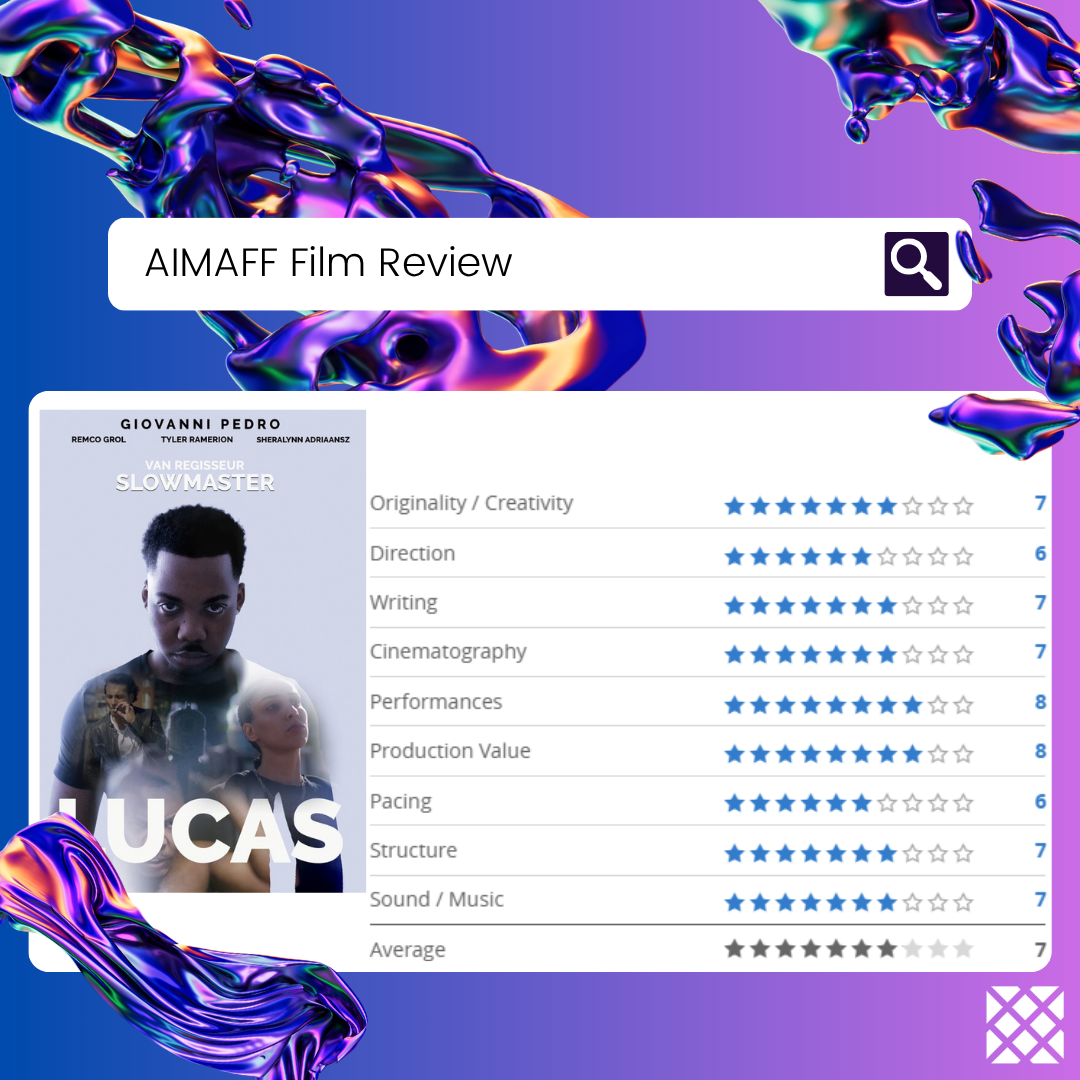
How quickly can the promise of fast money rewrite a young man's idea of success? And by the time he realizes the price, how much of himself has already been spent?
LUCAS, from filmmaker Slowmaster, follows its 19-year-old title character into the gravitational pull of street life. Education begins slipping into the background as money, status and hardened figures offer something considerably more seductive, an immediate shortcut to becoming somebody.
It's familiar territory, but with an admirable refusal to think small. Rather than allowing an independent budget to dictate the boundaries of the story, LUCAS reaches outward. There is a generous collection of characters, changing environments and narrative ideas, giving the film the feeling of a living social ecosystem.
That ambition is supported by convincing production design and carefully selected locations. Visually, the film frequently carries a polish beyond what one might expect from grassroots filmmaking.
The ensemble, including Tyler Ramerion, Remco Grol, Giovanni Pedro and Sheralynn Adriaansz, helps populate that world with different personalities and energies.
Yet LUCAS occasionally explains what it could simply show.
With a script willing to take this many creative swings, the filmmaking could afford to become equally adventurous. More expressive framing, unusual compositions and stronger visual motifs.
The dialogue could also benefit from some selective pruning. Not every silence needs rescuing by another sentence. Several scenes arrive at an emotional point only to continue explaining it, when a held glance, an uncomfortable pause or an empty room might say considerably more.
Still, those criticisms emerge partly because LUCAS clearly has aspirations beyond the ordinary micro-budget production. There are ideas everywhere and a filmmaker seemingly uninterested in allowing financial limitations to shrink the canvas.
LUCAS is ambitious, populated and visually polished, with the foundations of a filmmaker searching for a larger cinematic language. The next step may actually involve doing less. Now the challenge is trusting the camera enough to let us live inside it.