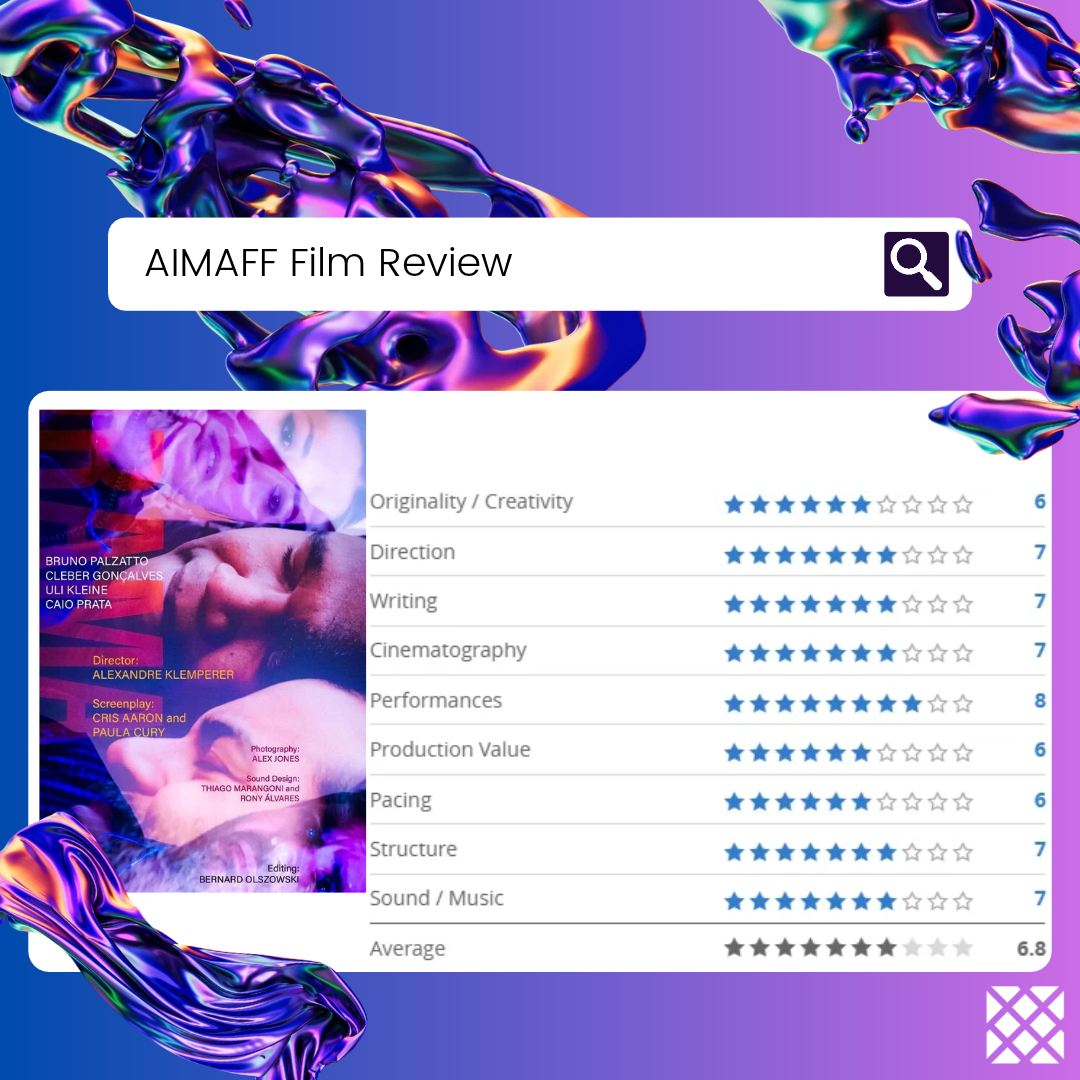
Can a writer rewrite his own past? Or are some chapters destined to haunt us, no matter how desperately we try to turn the page?
Alexandre Klemperer's Drama explores that uncomfortable territory where guilt, family and creativity collide. At its center stands Vicente, a troubled writer struggling to rebuild his life while navigating fractured relationships with his sons. When the mysterious July enters his world and unexpectedly reignites his artistic inspiration.
Klemperer, whose extensive television career includes two decades working on Brazilian productions for TV Globo, brings considerable storytelling experience to this independent project.
The screenplay is among the film's strongest assets, weaving artistic frustration, parental responsibility and unresolved trauma into an intimate narrative. A man capable of inventing entire lives on paper finds himself painfully incapable of controlling his own. Fiction offers endless second chances. Reality, unfortunately, isn't nearly as generous.
Bruno Palzatto brings an engaging presence to the central performance, supported by an intelligently assembled cast whose chemistry gives the relationships credibility. The acting provides much of the film's emotional foundation, allowing the characters' vulnerabilities and contradictions to emerge.
Music and sound design also deserve recognition. The soundtrack accompanies the shifting emotional atmosphere with sensitivity, while the audio work lends weight to moments of confrontation and introspection. Together, they help establish a production that feels driven by genuine creative commitment.
The film's independent origins do occasionally become visible, particularly in certain exterior sequences where the cinematography lacks the polish found elsewhere. A few shots also exhibit noticeable frame-rate inconsistencies, creating technical distractions that briefly interrupt the narrative's otherwise engaging flow.
Nevertheless, Drama possesses the unmistakable character of a passion project. Klemperer seems less interested in manufacturing emotional spectacle than in exploring the complicated ways people wound one another, often while believing they are doing their best.
The result is an intimate, performance-driven film about guilt, forgiveness and the stories we tell ourselves to survive our mistakes.