The Quiet Power of ‘‘Words Left Behind”
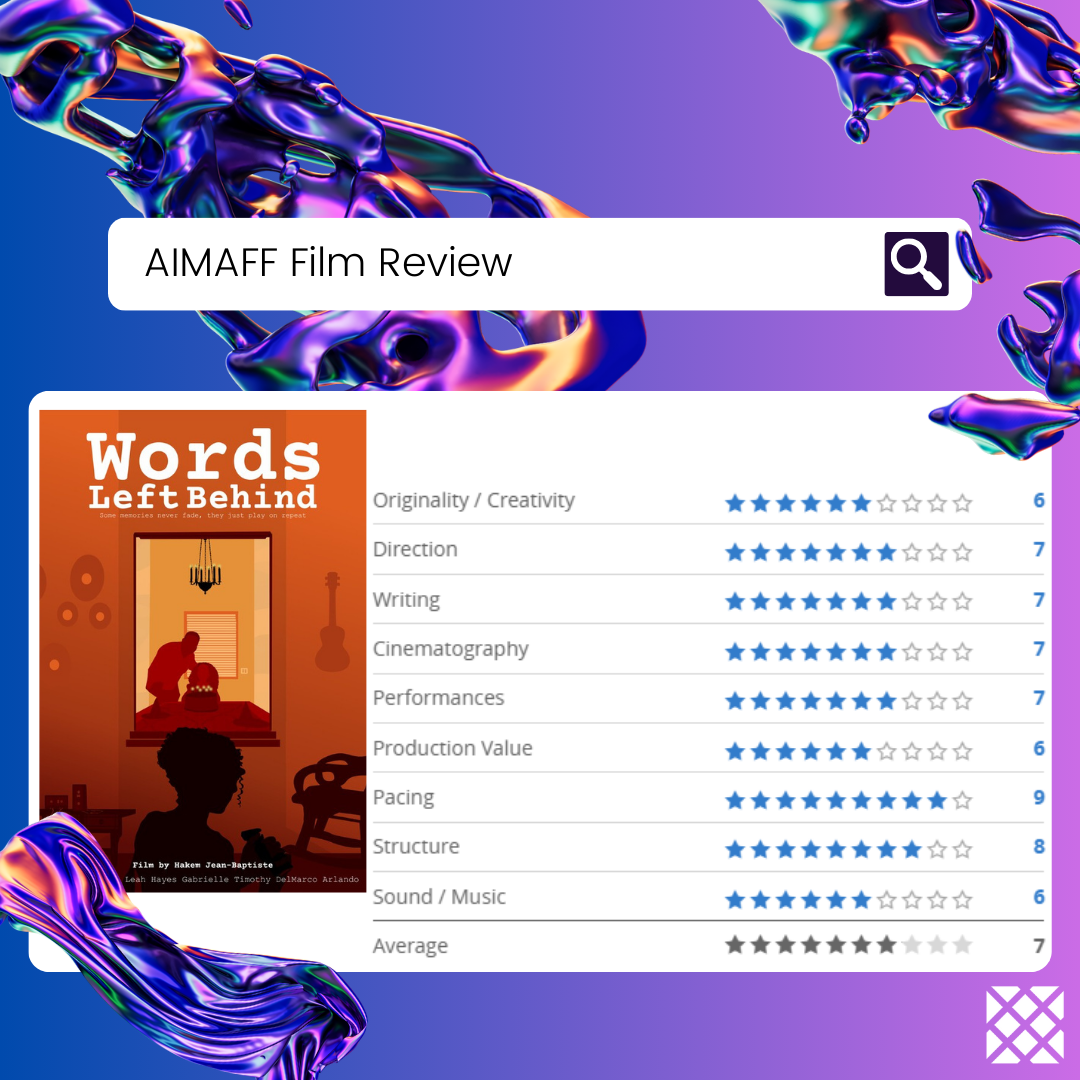
Hakem D. Jean-Baptiste’s Words Left Behind feels like a quiet piece, intimate, unguarded, almost fragile yet it carries the emotional weight of a story lived far beyond its brief runtime. The film trails 18-year-old Clementine as she presses “play” on an old camcorder and, in doing so, presses directly on the bruise of her own past. What unfolds is a collage of father-daughter moments: laughter, warmth, the small rituals that linger long after the people who created them are gone.
Jean-Baptiste, whose Haitian American roots and reflective storytelling sensibilities shape every frame, crafts a narrative that asks a deceptively simple question: What do we inherit from the people we’ve lost?
The technical work adds to the emotional stitching. The editing flows with a soft cadence, guiding the audience through present and past like pages of a well-worn diary. The pacing gives room for grief to ebb and nostalgia to warm. Structurally, the film is surprisingly tight, every memory placed with intention. The framing is clean and purposeful, bolstered by music that gently underscores the sentiment without dipping into melodrama. It’s sweet, slice-of-life cinema with an honest pulse.
But memory, like filmmaking, isn’t flawless. The sound design wobbles at moments. The interiors, bare walls, sparse rooms, betray the low-budget, student-film origins. You sometimes feel the absence of visual stylization, the kind of cinematic polish that might lift the story from “touching” to “transcendent.” A richer production design or bolder aesthetic choices could have pushed Words Left Behind into more haunting territory.
Still, what Jean-Baptiste accomplishes here is notable. The film may wear the shoes of a student short, but it walks with surprising maturity. It’s sincere, thoughtfully assembled, and emotionally authentic, a heartfelt meditation on loss, love, and the invisible threads that tether us to those who shaped us.
Isn’t that, after all, what the best memories do, reach forward even as we look back?