Aethrimus Review: AI, Aliens, and the Fear of Knowing Too Much
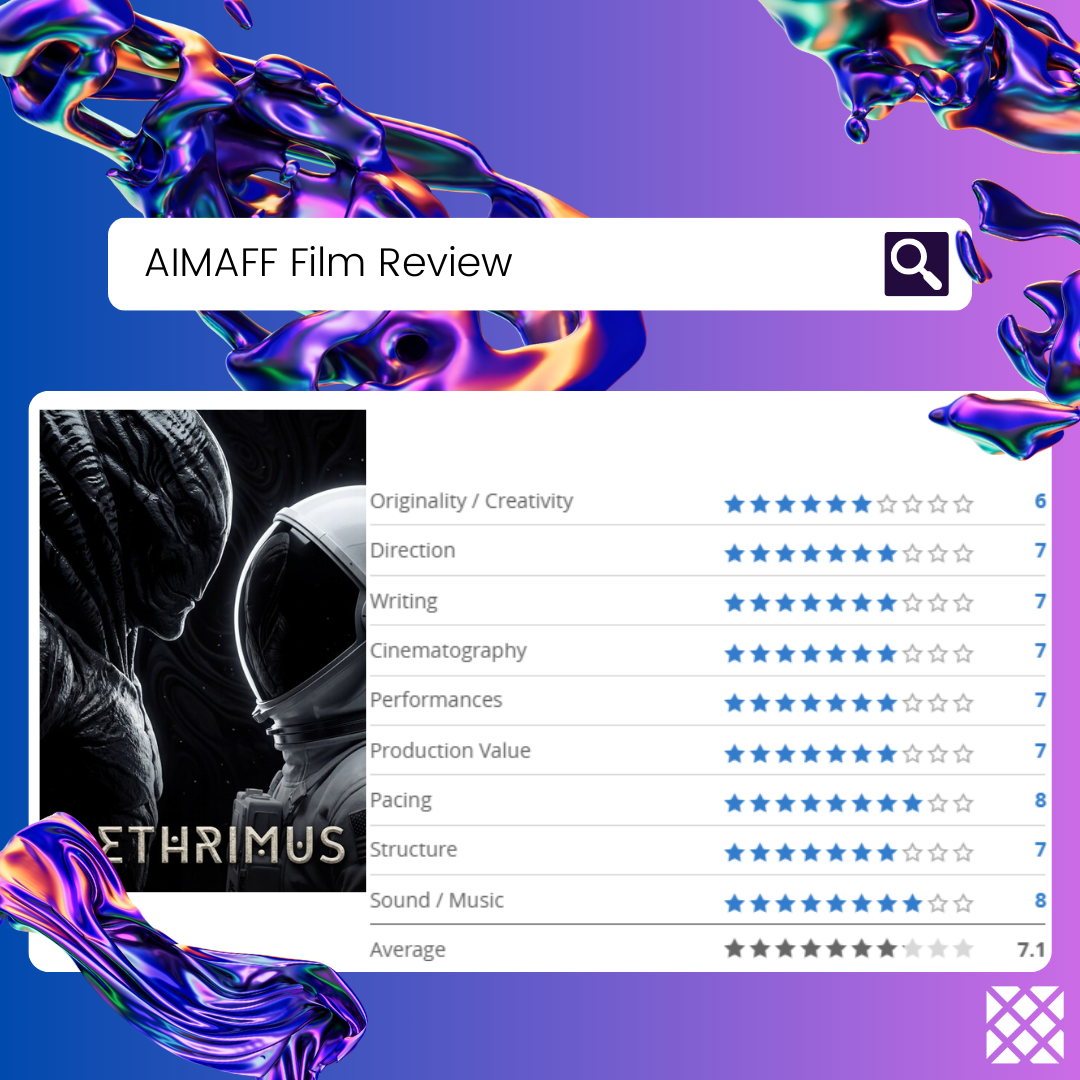
Something is wrong long before Aethrimus tells us so. Jaspreet Singh’s experimental sci-fi short opens not with spectacle, but with disturbance a cosmic deviation, a data point that refuses to behave.
The inciting incident is pure genre catnip: a mysterious object, catalogued as 3I Atlas and assumed harmless, abruptly alters its trajectory and collides with the Moon, obliterating a U.S. satellite in the process. Alarms sound. Protocols ignite. Humanity does what it always does when faced with the unknown, it sends someone to look closer. But Aethrimus is not interested in the mechanics of heroism or procedural spectacle. It’s interested in the moment before understanding, when certainty dissolves and curiosity becomes dangerous.
Visually, Aethrimus is striking. The VFX work is ambitious and often beautiful, leaning into abstraction rather than polish. AI-assisted imagery doesn’t try to mimic reality so much as distort it, creating a texture that feels unstable like the film itself is struggling to comprehend what it’s showing us. The editing is sharp and deliberate, carving tension out of negative space. Paired with a dense, immersive sound design, the film builds atmosphere the way pressure builds in a sealed chamber: gradually, then all at once.
That said, the film isn’t without its missteps. At times, Aethrimus leans too heavily into familiar genre aesthetics—the dimly lit corridors, the ominous hums, the well-worn visual shorthand of “serious sci-fi.” More notably, the dialogue occasionally overreaches, explaining ideas that would have been more powerful left unspoken. In a film so confident in its visuals, this insistence on verbal clarity feels like a lack of trust in the audience’s intelligence. Ironically, the moments where Aethrimus says the least are the ones that resonate most.
Still, these are minor fractures in an otherwise compelling experiment.
Aethrimus doesn’t aim to comfort or conclude. It hovers, unsettles, and withdraws, leaving behind an unease that lingers longer than its runtime. It’s a short film that understands the power of restraint, even when it occasionally forgets to fully trust it.