“The Conversation” Review: A Mind on Trial
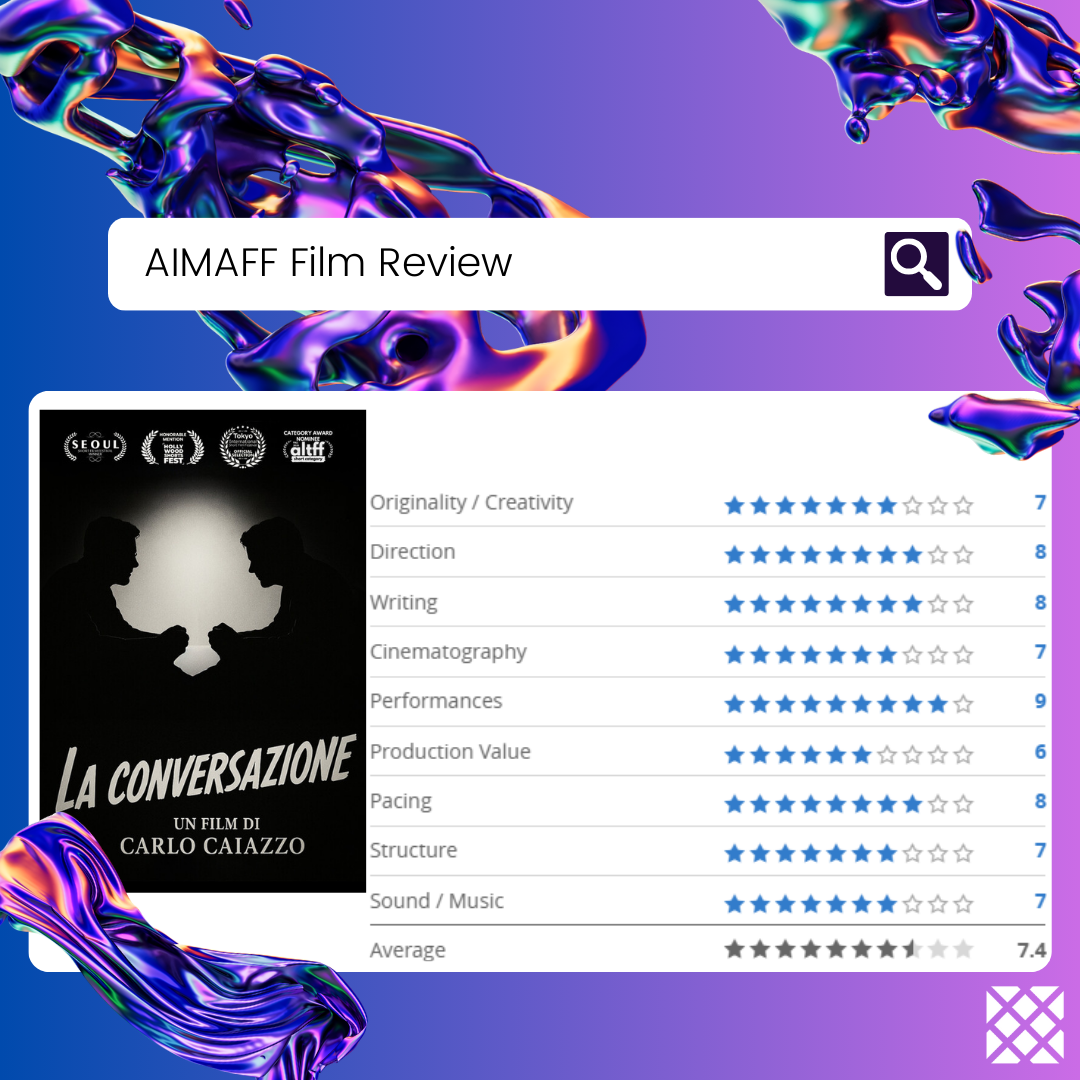
The Conversation, written, directed, and performed by Carlo Caiazzo, is a short film that doesn’t chase attention but rather interrogates it.
The setup is stark to the point of severity. A man sits alone at a table, pinned beneath a single overhead light. In front of him: a deck of cards. Across from him: his conscience. What begins as a seemingly simple exchange tightens into something far more insidious.
Caiazzo’s greatest gamble is his dual performance. Playing both the protagonist and the voice that needles him from within, he creates a striking psychological split without ever resorting to theatrical excess. The distinction is clear, expressive, and unsettling. It feels less like watching two characters converse and more like witnessing a mind argue itself into a corner.
The film’s atmosphere is meticulously controlled. Shot in black and white mostly, The Conversation embraces chiaroscuro lighting that feels lifted from classic noir but stripped of ornamentation. Faces emerge from darkness only when they have something to admit.
Sound design plays an equally vital role. Every pause, every breath, every shuffle of cards carries weight. Combined with sharp, deliberate editing, the pacing remains taut despite the film unfolding largely within a single scene.
The writing deserves particular praise for its restraint. Caiazzo understands that introspection doesn’t require verbosity. The dialogue is economical, precise, and laced with grotesque irony.
If there’s a crack in the mirror, it appears in the final scene. The climax is emotionally significant, yet visually less stylized than what precedes it, revealing the limitations of an indie production that otherwise masks its budget with confidence and craft.
Still, The Conversation is a compelling example of how minimalism, when wielded with intention, can feel expansive. Caiazzo’s belief that cinema is a mirror rather than a spectacle comes through in every choice. This is a film made in near solitude, but it doesn’t feel lonely, it feels intimate, like being allowed into a room you weren’t meant to enter.