Daniel Arreola’s Ashes of Freedom: Comfort Is the Cage
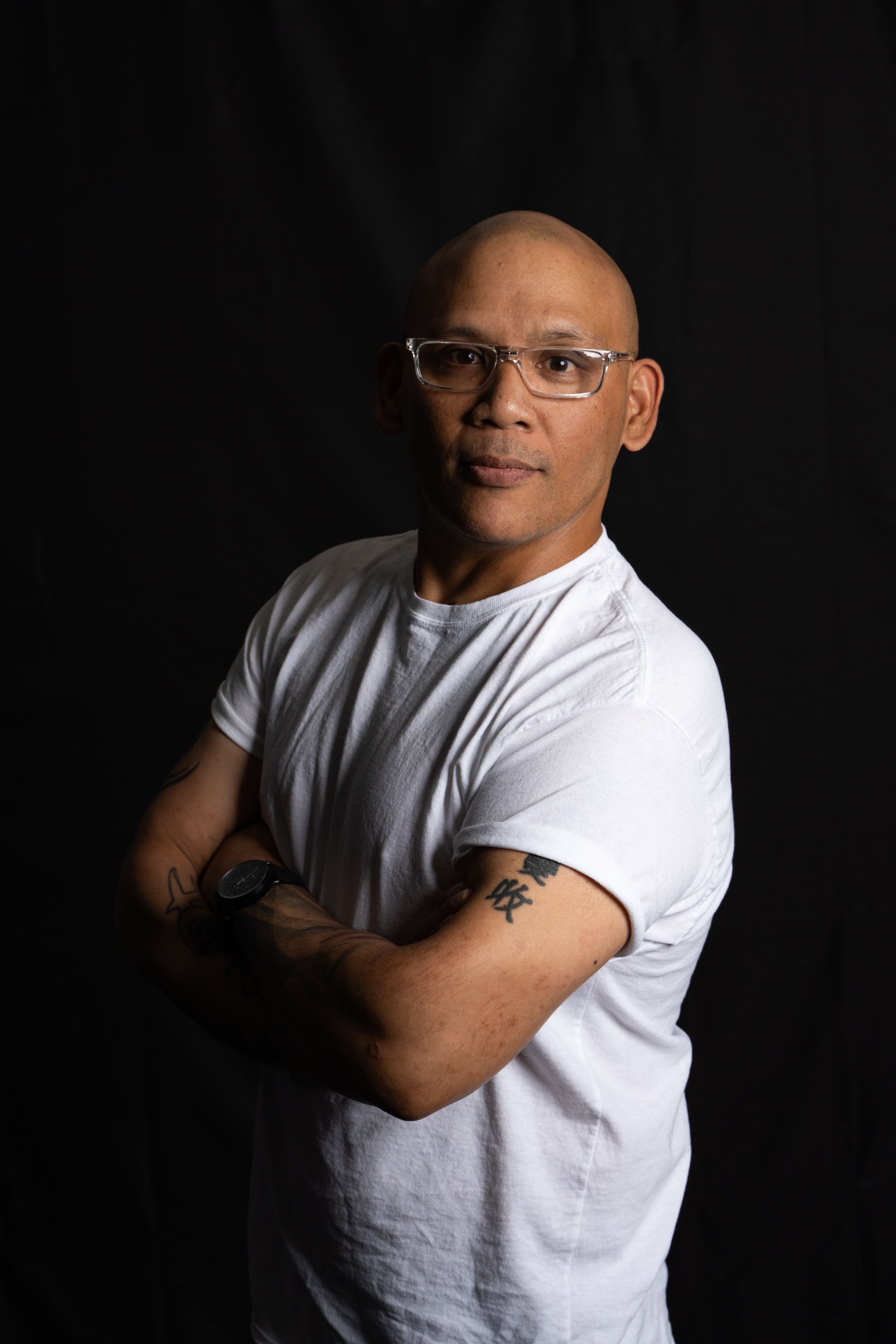
Welcome Dan, we are very excited to have you today with us to discuss about your work.
Who is Daniel Arreola and how did the passion for creating begin?
I am from a small pineapple village in Wahiawa, Hawaii, my creative journey began long before I stepped onto a stage then ultimately as a writer. Growing up, I was mesmerized by the rhythmic precision of Bon Odori Festivals and the craftsmanship of my uncle, who built custom vintage Volkswagen beetles from the ground up. Watching my relatives transform simple ingredients into extraordinary meals taught me that artistry exists in every medium.
These early influences ignited a passion for expression that at age 14 I was exposed to creative writing, speech, and drama classes. In 1997, I brought that island spirit to Seattle, continuing my career as an actor in the Pacific Northwest. For over twenty years, I have channeled my observations into plays, screenplays, and poetry, capturing the "random thoughts" that define the human experience.
Whether performing or writing, my work is a tribute to my roots, a blend of Wahiawa’s community spirit and Seattle’s artistic energy. I remain dedicated to the craft of storytelling, driven by the same wonder I felt as a child watching a car take shape or a festival come to life.
Can you tell us a bit about your previous work?
Let's see, Wisdom's Teeth was the sleeper of all my screenplays that was originally a comedy but became a horror... did you ever like going to the dentist as a child? Were you scared at all? Wisdom's Teeth tells the day that a little girl's day takes a horrifying turn as her mom drops her off at the dentist office! A calculated, cold, and sneering dentist is the villain that makes one's flesh creep in this unsettling appointment.
Another one was Note Between Two Books which was my very first screenplay that follows Hugo and Vivian. He is a leader at a university who is well traveled, well mannered, and is given a great opportunity to work overseas. She is a young spirited, direct, and educated woman with a fighting spirit but naive. Together they meet by happenstance at a university and form a friendship and love amidst good food, opera, symphonies, study groups, photography, while a loving and ever watching loyal Cane Corso named Charlie plays a hand. They learn and lean on each other yet come to grips with their own dreams in life and ultimately the age factor.
Ashes of Freedom opens with a city that gleams on the surface and rots underneath. What first image or idea sparked this world for you? Was this script born more from imagination, or from observing patterns in the real world?
When I was about 8 or 9 years old, my sister, mother, and I went to Maui to visit my uncle. During our trip we visited the Haleakala Summit which was at 10,000 feet. We watched the sunrise and for me, it was just mind blowing compared to the town I was from and we rarely traveled; so it was an experience. A lot of imagination went into Ashes of Freedom as well because growing up I wanted to be an astronaut and wanted to go to Space Camp! Also the reality of life despite these amazing things are always constant, things such as paying bills, struggling, traffic, dependency on technology...the purity and majestic awe of nature yet there's a struggle that no matter how miniscule exists. The core message is clear: one must actively engage with life; nothing happens unless you make it so.
CONVERSATION ABOUT: ''Ashes of Freedom''
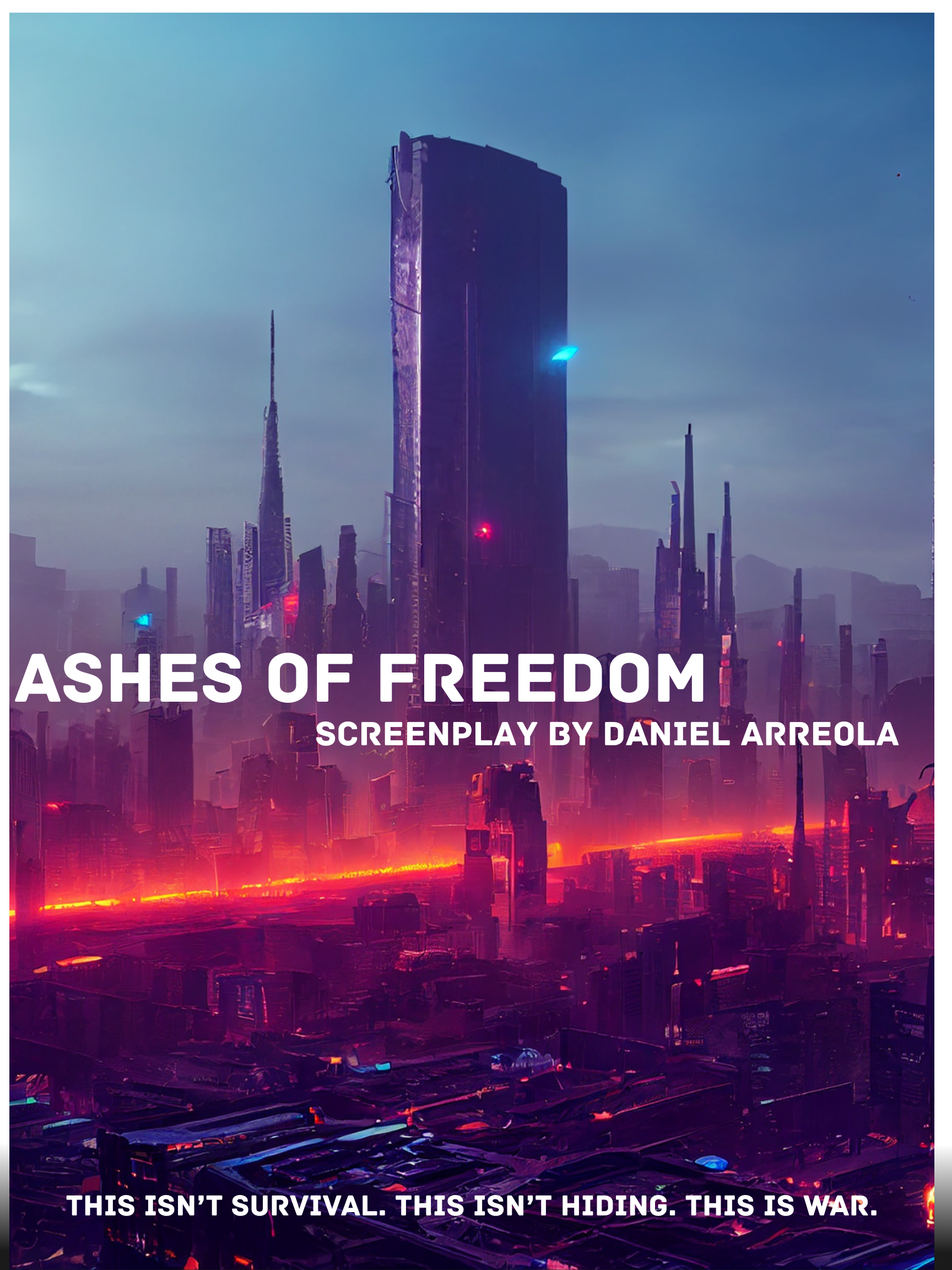
The false drug that pacifies the masses is chillingly plausible. What does that device represent to you: addiction, misinformation, convenience, or consent?
To a freedom fighter against corporate rule, the "pacifying drug" is the ultimate weapon of manufactured consent. While it wears the mask of convenience and mimics the numbness of addiction, its true function is the chemical or digital erasure of the will to resist. It also represents convenience weaponized. Corporations specialize in removing "friction"—the physical or mental effort required to live. When a population is provided with instant gratification, whether through a pill or an algorithm, they surrender the struggle that defines human autonomy. To the rebel, this comfort is a cage; it is the trade of liberty for a painless existence where the "walls" are simply too soft to feel. Lastly, it represents misinformation at a cellular level. If a drug makes a starving worker feel full or a disenfranchised citizen feel empowered, it is the ultimate lie. It creates a biological echo chamber where the body can no longer signal that the environment is toxic. By severing the connection between reality and perception, corporate rule becomes invisible, and therefore, unassailable.
Ultimately, the device is a tool of enforced addiction to the status quo. By making peace internal and artificial, the corporation ensures that any movement toward revolution is viewed not as a quest for justice, but as a withdrawal symptom. To fight back is to choose the "pain" of truth over the "safety" of the corporate dose. Resistance, therefore, begins with the sobriety of seeing the world as it truly is.
Were there specific films, novels, or philosophies that influenced the tone and atmosphere of the story? The masses are chillingly plausible. What does that device represent to you: addiction, misinformation, convenience, or consent?
To me, this phrase suggests that the most dangerous societal shifts occur not through force, but through a convenience that breeds collective addiction.
It evokes a world where the "masses" are not a mindless mob, but a collection of reasonable individuals who have been nudged into a state of quiet compliance. When life is optimized for frictionless ease, people become addicted to the comfort provided by the "algorithmic system". This makes misinformation not just believable, but "chillingly plausible"—if a narrative serves our immediate desires or confirms our biases, we accept it as truth to avoid the discomfort of critical thinking. The "chill" lies in the loss of informed consent. We aren't being coerced; we are being catered to. We "consent" to surveillance and manipulation because the alternative—opting out—is too inconvenient. In this context, the phrase means that a society can lose its autonomy while everyone involved feels perfectly comfortable, making the descent into a controlled or delusional state appear entirely rational and "plausible" to those within it.
What does a typical writing session look like for you? Rituals, music, time of day, or total chaos?
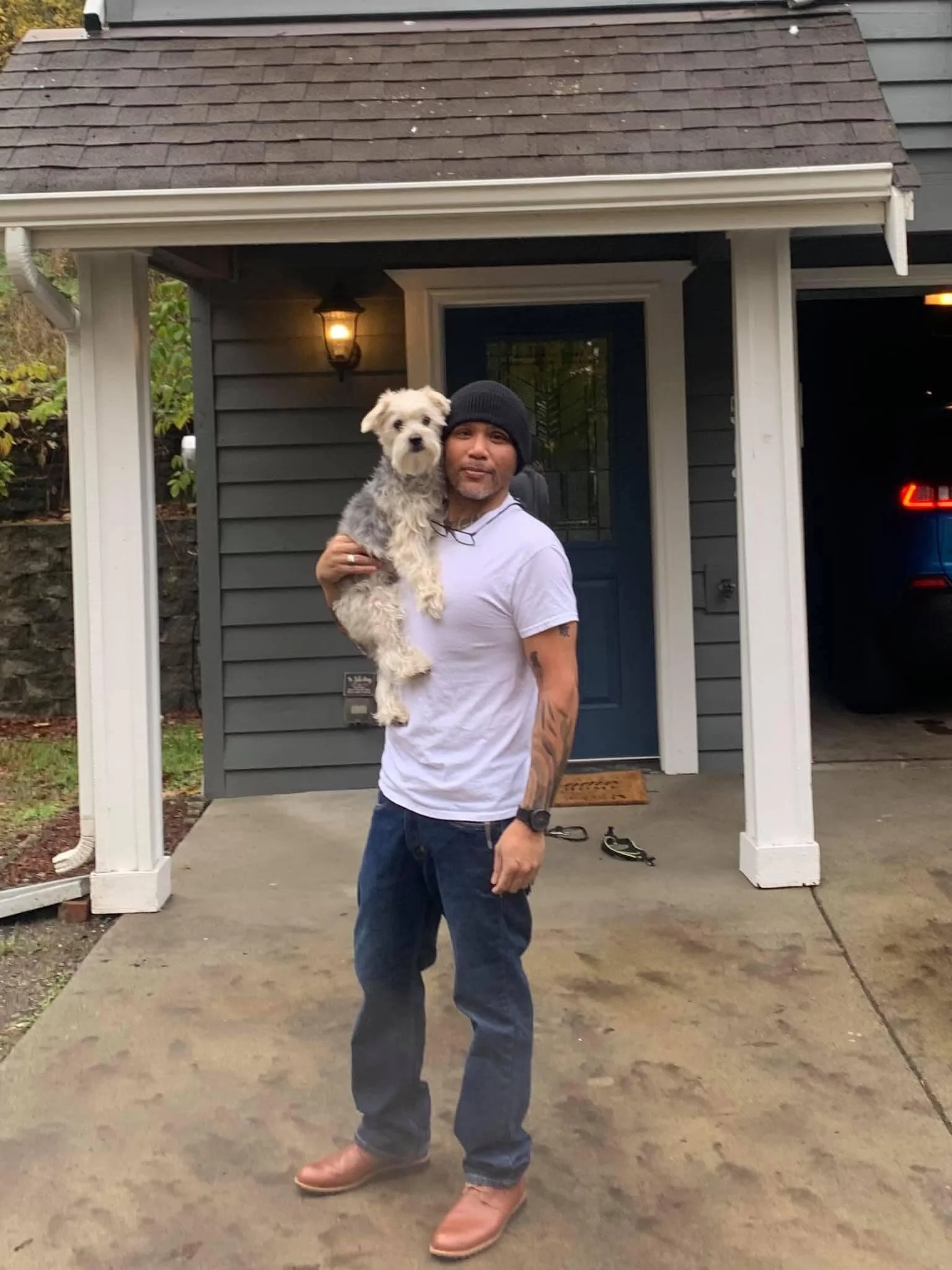
For me, the ideal writing environment is a sanctuary of specific sensory details, comfortable rituals, and always late at night. I favor a constant dose of classical music or 80's hits, a carefully chosen soundtrack to fuel creativity! A refreshing glass of ice water or a warm mug of hot tea is also required, keeping me hydrated and focused throughout the session. The most unique component however, is the silent (but snoring) presence of my 12yo dog, peacefully passed out on the nearby bed. This furry friend serves an unusual but vital role as a sounding board; the author bounces ideas off the confused-looking dog, finding humor and a break in the dog's bewildered stare. The process also involves me talking to myself, where I verbalize words and sentences to truly hear the script flow and rhythm, this technique aids in refining the piece. This blend of sound, sustenance, and companionship creates the perfect, personal atmosphere for my writing to flourish.
What kinds of conversations do you hope this project sparks among audiences after they’ve seen it?
Quite simply to stand what you believe in. It's OK to fight for what you want. Empowering others and being humble at the same time which is the theme of the script, but also never mislead or lie. As in Ashes of Freedom, a good revolution from time to time is a healthy thing. The script emphasizes the need to empower others while maintaining honesty and transparency, never resorting to lies or manipulation. It suggests that personal conviction and the refusal to be defeated are powerful forces, and that a just cause can inspire meaningful change. Ashes of Freedom implies that true liberty may require a period of destruction and rebuilding, a transformative process where old systems are challenged for a better future. It is a call to action to defend democratic rights and the common good, even in the face of strong opposition, although the protagonists want change, they also have to acknowledge that they also fight conflict within their ranks.
In future projects, do you plan to explore similar genre intersections, or are there other genres you're eager to explore ?
I always wrote with a minimal amount of characters. In all my works, 2 maybe 3 characters at most. I really want to challenge myself and expand to a large cast in a courtroom drama, just high tension at all times! The courtroom setting to your advantage; the rigid procedural rules act as a pressure cooker, forcing characters to reveal their nature through subtext and silence when they aren't allowed to speak.The pacing would be fast, controlled, characters with strong intent, just a solid slow burning piece! Lots of opportunities for characters to bounce off each other!
After so many festival wins and selections, what still challenges you creatively?
I tend to overthink as a person which makes me question every line, character, setting, everything that makes up a world I am attempting to create. I am also too hard on myself, I have learned to have the script breathe from time to time during the process. So despite the validation of awards, the primary creative challenge remains resisting the safety of getting comfortable which can form bad habits and restrain you as a creator. There is a recurring temptation to replicate the specific tone or structure that previously resonated with juries, but true growth requires abandoning those comfortable patterns to find a new visual or narrative language. Furthermore, maintaining vulnerability becomes more difficult as expectations rise. With a higher profile comes the pressure to appear "expert," which can stifle the experimental curiosity necessary for breakthroughs. The goal is to consistently approach the blank page with the same "beginner’s mind" that fueled earlier work, ensuring that the next project is driven by genuine inquiry rather than a desire to maintain a reputation. Finding that balance—harnessing experience without letting it become a creative cage—is a constant, rigorous process.