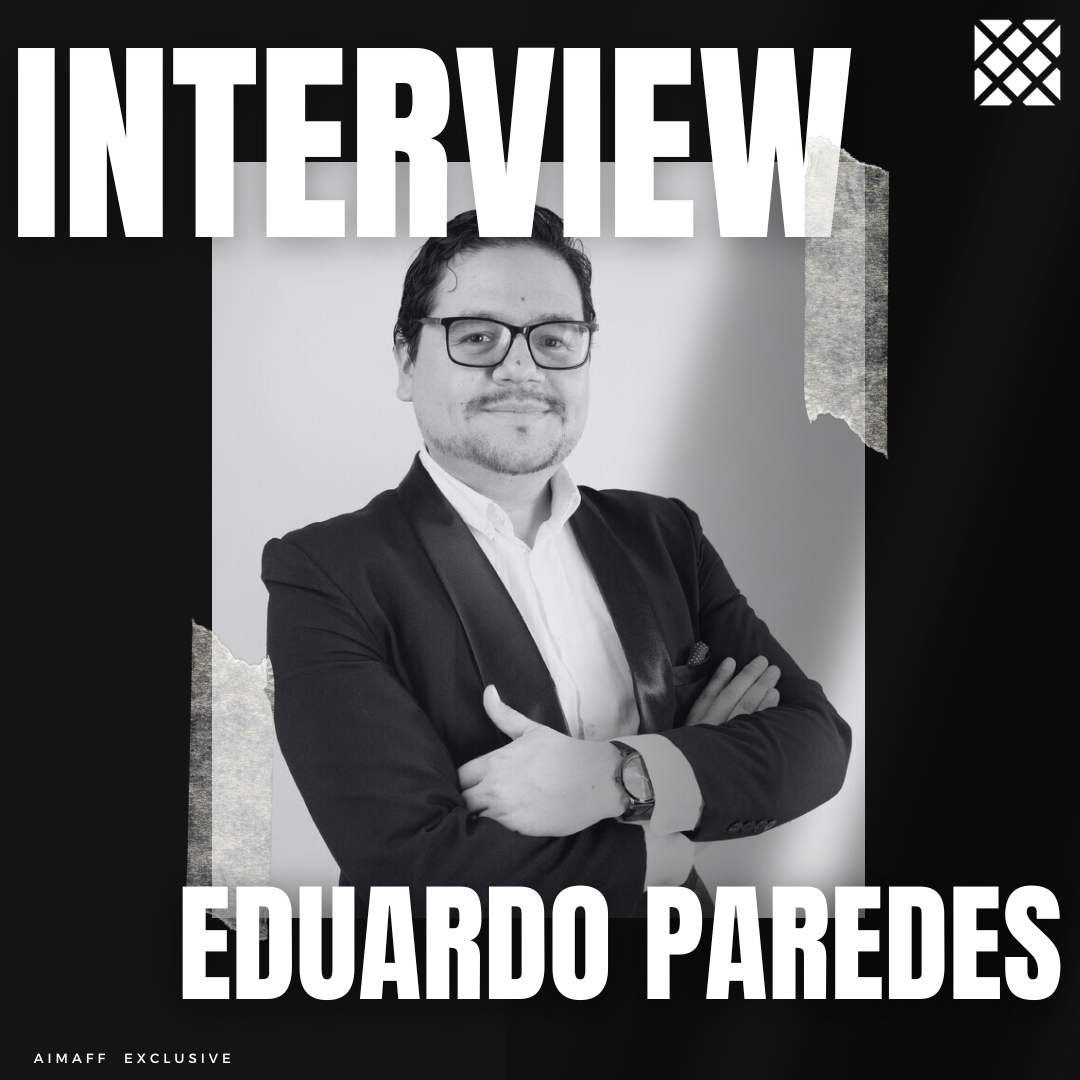
Eduardo Paredes: Bringing Ancient Peru to Life with Blood Puma

Welcome Eduardo, we are very excited to have you today with us to discuss about your work.
Who is Eduardo Paredes and how did the passion for creating begin?
I am a Peruvian filmmaker who has dedicated a large part of my career to independent productions. My passion for creating has been with me for as long as I can remember, always driven by the conviction of telling stories with a strong sense of identity, stories inspired by their surroundings.
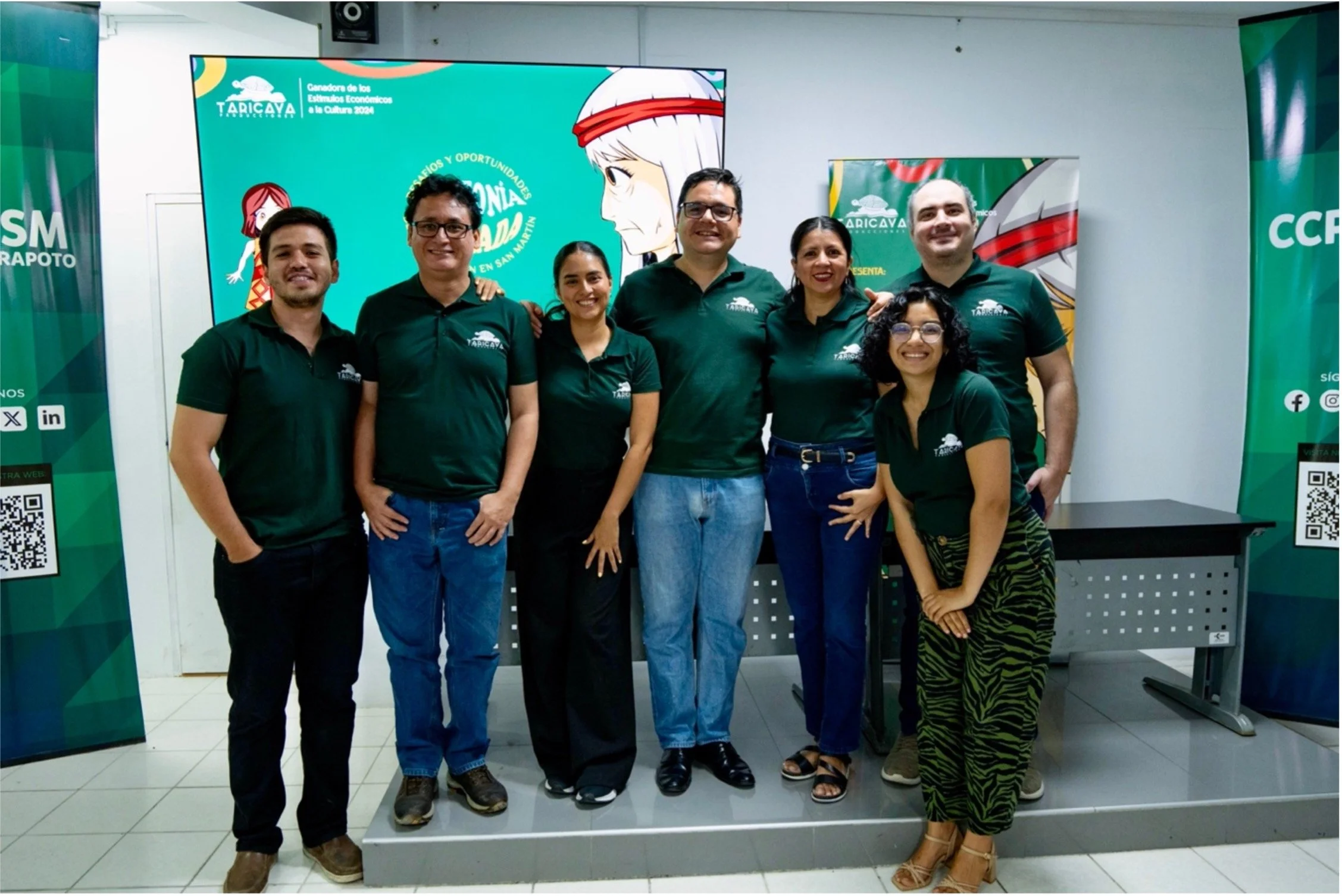
I have been based for more than a decade in Tarapoto, in the San Martin region, a city nestled in the Amazon rainforest with an emerging audiovisual industry. There, I have developed several television projects focused on highlighting the cultural richness of this part of the Peruvian jungle. With that same intention and creative drive, my team and I chose to embrace animation, understanding it as a form of creation with far broader narrative possibilities. In a region that has historically lacked its own voice within national cinema, we are honored to be the first to win the animation project grant organized and funded by the Peruvian State.
This opportunity allowed us to bring to life a story that highlights a vital yet often overlooked connection: the ancient bond between the Andes and the Amazon.
Can you tell us a bit about your previous work?
In television, I have created and produced formats such as “Historias con Harta Calle”, a documentary program that explored the history of different places in Peru, with a particular focus on Amazonian cities.
From a journalistic perspective, I have been responsible for several investigative reports centered on gender issues and Indigenous communities. This work earned me the national journalism award “Periodismo que llega sin violencia” in Peru.
In the cinematic field, I have directed and produced short films such as “Sin Llaves” (Without Keys), which received numerous awards at festivals around the world; telling stories that delve into the chiaroscuro of human nature—its contradictions, inner conflicts, and imbalances.
What was the very first image or emotion that sparked Blood Puma for you? Was there a specific moment in your life or in Peruvian history that made you feel, “This story needs to be told now”?
Without a doubt, Blood Puma – “Puma de Sangre” in Spanish - is the result of my encounter with the Peruvian rainforest and with the peoples who have inhabited it for centuries. We often hear a great deal about the Incas and their dominance over the Andes, leaving behind wonders known worldwide, such as Machu Picchu. Yet even among Peruvians—especially those of us born in Lima—few are truly aware that, despite its low population density, a large portion of Peru’s territory is rainforest, and that although the greatest pre-Columbian empire in South America emerged in the Andean world, it cannot be understood without its relationship with the Amazon.
The story told in Blood Puma is directly inspired by the foundational myth of Lamas, a city considered the capital of Amazonian folklore. Its native inhabitants identify themselves as descendants of the Chancas, a people who migrated from the mountains while fleeing the Inca Pachacutec, who in turn transformed a small kingdom into the vast empire of the Tawantinsuyo. Like this one, there are many other stories that confirm the millennia-old bond between these regions.
CONVERSATION ABOUT: ''Blood Puma''

Why tell this story through animation rather than live action?
As I mentioned earlier, I strongly believe that animation offers greater creative freedom, allowing narrative possibilities to expand significantly. In addition to that, in the case of Blood Puma, animation enabled us to recreate a historical period that would have been beyond our budget in live action.
Even with the financial incentives provided by the State for audiovisual production, Peruvian cinema—and particularly filmmaking outside the country’s main urban centers—must constantly find inventive ways to tell stories with limited resources.
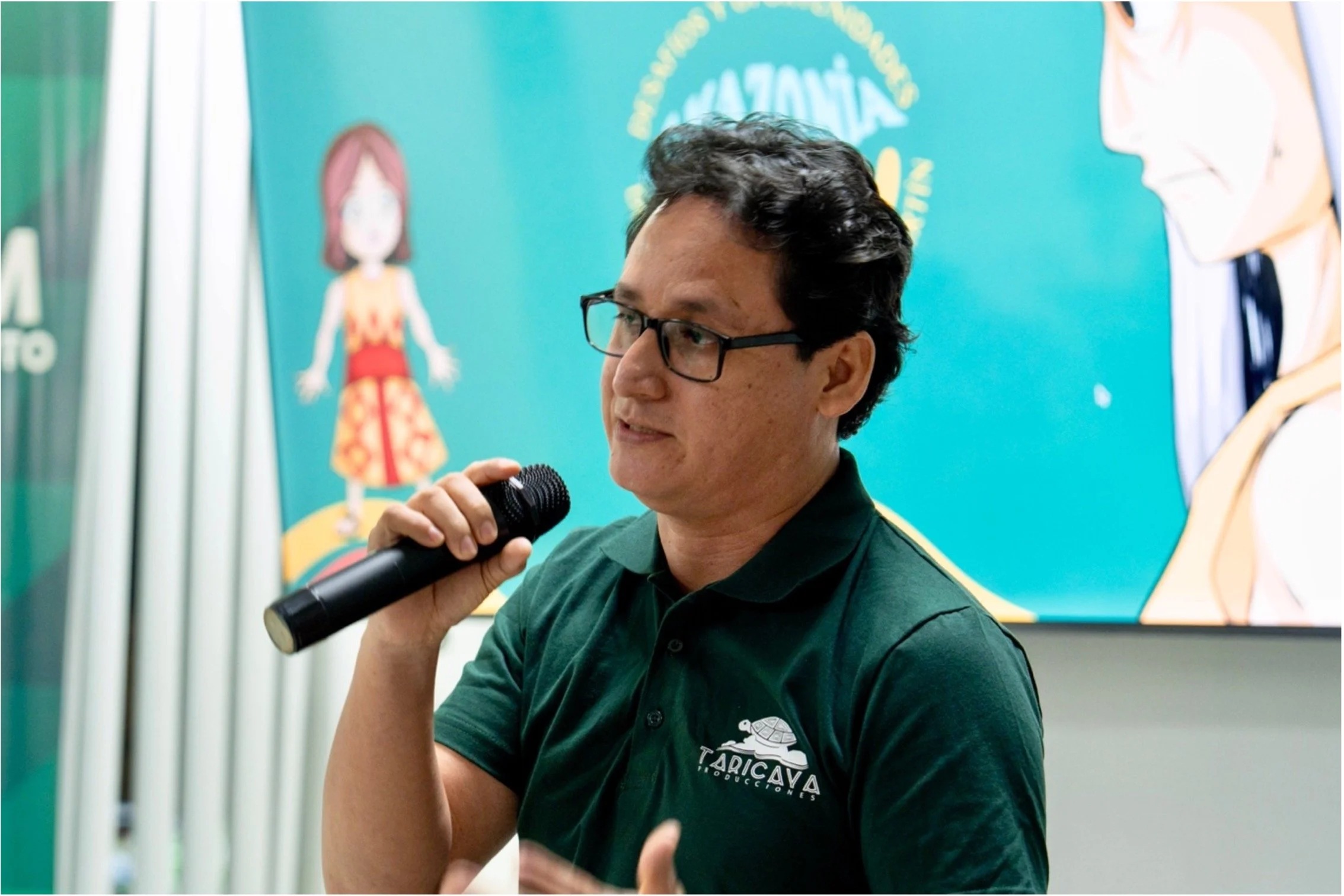
With the support of local talent such as Ramon Roque, the animator responsible for the film’s visual concept, we found animation to be the most effective way to bring to life what Peru looked like 500 years ago.
How did your connection to Cusco and Andean heritage influence the visual and emotional world of the film?
Cusco is the heart—or, as it was understood in pre-Hispanic times, the navel—of a world shaped by a unique worldview. Although the Inca Empire was brief in historical terms, it represented the culmination of a cultural development that began five thousand years earlier in what is considered one of the cradles of civilization.
From Caral—the only recognized cradle of civilization in the Southern Hemisphere—to the expansion of the Tawantinsuyo under Pachacutec and his successors, ancient Peru was the stage for cultures whose dynamics shaped an Andean heritage that was not confined solely to the Andes. This heritage extends beyond geography and seeks to be reflected in the film’s visual and emotional universe.
In this sense, my connection to Cusco forms the foundation of the story, complemented by my connection to Lamas, where the narrative arc finds its completion. In fact, I believe that Blood Puma reflects my fascination with these places and what they represent on a cultural level.
Chanan Cori Coca is a grieving mother, a warrior, and almost a mythic force. Which side of her did you connect with most while directing?
Without a doubt, my strongest connection to Chanan Cori Coca was through her most human side. As a father, I deeply identified with a mother who loses what is most precious in her life. A mother whose unimaginable pain drives her to make a series of decisions she would never have made under different circumstances.
Beyond her skills as a warrior, the strength she represents, or the political forces surrounding her, she is ultimately a woman who must face a traumatic event under the worst possible conditions—unable to process such profound grief until circumstances force her to reconcile with herself.
In this way, Chanan’s tragedy is the tragedy of pain that seeks to be soothed through the suffering of others, yet cannot truly end until it finds a greater purpose—one that goes beyond her own thirst for revenge.
The story suggests that revenge can collide with political power. What were you exploring about the cost of vengeance in a society that’s also changing?
The story is set during a key historical episode for Andean civilization. After years of tension, the Chancas had a real chance to defeat the Incas once and for all and marched their army toward Cusco, prompting the Inca Wiracocha to flee with his heir.
It is at this moment that the figure of Cusi Yupanqui emerges, the Inca prince who chose to defend the city. A confrontation in which Chanan lost her daughter. So, revenge fuels the transformation of a society in crisis, only to later collide with a political power eager to instrumentalize that vengeance in service of its own ambitions, revealing an intrinsic relationship between emotions such as fear or anger and political manipulation. In this sense, Chanan represents the collective feeling of her people, a sentiment that Prince Cusi Yupanqui exploited not only to defend Cusco, but to eradicate the enemy and initiate a process of conquest that would eventually subjugate many other kingdoms across the Andean world.
At this point, Chanan becomes aware of the true cost of her vengeance and reacts against the barbarism, embodying those who are capable of opening their eyes to the interests of those who pull the strings of power.
In future projects, do you plan to explore similar genre intersections, or are there other genres you're eager to explore ?
At the moment, we are working on a new project that aims to become an animated feature film, also set in ancient Peru. Specifically, it will take place during the final days of the Inca emperor Pachacutec and the conspiracies unfolding around him to determine who will succeed him in power.
In a way, this project will serve as the culmination of the character of Cusi Yupanqui as introduced in Blood Puma, who, after the events depicted in the short film, adopts the name “Transformer of the Earth” (pachacuti in Quechua).
Therefore, we do plan to explore similar genre intersections, though with greater narrative complexity, revealing the internal power struggles that shaped the fate of the Inca Empire. As with the bond between the Andes and the Amazon explored in Blood Puma, little is known about what truly occurred within the greatest empire ever seen in the hemisphere, as it is often viewed through a partial lens that either idealizes or demonizes it.
Our intention is to offer a more grounded and realistic perspective, once again turning to animation as a means to recreate an extinct civilization whose remnants continue to pulse through Peru and many other parts of Latam.
If you could sum up the film’s core question in a single sentence that would make someone want to watch it immediately, what would it be?
When pain rules, violence founds empires. That would be the sentence. Of course, every empire falls sooner or later because of the same pain that gives it life.
I am very grateful for the interview, and I would also like to thank my entire team at Taricaya Producciones: my executive producer and wife, Liz del Aguila; my animation director, Ramon Roque; and my director of photography and the voice actress who brought the main characters to life, Maripily Cordova.
I also cannot fail to mention those who believed in my script from the beginning and accompanied the process through to post-production, such as Claudia Cari, Sergio Perea, and Luis Saavedra. Likewise, I want to thank Chacruna Producciones, who took on the challenge of producing the soundtrack under the direction of Herbert Quinteros, with musical compositions by Walter Ramirez—great masters of sound in the Peruvian Amazon.
Finally, I invite you to follow Taricaya Producciones on all social media platforms, where we will soon be premiering Blood Puma and announcing our next project. Thank you all.