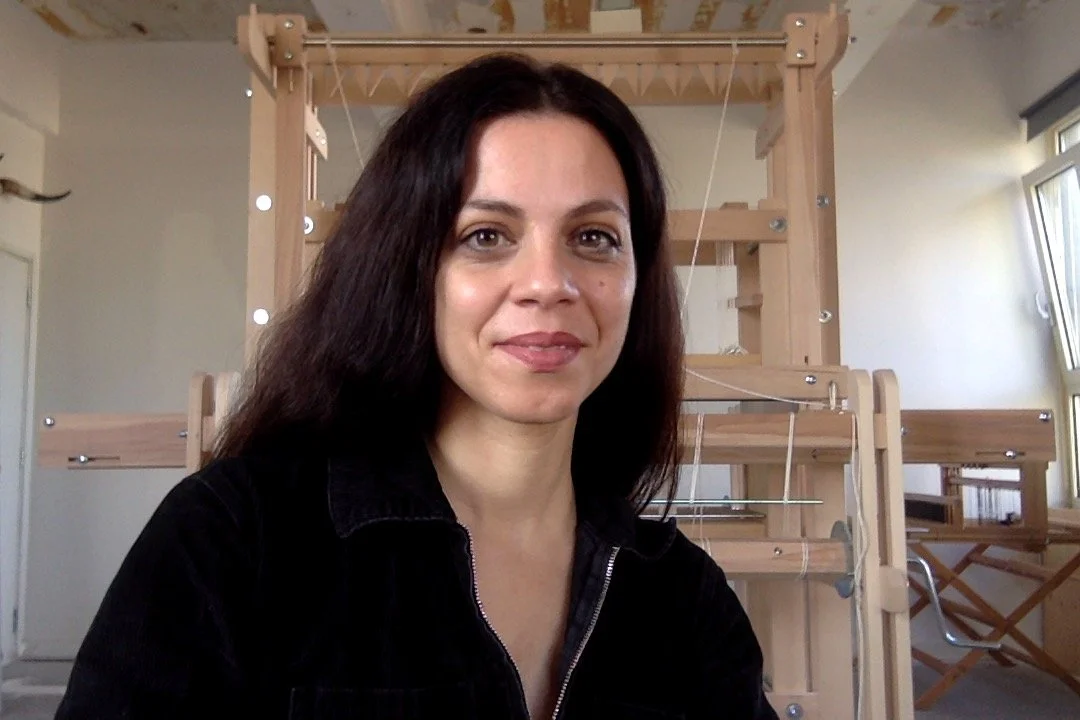
Welcome Theodora, we are very excited to have you today with us to discuss about your work.
Who is Theodora Kotsi-Felici and how did the passion for creating begin?
Kotsi-Felici (GR, NL) is an artist with more than 15 years of experience in the artistic field is based in The Netherlands and France. Theodora studied graphic design, cultural anthropology at Radboud University of Nijmegen and Fine Art in 's Hertogenbosch, she obtained her Master in Fine Art in 2012 at the St. Joost Academy in Breda. Besides visual art, she has been involved with Forum Theater, Playback Theater and has various trainings in trauma-informed therapy. She makes site-specific installations, community based projects and is specialist in public art. Her work is influenced by her commitment to critical reflections and political and social observations. Theodora is fascinated by creating space and conditions - a catalyst for social action to happen - where she invites people to participate and take action.
Her current work focuses on Trauma and its impact in society. Art has always accompanied me in my life, as a getaway from my own reality, even an escape to a new reality. This kept me curious about life and made me more aware of potentiality within creativity.
Can you tell us a bit about your previous work?
My art work is strongly influenced by social changes and the role of art in society. I view my subjects always from a different lens or a different perspective. This allows me to put myself in the shoes of others; I transform myself into a performer, a researcher, an anthropologist or even a biologist that allows me to create inspiring collaborations. My art forms a dialogue between art and society. A few characteristic examples are the “IJssel Alga Lab” and “The Collective Loom Project”.
“IJssel Alga Lab” is a laboratory-like setup where algae are grown using the water of the IJssel river (NL). This project was developed for the IJssel-Biennale 2021 and is a collaboration with the University of Wageningen (NL). The installation is raising awareness on the necessary ecological cycle and was offered as a “suggestion for a balanced relationship between people and the environment.”
“The Collective Loom Project” (2020) was based on collaboration with associated professor Valeria Gazzola (VU Amsterdam). The project concerns a series of experiments in which we investigated the effect of “social distancing” on the movement and empathy of people. The data collected were converted into tapestry using a collective loom. A simultaneous collaboration between 4, 6 or 8 people made the weaving process possible, while the empathy data were processed on the ‘brain’ of the loom, a cylinder with pins that functioned as an analogic computer.
What was the first moment you realized that trauma, and re-traumatization, needed to be explored through film rather than installation or public art? Was there a specific story, encounter, or observation that became the emotional starting point of the film?
Trauma have a big impact on people’s life as well as in mine, its imprint in society has a direct effect on various systemic domains such the health care system, judicial system, educational system and others. Trauma lead individuals to implement maladaptive coping strategies, favoring the emergence of relational and work difficulties and, potentially, increasing the risk of re-traumatisation. However re- traumatisation caused by the way the system is organized or deals with trauma is not commonly known or demonstrated. There were many moments throughout my life when I felt the need to realize a project regarding the impact and insights of trauma. After a long research, I felt that the time was ripe now to shine light to the need for reframing approaches and utilize trauma-informed strategies that minimize the impact of trauma and re-traumatisation. The production and distribution of social-issue documentaries and films have had a wide range of significant impact on community organizations, educational institutions, citizens, and even policy makers, reaching a wide audience. Film in particularly has been identified by various researchers as a vehicle for learning while the creative quality of art can be a driving force for trauma resolution. According to me, film has the ability to listen to society, to reflect its needs and to access very complex matters with the necessary lightness and optimism, a very inspiring process. When this is translated into an artistic image and projected on the consciousness of society, the result can be transformative.
CONVERSATION ABOUT: ''The Circle''
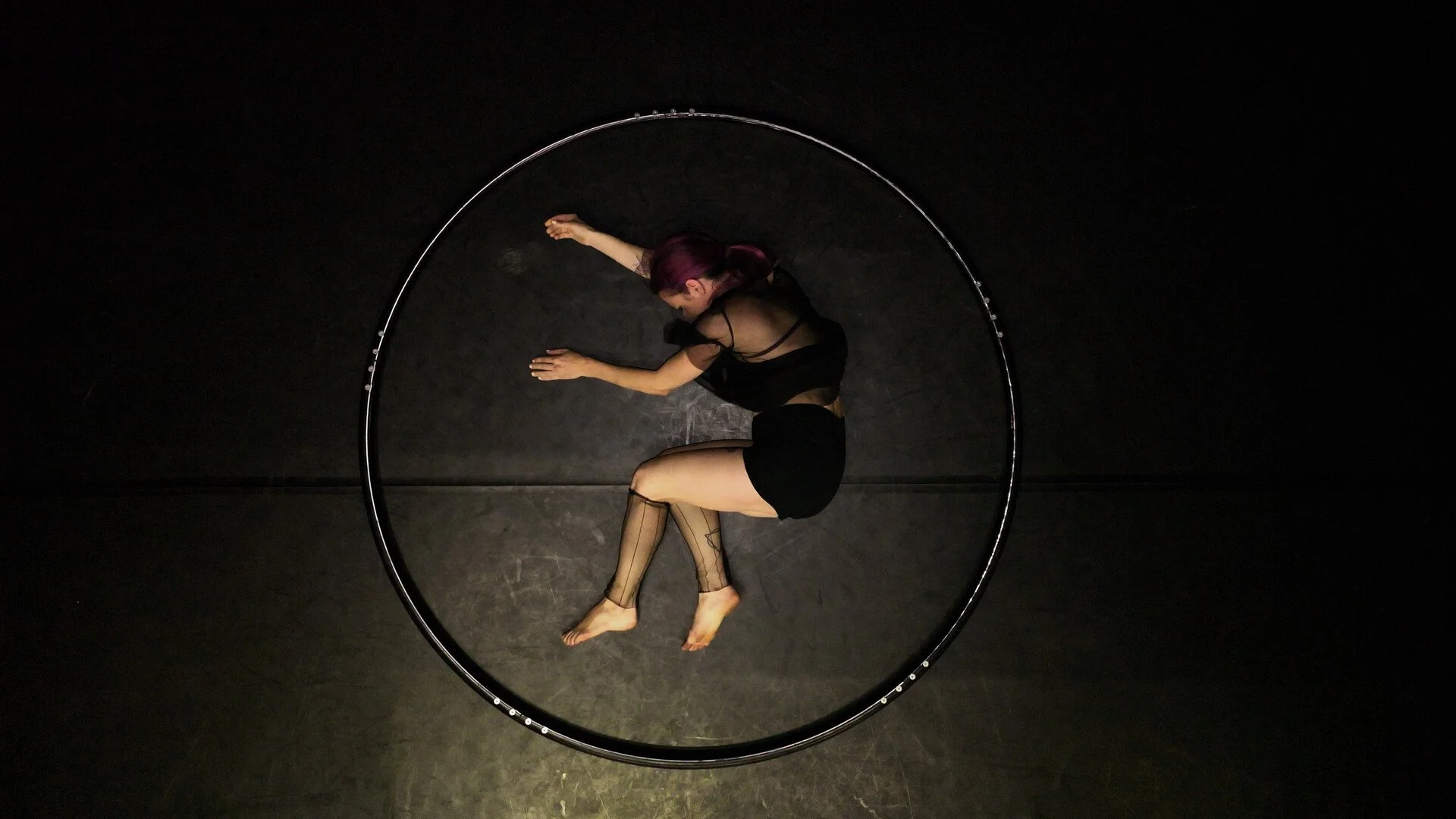
4. The title The Circle feels simple yet loaded. What kinds of “circles” are we witnessing, emotional, systemic, societal, biological?
The movie examines the dynamics inherited to the vicious circle of trauma and re- traumatization and the adaptive cycle of self-organization and evolution. The circle is a metaphor for the complex dynamics of growth, conservation, collapse and renewal. These different elements of the cycle are demonstrated in the movie. Also, there are cycles within each cycle.
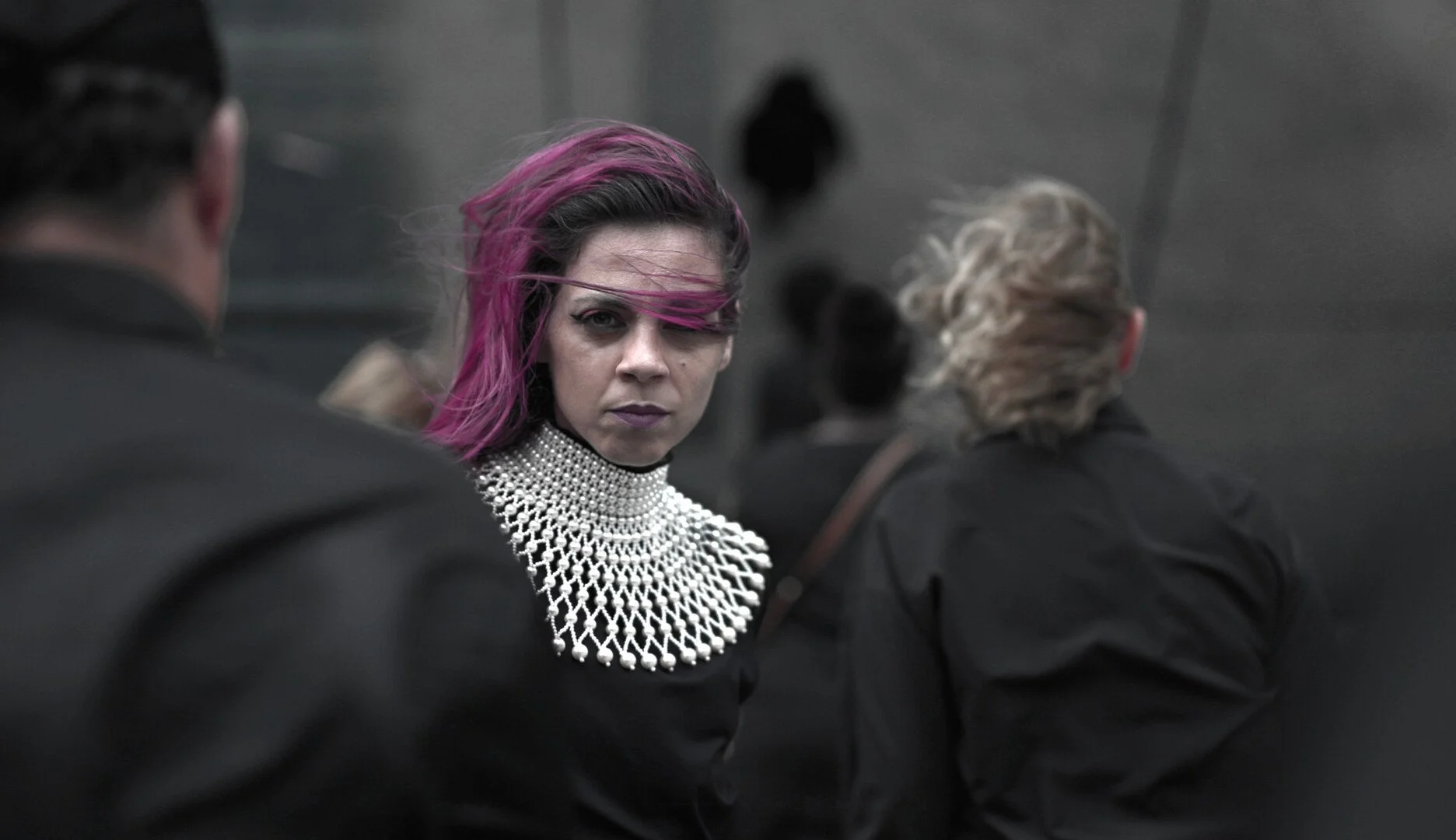
We follow the character facing the repetitive countless ineffective psychological treatments, and meaningless legal proceedings that determine the distinct repetitive maladaptive behavior that eventually reinforces the trauma rather than alleviate it. We are confronted with the failure of both society and the systems to effectively support a traumatized person. As a result, the character becomes increasingly isolated and trapped in a vicious circle of re-traumatization. But life is also characterized by the inner ability each and every individual has to access her/his own healing capacity. This restorative power can get us out of the vicious circle and enable us to narrate new stories based again on repetitive patterns. This ability to generate connections between the different cycles, between the past and the future, between themselves and the others and eventually between trauma and rehabilitation is the essence of rehabilitation.
The film highlights the failure of social, legal, and healthcare systems. How did you balance personal experience with structural critique?
Systemic change places significant demands on those who design and implement policies intended to improve existing structures. It requires not only technical knowledge and flexibility, but also a deep sense of responsibility, a strong ethical foundation, and the capacity for sustained self-reflection. Systems themselves are, at their core, instrumental and functional; they acquire meaning and consequence only through those who represent and enact them. When these representatives lack the necessary ethical awareness, reflexivity, or care, the resulting harm can be profound and far-reaching. Confronting the shortcomings of a system is therefore both difficult and enduring work. It is a long-term process that demands perseverance, mental stability, and financial resources, as well as persuasive capacity, analytical clarity, and strategic thinking. Yet more essential than any of these is the presence of a supportive safety net and a well-grounded motive. My own need to address these systemic shortcomings emerged from years of research, and from an even longer journey of recovery—one made possible through the presence and care of a deeply supportive group of individuals.
This is described as both documentary and experimental art film. Where does reality end and interpretation begin for you in this film?
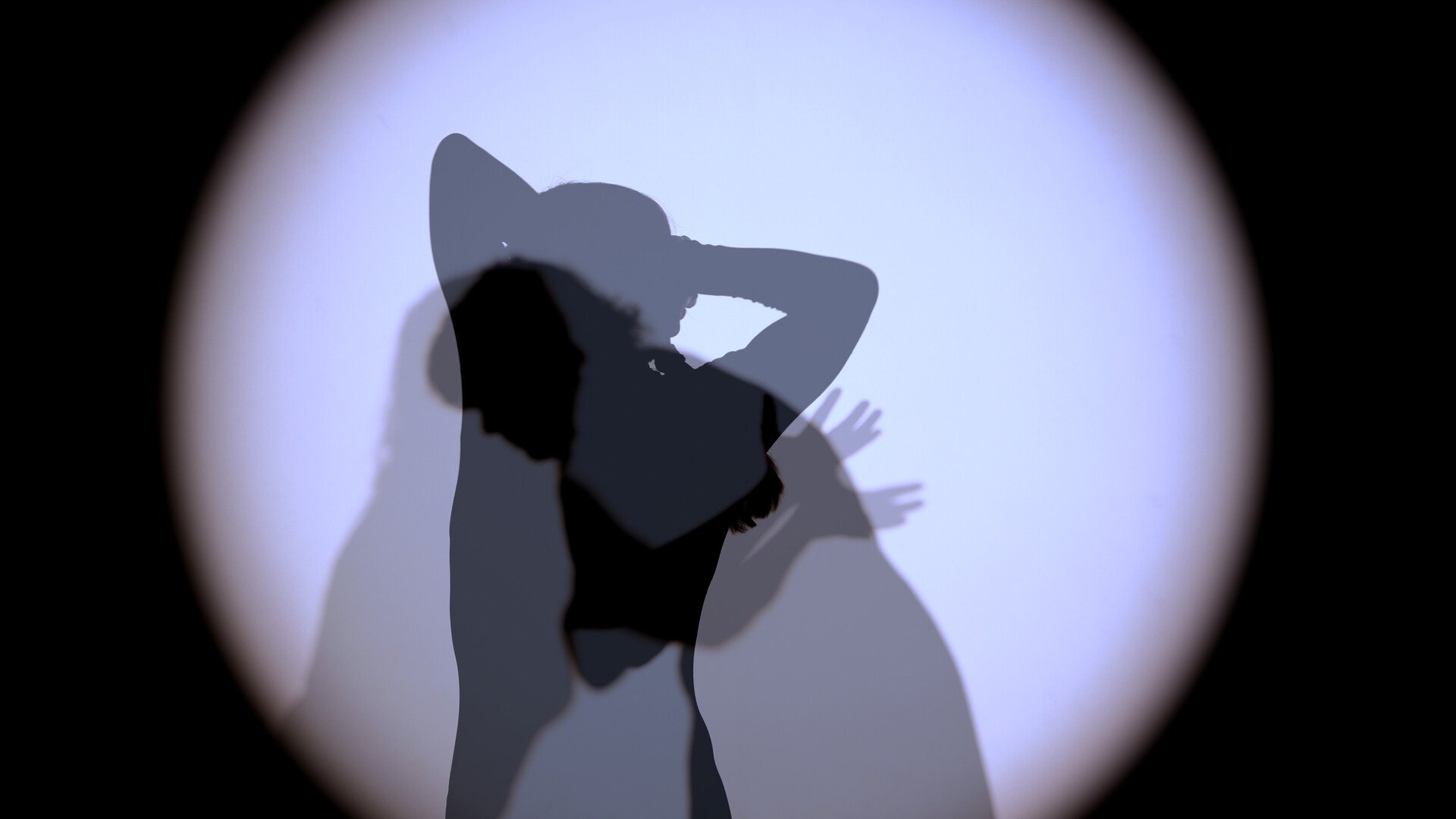
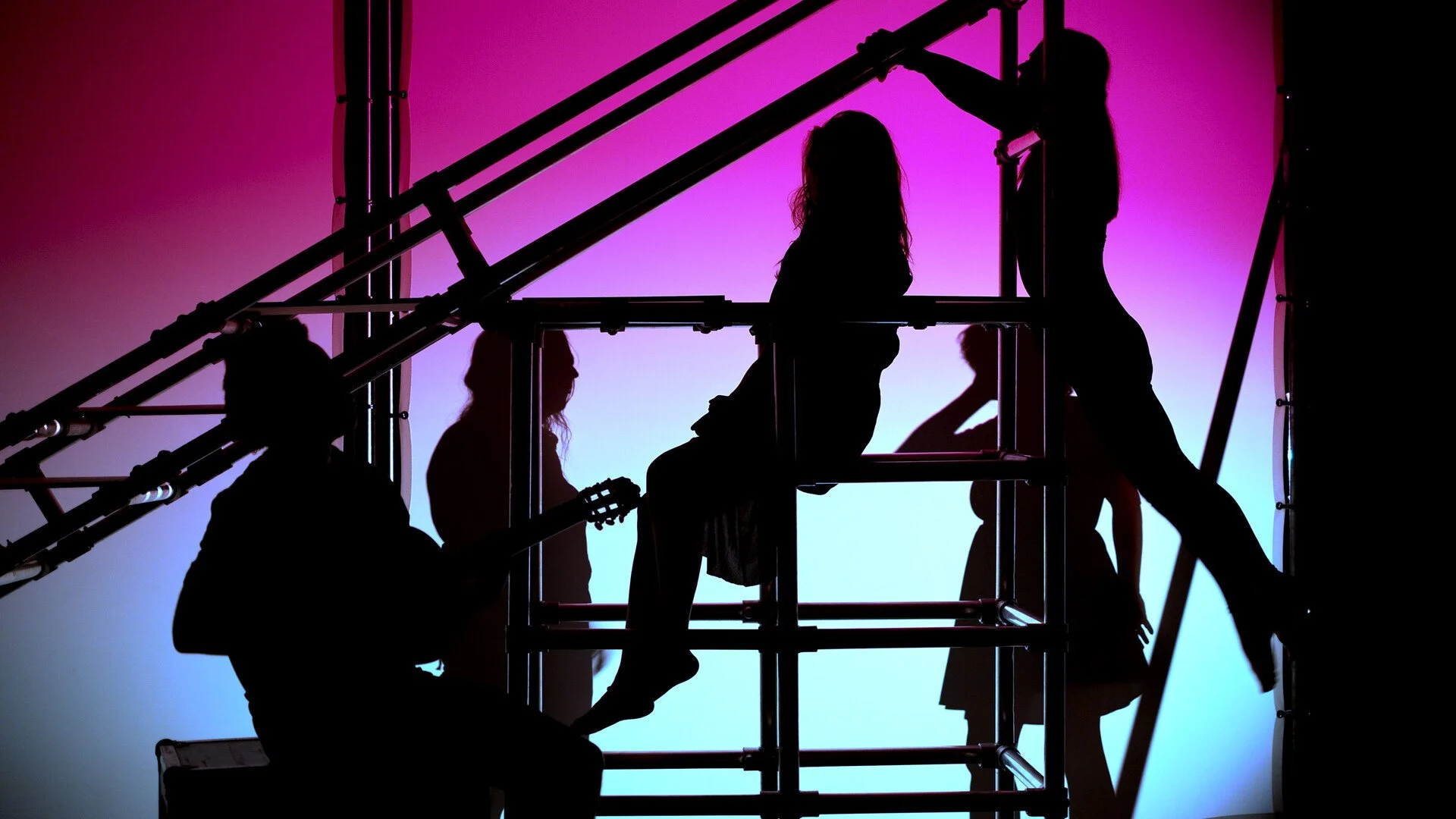
The way we view reality is constantly changing, people are now seeing the world and themselves as interconnected, rather than as individual entities bound together only by cause and effect. However our experiences are also shaping the way we perceive reality. According to Trauma expert Peter Levine, trauma is not what happens to us but what happens to our inner reality when there is no witnessing eye to empathies with us. Combining contrasting approaches such as theater and film, contemporary shadow techniques with body movement and circus art, indoor and outdoor scenes, realistic and abstract images, I investigated how this interconnectedness is affected by trauma. The scenario depicts reality in a documentary-like manner, but its elaboration occurs in symbolic and unrealistic ways. While alternating between reality and abstraction I explored the relationship between audience engagement and detachment, creating presence in absence.
Did you think of the film as something viewers “watch,” or something they physically and emotionally “move through”?
The work highlights disfunctional aspects of trauma and the way society and the mental healthcare system deal with it. The narrative and direction are designed in such a way that the viewer becomes a witness to a plot that may confront them with their own wounds, weaknesses, or even prejudices. This may be disturbing or even shocking, or it may encourage them to shed light on their own dark sides. It is still up to the viewers to decide how they want to experience the film; whether this is an emotional, physical or mental process depends on our experiences, conditioning and the way we are wired. The viewer is prepared in advance for what it will be displayed, but the movie is thought and designed to create space for the viewer to endure.
In future projects, do you plan to explore similar genre intersections, or are there other genres you're eager to explore ?
The concept of recovery and rehabilitation has occupied my thinking for a long time, not as a fixed destination, but as an open and evolving question. Recovery from trauma cannot be reduced to technique or contained within the four walls of a therapy room; it unfolds as a way of being in the world. It arises in relation—in our encounters with others, in the quality of care we give and receive, and in the willingness to remain present rather than withdraw. It is found in reconnecting with the body, in connecting with others, in learning to slow down, and in practicing gentleness, compassion, and gratitude. Recovery also demands ethical attention: acknowledgment and recognition, equality and acceptance, listening without judgment, and the careful exploration of boundaries—our own and those of others. It asks for courage and curiosity, as well as the capacity to endure pain without being defined by it. When a sufficiently safe space is created internally and collectively, a shift becomes possible. From this space, movement can occur: from unrest toward coherence, from isolation toward relation, and from survival toward resilience.
If you could sum up the film’s core question in a single sentence that would make someone want to watch it immediately, what would it be?
If I would have to choose a sentence that is representative to the essence of the film that would be: “The transformative power of trauma bends the soul, not to break it, but to carve space for new ways of being.” The impact of trauma, compounded by the absence of a trauma-informed care system, has shaped my life in profound ways—a reality I know I share with many others. Though it brought immense suffering, I have come to appreciate the transformative power of trauma. It revealed to me the intricate complexity of life and human nature, and the healing potential found in intertwining—where lives, stories, and wounds meet. It allowed me to develop many skills, increase my self-reflection, explore and stretch the edges of my own boundaries, learn to cultivate compassion for myself and others, restore the coherence of my fragmented memory and identity, and redefine my position in the world. Above all, it drew me closer to the essence of life itself, teaching me to honor my fragility and to recognize vulnerability not as a weakness, but as a form of truth.