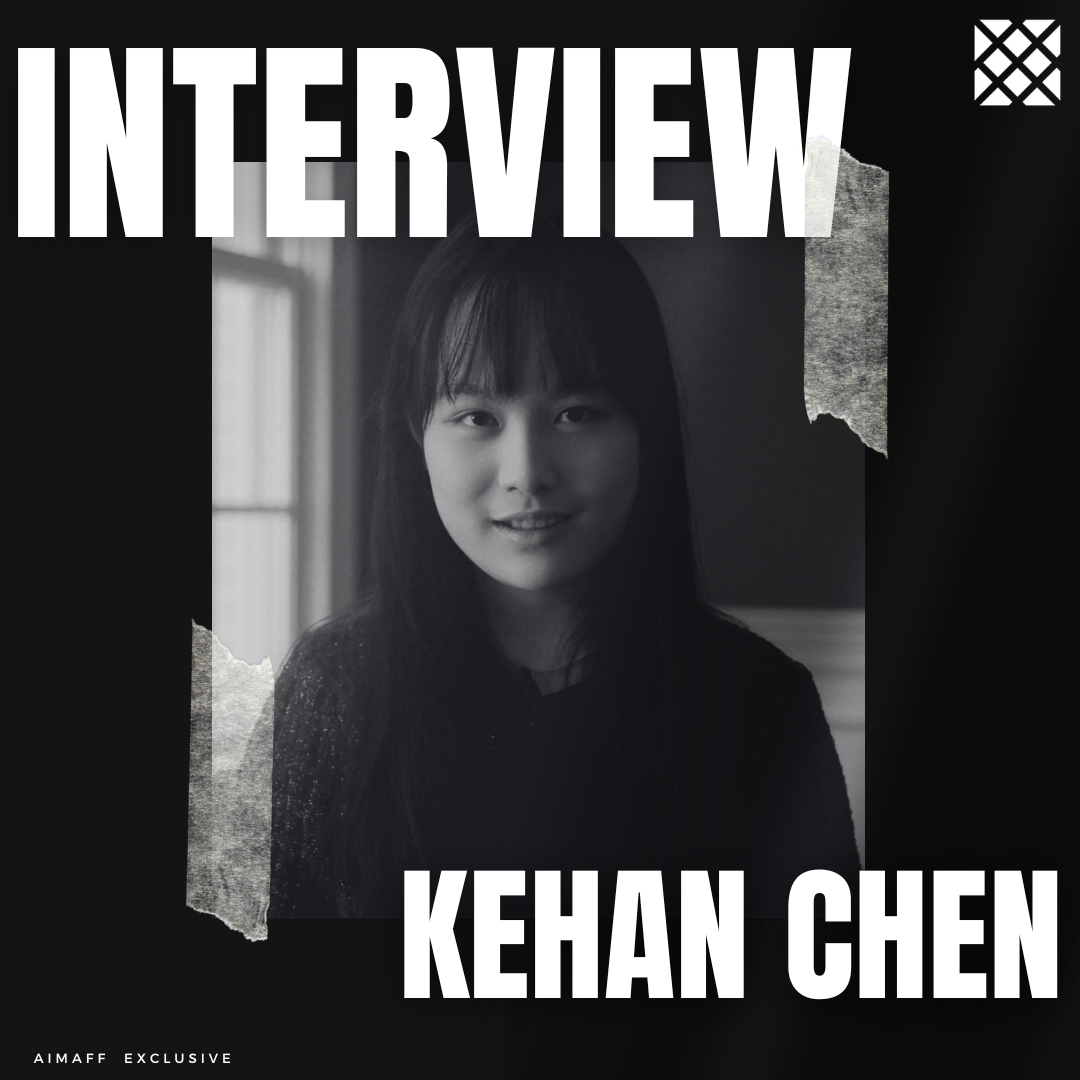
Kehan Chen and the Architecture of Silence

Welcome Kehan, we are very excited to have you today with us to discuss about your work.
Who is Kehan Chen and how did the passion for creating begin?
I'm a student, researcher, and maker of things: essays, poems, films, and sometimes organizations. I grew up between Mandarin and English, and later added Latin and Classical Chinese. That early experience of living between languages gave me something I didn't have a word for until much later: an awareness that the way something is said shapes what is allowed to exist.
My passion for creating didn't begin with a single moment. It accumulated. In eighth grade, I corrected the spelling of a classmate's Japanese name and was misunderstood for months. That small experience, my intention rewritten by someone else's interpretation, became a question I couldn't stop asking: who gets to define what something means? I started writing poems in other people's voices, then research papers about how empires construct the people they conquer, then the documentary about the structures behind that construction. Each form let me ask the same question differently. Creating, for me, is not a separate activity from thinking. It is how I think.
Can you tell us a bit about your previous work?
My primary research compares how the Roman and Han Chinese empires used language to construct "barbarian" peoples at their borders. My 15,000-word paper Structuring the Barbarians analyzed the spatial rhetoric both empires used to make conquered populations appear chaotic, disordered, and in need of imperial control. It received the highest distinction from The Concord Review's National Writing Board, one of three worldwide in eighteen months.
Before that, I traced how Caesar's ethnographic framework was repurposed by Renaissance political thinkers to justify legal exclusion. That paper was selected as the lead article in the inaugural issue of Ephebeia, published by the Paideia Institute.
Beyond academic writing, I write poetry and memoir; my work has been recognized with Scholastic Gold Keys and published in Apprentice Writer. I authored a four-part collection, The Plebeians' Battle, structured like classical musical movements. I also founded Ymbetin House, a 501(c)(3) nonprofit leading a Global Narrative Initiative across four continents, building a 150,000-word archive of narratives displaced by dominant power structures. Grammar of Power is where all of these threads — research, writing, civic action — converged into a single visual form.
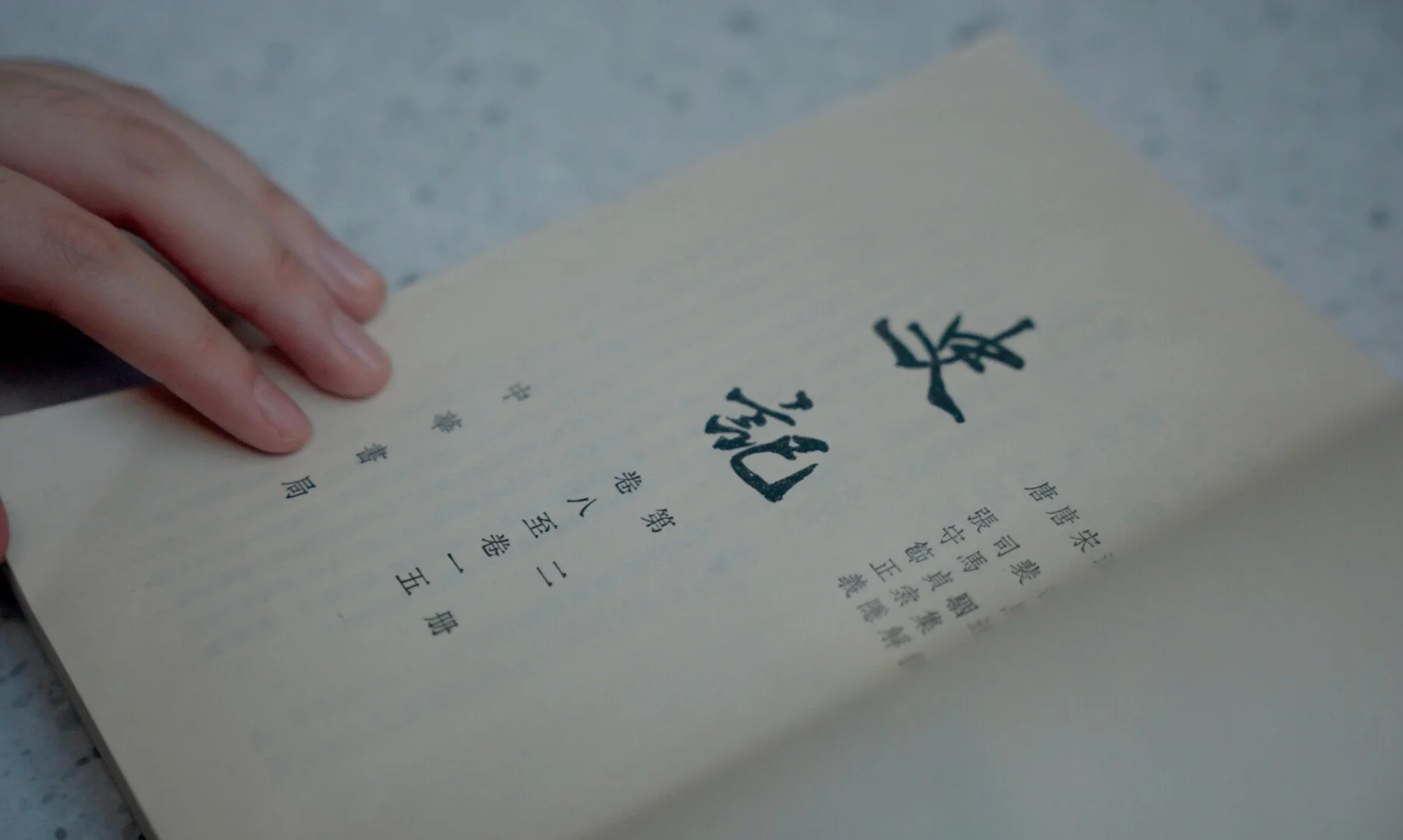
"Grammar of Power" begins not in the archive, but in silence. Can you take us back to that first moment when personal experience transformed into cinematic inquiry?
The year I turned fifteen, two silences entered my life at once. My grandfather, on the other side of the world, lost the ability to speak after an accident. A man who had called my name in a particular way — stretching the tones, half-teasing — could no longer say anyone's name. At the same time, my mother was fighting a legal case she never asked for. Anonymous letters distorted her name, her motives, everything she had done. People who hid their own names were rewriting hers.
I sat with her at the kitchen table, helping her look up English legal terms. Her Mandarin was precise. The documents did not answer in her language.
I didn't have a framework for what I was seeing then. I just knew that two kinds of silence, one where a voice was taken by time, one where a voice was twisted by people who refused to sign their names, were asking the same question: what happens to a person's identity when they can no longer speak for themselves?
It was only later, when I began reading Caesar's descriptions of the Gauls and Sima Qian's framing of the Xiongnu, that I recognized the structure. The same mechanism I had watched happen in my family, someone else's language overwriting yours, was operating at the scale of empires, across millennia, in two civilizations that never spoke to each other. The personal experience came first. The research gave it a name. The film began when I realized that naming alone was not enough; the pattern needed to be seen and heard, not just analyzed.
CONVERSATION ABOUT: ‘‘GRAMMAR OF POWER’’
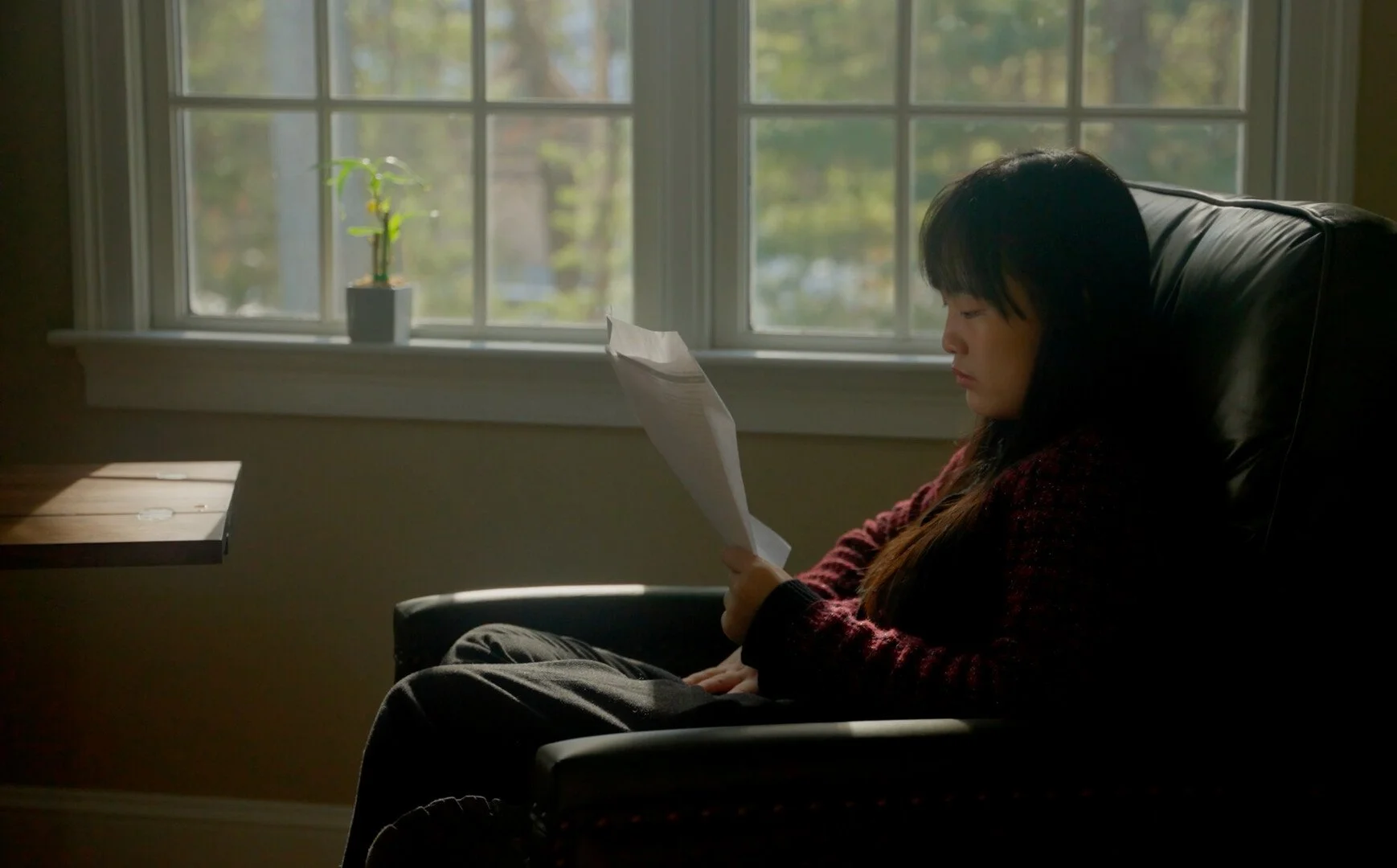
You say "silence is never empty." What does silence reveal that spoken or written language often conceals?
When an empire describes a group as "barbarian," it fills the space with its own language: categories, labels, explanations. The described group appears to have been accounted for. But if you read carefully, you notice that the empire's description is not a record of the other's voice. It is a replacement.
Silence reveals the fact of that replacement. Where there is silence in the archive, where a group has no surviving texts, no recorded speech, no self-description, that absence is not nothing. It is evidence that something was there and was overwritten. The silence has a shape, and that shape tells you what was removed.
Spoken and written language can conceal power's operations by making them sound natural, even elegant. Caesar's Latin is beautiful. That beauty is part of the mechanism. Silence, by contrast, cannot disguise itself. It simply sits there, waiting to be read by someone who knows what to look for. That is what I mean when I say silence is never empty. It is full of evidence, if you learn how to listen.
The title "Grammar of Power" is striking. What does it mean to think of power as something with rules, syntax, and structure?
A grammar is a set of rules that determines which combinations of elements produce meaning — and which are excluded. When I say "grammar of power," I mean that imperial domination is not arbitrary. It follows patterns.
In both Rome and Han China, I found the same structural moves: first, define foreign space as unstructured: "bristling with forests," "having no walled cities." Then, define the people within that space as extensions of its disorder: nomadic, unstable, cognitively incomplete. Finally, present imperial expansion not as aggression but as the introduction of order into chaos. This three-step sequence — spatial disorder, human disorder, moral necessity — is the grammar. Once you see it, you recognize it everywhere: in ancient conquest, in colonial rhetoric, in twentieth-century urban renewal.
The word "grammar" matters because it implies that this is learned, systematic, and reproducible. It is not a single tyrant's cruelty. It is a structure that any power can adopt. And because it is a structure, it can be analyzed, deconstructed, and — eventually — rewritten.
You transformed a 15,000-word comparative study into a cinematic experience. What was the biggest challenge in translating dense scholarship into visual storytelling?
The biggest challenge was resisting the urge to explain.
In a research paper, you build an argument step by step. The reader follows your logic. In a film, the viewer follows their senses. If you try to replicate the paper's argumentative structure on screen, you get a lecture with images, not a film.
The breakthrough came when I stopped asking "how do I show my argument?" and started asking "how do I make the viewer feel what I felt when I first read these texts?" What I felt was not intellectual satisfaction. It was unease — the recognition that beautiful, precise language was being used to make people disappear.
So I designed the film around that feeling. I used silence to force the viewer into the gap between what is said and what is meant. I juxtaposed ancient and modern footage without narrated transitions, letting the viewer's own pattern recognition do the work. The parallel between Caesar's frontier and Boston's West End is never stated explicitly. It is shown.
The scholarship is all there: every claim in the film is supported by my research. But the film's job is not to prove. It is to make you see.
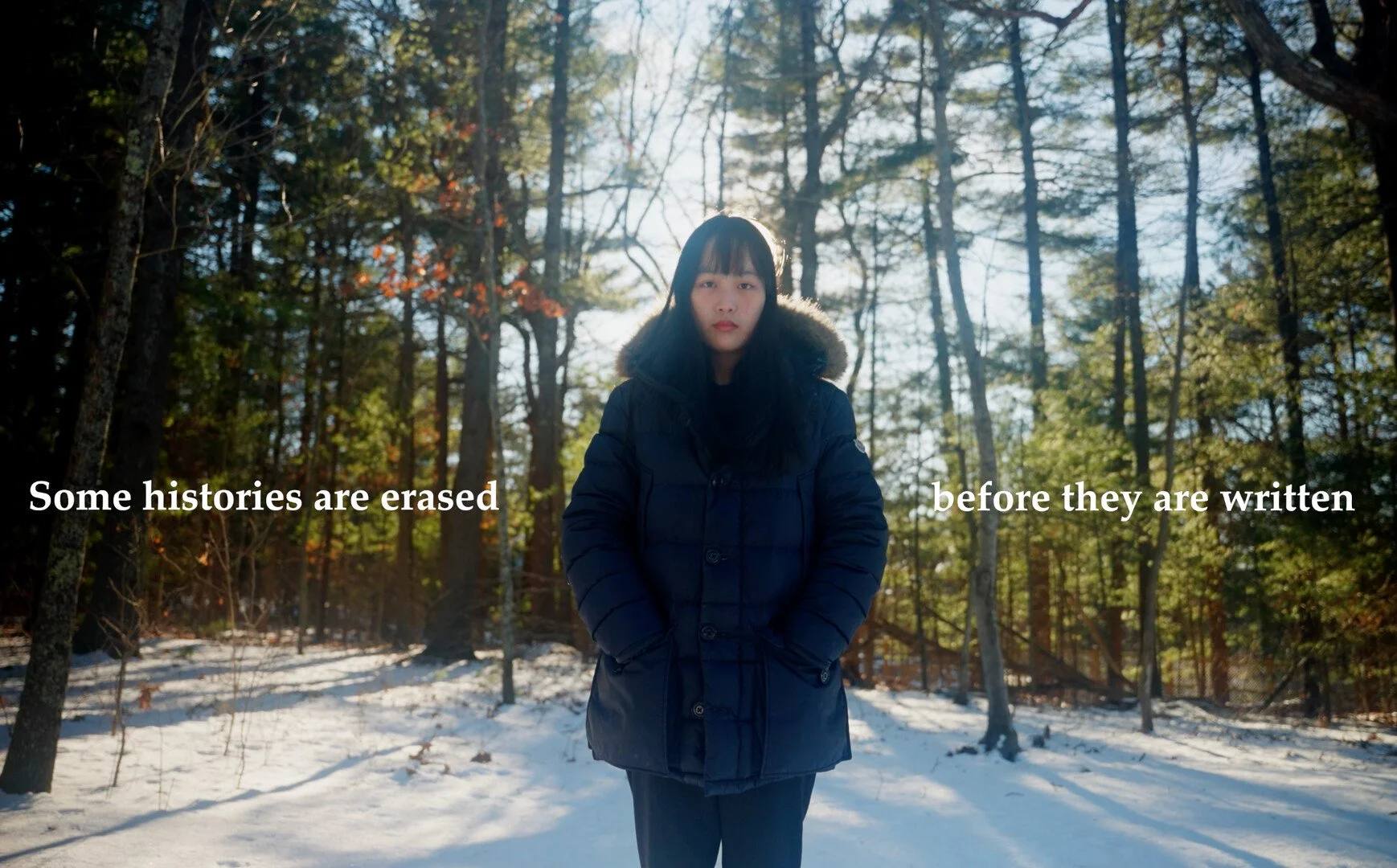
What do you hope viewers feel when they confront the parallels between ancient empires and modern systems?
I hope they feel recognition — not shock.
Shock implies that what they are seeing is exceptional, an aberration. But the point of the film is that it is not exceptional. The same rhetorical strategies that Rome and Han China used to justify expansion were used in twentieth-century Boston to justify demolishing the West End. The logic is not ancient or modern. It is structural. It recurs because it works.
When I show the West End — a neighborhood labeled "blighted" and "slum" before the bulldozers arrived — I want viewers to notice the grammar. The community was not destroyed by bulldozers first. It was destroyed by language first. The word "blighted" did the same work as Caesar's "bristling with forests": it turned a living place into a void that could be filled by something else.
I hope viewers leave the film not thinking "that was terrible" but thinking "where is this happening now?" Because it is happening now. Every time a community is renamed, from "neighborhood" to "blight," from "people" to "problem", the grammar is at work. If the film does its job, viewers will start hearing that grammar in the language around them. And once you hear it, you cannot unhear it.
In future projects, do you plan to explore similar genre intersections, or are there other genres you're eager to explore ?
I am deeply interested in sound as a medium for humanistic inquiry. This summer, I am producing a podcast, which explores how historical voices are replaced rather than simply silenced. The podcast does something my paper and film cannot: it lets the listener hear the difference between a fabricated voice and a real one. When you read about that difference on a page, you understand it. When you hear it with your ears, you experience it. That distinction matters to me.
I am also writing a new play. My previous work, Last Door on Charles Street — an original historical drama about Boston's West End displacement — received a Superior rating from the International Thespian Society and advanced to the national finals. I want to continue working at the intersection of archival research and live performance, where historical voices can literally re-enter a room through actors' bodies.
Ultimately, I do not think of these as "genre intersections." I think of them as different frequencies of the same signal. The research paper, the film, the podcast, the play — each one asks the same question in a medium that reveals something the others cannot.
If you could sum up the film’s core question in a single sentence that would make someone want to watch it immediately, what would it be?
What if the language that built empires two thousand years ago is still demolishing neighborhoods today?