Cosmic Rhapsody: Five Minutes Between Earth and Infinity
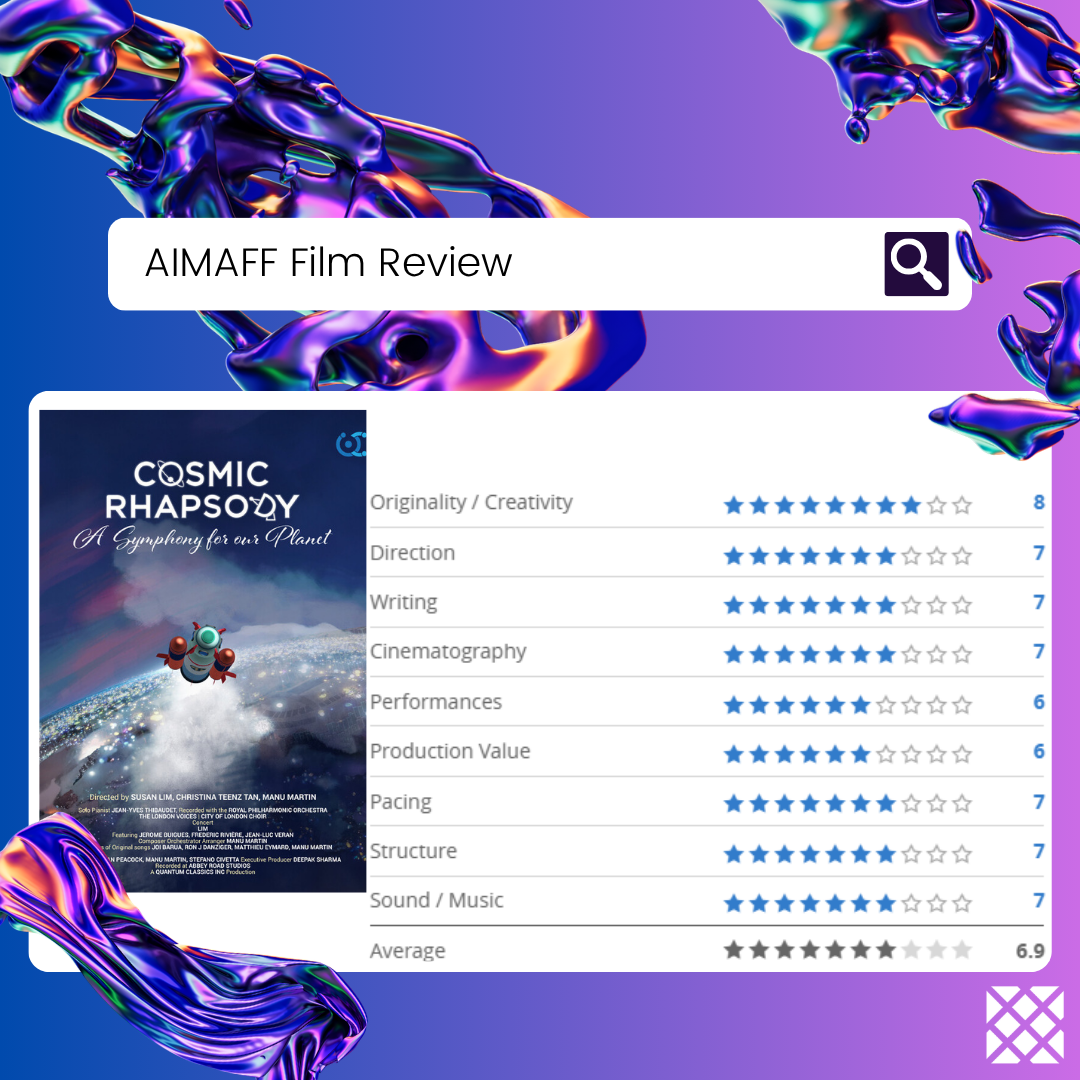
There is something distinctly human about looking upward when everything down here seems to be falling apart. Cosmic Rhapsody: A Symphony for Our Planet, created by Susan Mey Lee Lim, Manu Martin and Christina Teenz Tan, takes that instinct and turns it into a five-minute audiovisual overture, part ecological warning, part cosmic daydream, part orchestral act of defiance.
Born from the strange paralysis of 2020, when pandemic anxiety and environmental catastrophe seemed to arrive in tandem, the film finds its counterpoint in humanity's renewed voyage into space. Earth burns and astronauts ascend.
It feels experimental without becoming deliberately obscure. Its environmental message is direct, even brave, but its strongest moments come when words and ideas recede and the imagery is allowed to converse with Manu Martin's music. And what music it is. Recorded at Abbey Road Studios, the composition lends the film a scale its brief running time could never achieve alone. Strings rise and recede like celestial tides; suddenly five minutes begin to feel considerably larger.
Visually, the film shares that sense of scale. Its strongest images possess an almost exhibition-like quality, particularly when animation and cosmic imagery begin bleeding into one another. In fact, Cosmic Rhapsody may be even easier to imagine looping across an enormous wall in a contemporary art museum than sitting neatly inside a traditional cinema programme. There is something installation-like about its construction.
That format also exposes its principal weakness. Dramaturgically, there isn't quite enough gravitational pull connecting the individual ideas. A stronger dramatic progression or one central idea given more room to breathe, could have transformed its collection of powerful impressions into a more piercing emotional journey.
It is ambitious, earnest and occasionally overwhelming but never timid. It doesn't pretend to know whether technology, exploration or human ingenuity will save us. Instead, it raises its orchestra toward the cosmos and asks a much older question: if this tiny planet is the only home we have, what kind of future are we composing for it?