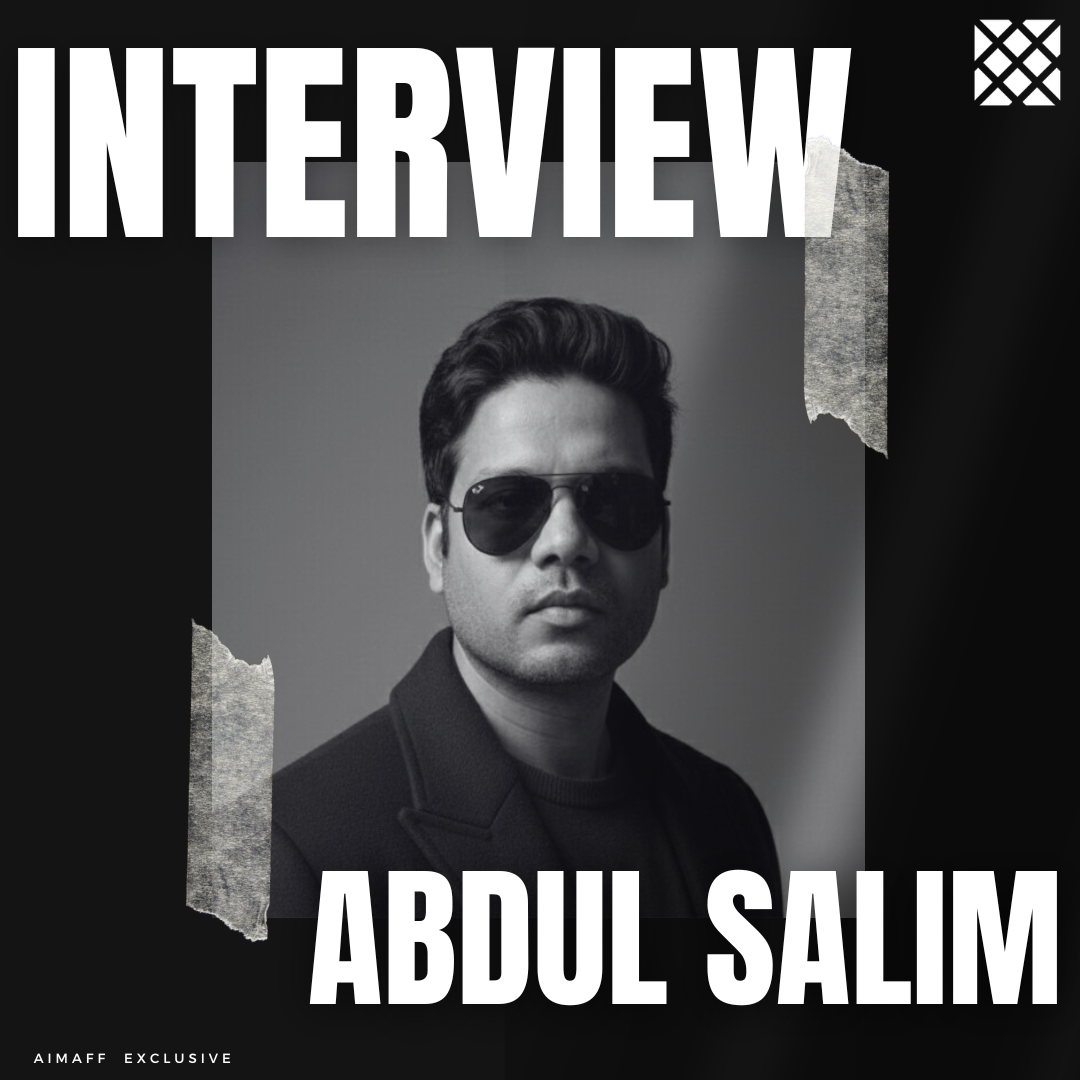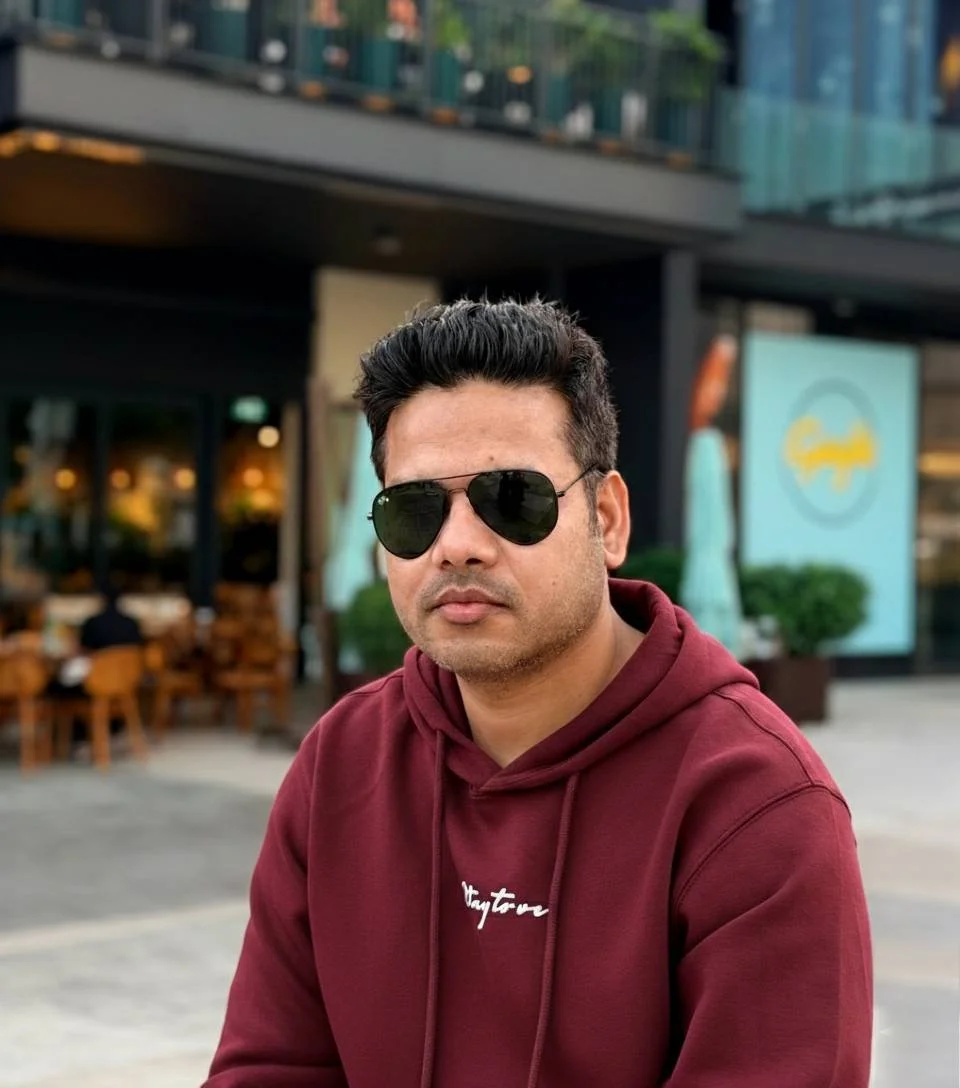
Welcome Abdul, we are very excited to have you today with us to discuss about your work.
Who is Abdul Salim Lodhi and how did the passion for creating begin?
My name is Abdul Salim Lodhi, and as an artist, I go by Captain Wisam. I have been creative since childhood, and my passion for art was noticed early in school. I loved painting, performing, and exploring artistic expression. During college, I began writing and composing songs, sharing them with friends, while pursuing a Master’s in Computer Science. After moving to Abu Dhabi in 2009 for a career in software development, my artistic instincts continued to guide me, I was always writing, composing, and imagining music.
In 2019, I attempted to produce a professional song in Mumbai, hiring musicians and a singer. While the experience taught me a lot, I realized that my vision wasn’t fully realized through others, which led me to step back and continue creating independently.
In 2025, I discovered AI tools, and my technology background allowed me to quickly explore their potential for creative expression. AI became my collaborator, helping me compose music, generate videos, and bring my imagination to life exactly as I envisioned. It rekindled the artist within me, allowing me to merge music, writing, direction, and cinematography into solo projects. Today, I am a solo artist blending Hollywood-style imagination, emotion, and AI technology, aiming to share my unique artistic vision with the world.
Can you tell us a bit about your previous work?
I officially began my journey as a solo songwriter, director, and visual creator in May 2025. My first music production experience was in 2019 with a song titled “Dilliwale Thumke.” While it did not fully represent my artistic identity, it became a valuable learning phase that helped me understand the importance of creative control.
Since 2025, my work has evolved into complete audiovisual storytelling. I create not only songs, but entire music videos—handling imagination, concept development, direction, editing, and visual narrative as a solo artist using AI tools. My primary focus is Hindi music with strong emotional depth and cinematic presentation.
One of my most significant works is “GUZARA,” a sci-fi, feel-good romantic Hindi song created entirely by me. It features high-level writing, poetic lyrics, and visually rich AI-generated animation, and it has received multiple awards and recognition in India.
In addition, I created a short musical film focused on women empowerment, where music and visuals merge to tell a powerful social story. I have also collaborated internationally on projects like “WE RISE,” a global unity song produced during the 360 Music Deal – Global Sync Album (Studio Hackathon), featuring artists from multiple countries and designed for worldwide licensing and long-term royalties.
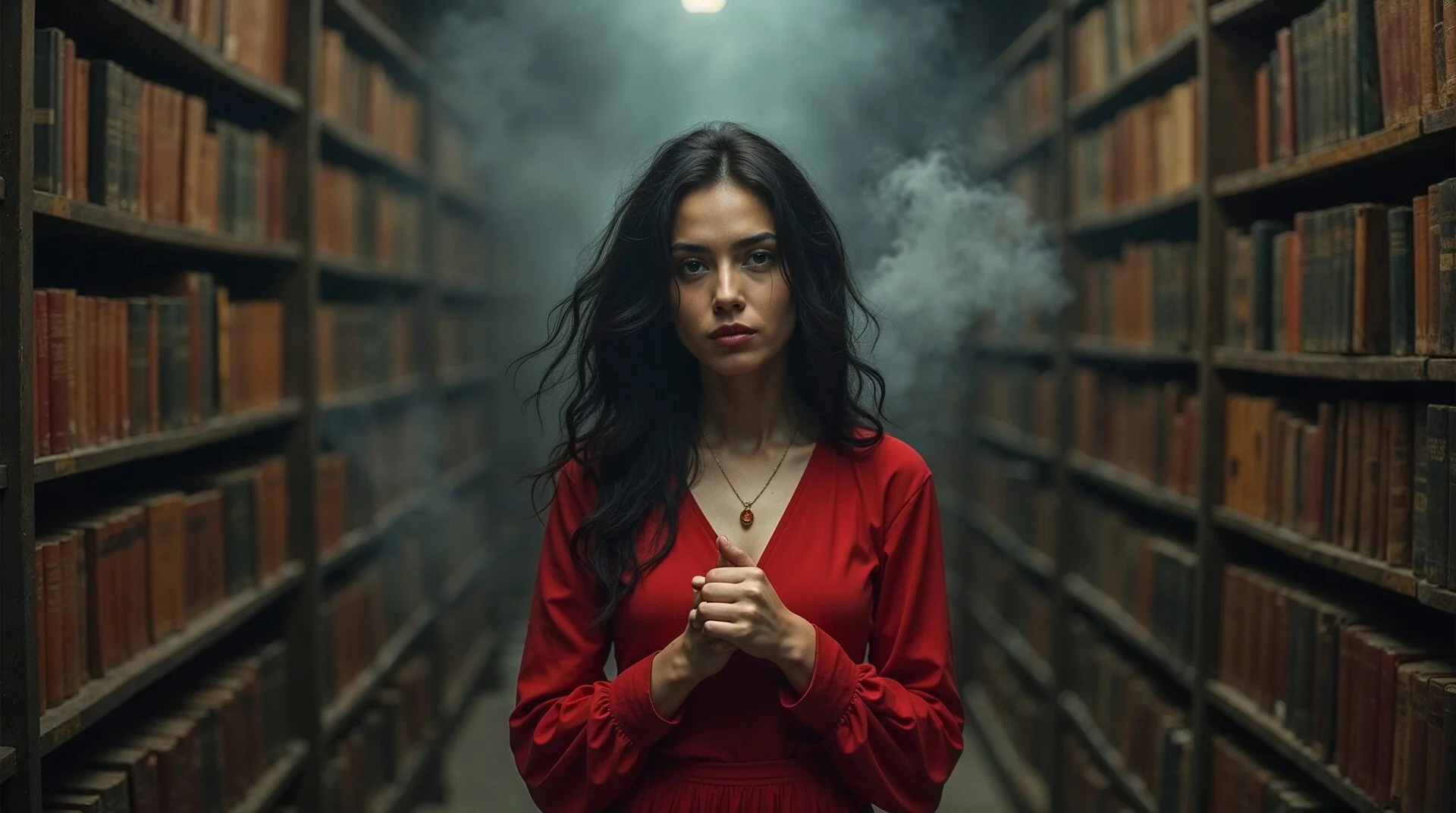
Was this song born from a personal emotional experience, or from observing the emotional journeys of others?
This song was born from a combination of personal emotional experiences and observing the emotional journeys of others. I am a deeply creative person, and I constantly learn from people, their lives, and their stories. Bollywood and Hollywood films have played a major role in shaping my emotional understanding, teaching me how emotions can be expressed through music, storytelling, and visuals.
Along with this, I have experienced many emotional ups and downs in my own life, especially in relationships and love. Even though I am naturally a happy and positive person, these experiences helped me develop a deeper understanding of vulnerability, longing, and emotional depth. As I grow older, my emotional maturity and understanding of human life continue to evolve.
I also love traveling and experiencing different cultures, which allows me to observe emotions across different societies. These influences reflect strongly in my writing, cinematography, and music. The song is not based on a single story, but on shared human emotions—shaped by my own life experiences, the stories of people around me, and the emotional language I absorbed from cinema.
CONVERSATION ABOUT: ‘‘Faith in Love’’
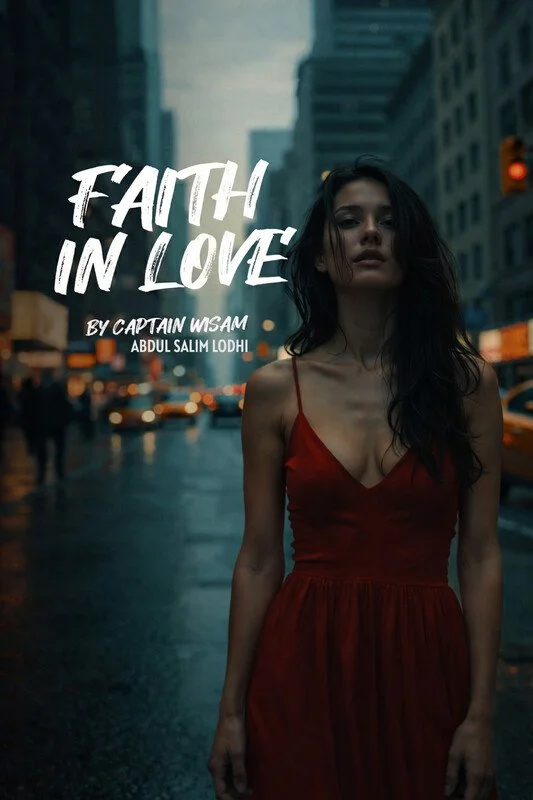
You have 18+ years in AI and IT. At what point did you realize AI could become part of your artistic language, not just your profession?
After more than 18 years working in AI and IT, I always saw technology as a professional tool—something meant for logic, systems, and problem-solving. For a long time, my artistic and technical lives existed separately. The turning point came in early 2025, when I began exploring modern AI creative tools out of curiosity rather than work.
As I experimented, I realized AI could translate imagination into visuals, music, and movement much faster and more precisely than traditional workflows. With my background in technology, understanding prompts, models, and creative control came naturally. What truly changed my perspective was seeing AI respond to emotion—how a carefully written prompt could reflect mood, atmosphere, and feeling. At that moment, AI stopped being just software and started becoming a creative collaborator.
For the first time, I could fully control my artistic vision without depending on large teams or external interpretation. Writing, direction, cinematography, editing, and music composition could all flow from a single emotional idea. AI allowed me to express what I had always carried inside but could not previously execute at this scale as a solo artist.
That realization reshaped my creative language. AI did not replace my imagination—it amplified it. Today, technology and emotion are no longer separate for me. They exist together, allowing me to tell deeply human stories through a new artistic medium.
Did AI ever surprise you creatively during this project, producing something you wouldn’t have imagined on your own? How do you maintain emotional authenticity when working with synthetic or AI-generated elements?
Yes, absolutely—AI surprised me many times during this project. It can create costumes, locations, and faces with an extraordinary level of detail and cleanliness. The styling, makeup, textures, and outfits often appear perfectly refined, as if everything is already prepared and polished. In many moments, AI produced visuals that felt even more cinematic than what I had originally imagined.
At times, AI also shifts the direction of imagination itself. It can take a simple idea and expand it into something larger, more expressive, and visually richer. In that sense, AI doesn’t just follow instructions—it blends with your imagination and offers unexpected creative possibilities.
However, working with AI is a serious art form. It requires patience, precision, and a deep understanding of emotion. It is not as easy as many people assume. Achieving the right output takes time, experimentation, and strong creative judgment.
To maintain emotional authenticity, I remain fully involved in every decision—selecting, refining, editing, and shaping the AI-generated elements until they align with the emotional core of the story. AI may generate visuals, but the emotion, intention, and final meaning always come from a human place.
What do you hope someone going through heartbreak feels after watching Faith in Love? Is this song more about healing, remembering, or accepting?
I hope that someone going through heartbreak feels seen, understood, and emotionally held after watching Faith in Love. Heartbreak often leaves people feeling invisible, as if their pain has no voice. This song is meant to become that voice—a gentle reminder that their emotions are real and shared by many.
Faith in Love is not only about healing; it is also about remembering and accepting. Remembering the love without denying the pain, and accepting that sometimes love ends even when it was sincere. The song allows space for grief, reflection, and quiet strength, without forcing closure or quick recovery.
Through its lyrics and visuals, I wanted to create a calm emotional journey where pain is acknowledged, not hidden. Even when faith in love feels broken, there is honesty in that loss. Acceptance becomes the first step toward healing—not by forgetting, but by understanding.
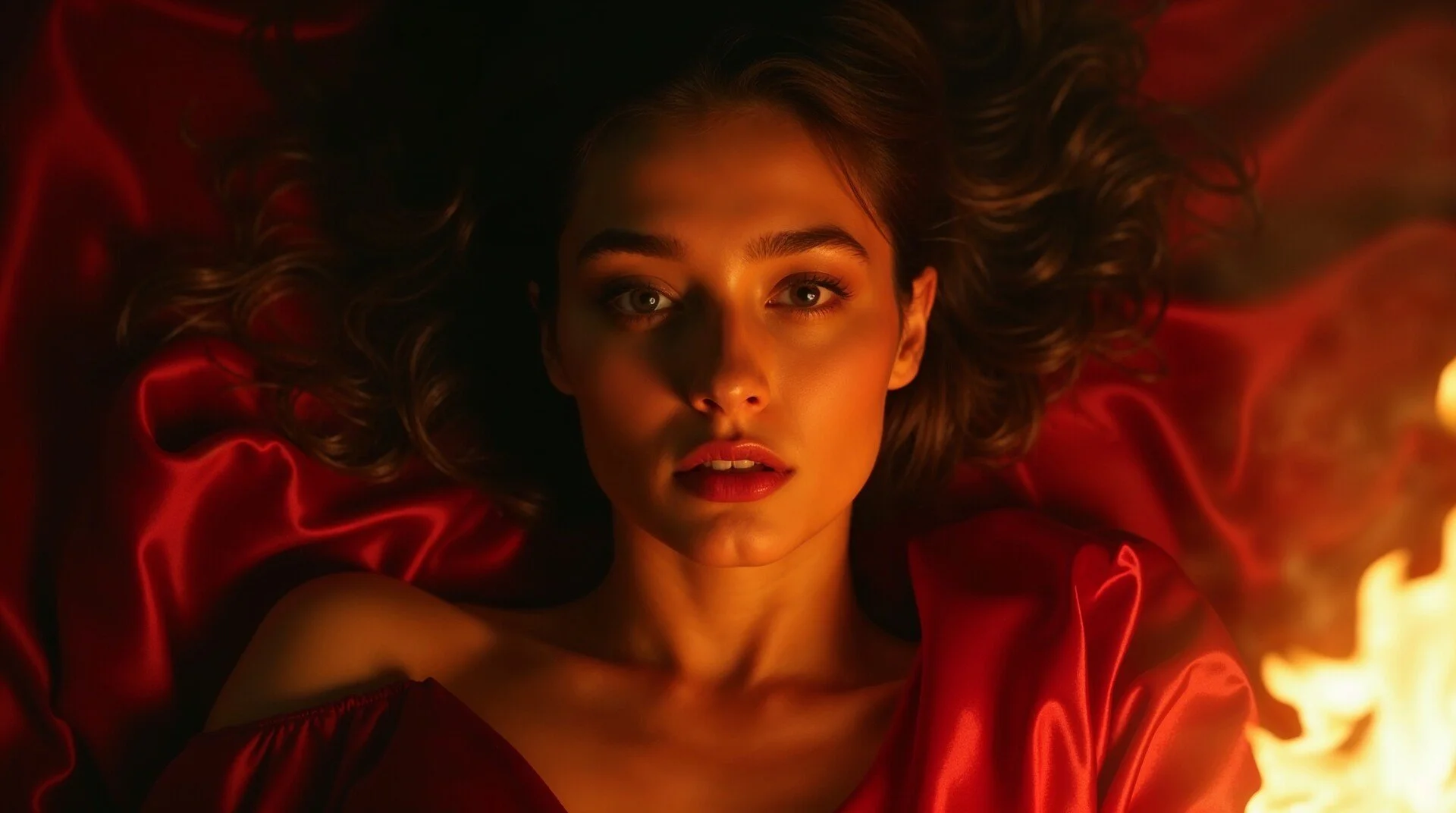
Which single frame or lyric from the project feels most personal to you?
The lyric that feels most personal to me is:
“Loved you like my only prayer, but you hurt me more than you’ll ever know.”
This line captures the essence of deep, vulnerable love—giving everything sincerely, yet experiencing profound pain. It resonates because it reflects not just heartbreak, but the quiet intensity of devotion, faith, and emotional honesty. For me, it is the emotional core of Faith in Love, where love becomes spiritual, personal, and almost sacred.
Visually, the most personal frame is a quiet, solitary moment: the central figure standing alone under a vast, stormy sky, representing the aftermath of loss and the space where reflection begins. There is no dramatic gesture, only stillness. That silence mirrors the emotional truth of heartbreak—the part that lingers when words and tears are done.
Together, the lyric and frame express the duality of love and loss—the beauty and pain that coexist. They capture the deeply personal journey I wanted to share with the audience: that love shapes us profoundly, even when it ends. This combination of imagery and words is where my own artistic voice and emotional experience meet, making it the most personal moment of the project.
Ultimately, the song is a companion for broken hearts. It doesn’t promise answers; it offers emotional truth, comfort, and the reassurance that feeling deeply is not a weakness, but a form of strength.
In future projects, do you plan to explore similar genre intersections, or are there other genres you're eager to explore ?
I am not tied to any particular genre. As a writer and visual creator, I love experimenting across styles and formats. My work spans cinematic Hindi songs, sci-fi-inspired music, feel-good romantic tracks, and even party anthems. Each project allows me to explore new emotional landscapes and visual storytelling techniques.
In one of my upcoming projects, I am creating a short musical film and song that I believe is unlike anything produced in the world before. It blends narrative, music, and AI-generated visuals in a way that I have not seen elsewhere. This reflects my belief that art should constantly evolve, push boundaries, and surprise both the creator and the audience.
I am passionate about trying experimental ideas, exploring new genres, and merging technology with emotion. For me, creativity is a journey of discovery, not limitation. My focus is on originality, emotional depth, and immersive experiences, and I look forward to seeing where experimentation will take me next. Every new project is an opportunity to redefine what music and visual storytelling can be.
This project blends technology and emotion so deeply. At the end of the day, what do you think matters more: the tools we use, or the feelings we share?
At the end of the day, it is always the feelings we share that matter more than the tools we use. Technology and AI are incredibly powerful—they can bring imagination to life, create visuals, compose music, and make ideas tangible—but they are only a medium. Without emotion, these tools are just sophisticated machines.
In Faith in Love, AI allowed me to produce music, visuals, and cinematic storytelling exactly as I imagined, but the heart of the project is human emotion: love, heartbreak, hope, and acceptance. The tools amplified my vision, but they did not create the emotional truth. That comes from lived experience, empathy, and the willingness to express vulnerability.
Tools can make the impossible possible, but it is the feelings behind them that connect with audiences, move hearts, and create lasting impact. AI and technology are enablers, not replacements for human expression. At the core of any artistic work, what resonates is the honesty, intention, and emotional energy shared between the creator and the audience. That is what makes art timeless.