Welcome Vasiliki, we are very excited to have you today with us to discuss about your work.
Who is Vasiliki Kannou and how did the passion for creating begin?
I am 21 years old and I am from Greece. I have been in love with the Arts since I can remember myself. I have been dancing since I was 8 and as a child I would find any excuse to make my friends create silly TV shows or fake concerts that we would star in.
I always knew that I wanted to be an actor, but as a shy person I felt like I couldn’t pursue it. Directing came as a blessing in disguise when I didn’t get accepted to my first university choice.
Since day one of studying directing, I fell in love with the knowledge and started feeling like I was finally on the right path. Since then, my passion has only grown stronger. Every time an idea comes to life, creating makes me feel full of life and puts all my thoughts at ease.
Can you tell us a bit about your previous work?
Escape is my first official film that I sent out to festivals. All of my previous work mostly consists of assignments for my university classes, while in the past two years I started experimenting with video art and publishing it on my Instagram page.
The Feelings Project is a series of consecutive video arts, each one exploring a different emotion. The first one, I’m Sorry, is about overthinking, over-apologizing, and the anger those feelings create. The second, Lonely, deals with isolation and the feeling of being trapped inside a box. Lastly, I Miss You explores time and grief, inspired by the loss of my great-grandfather — the first real loss I experienced.
The latest work I published was Catharsis, which is probably my most personal project. I created it to help myself process emotions and properly close a huge chapter of my life.
Your film feels almost like a dream or perhaps a memory we can’t fully explain. Did the concept come to you visually first, emotionally first, or philosophically first?
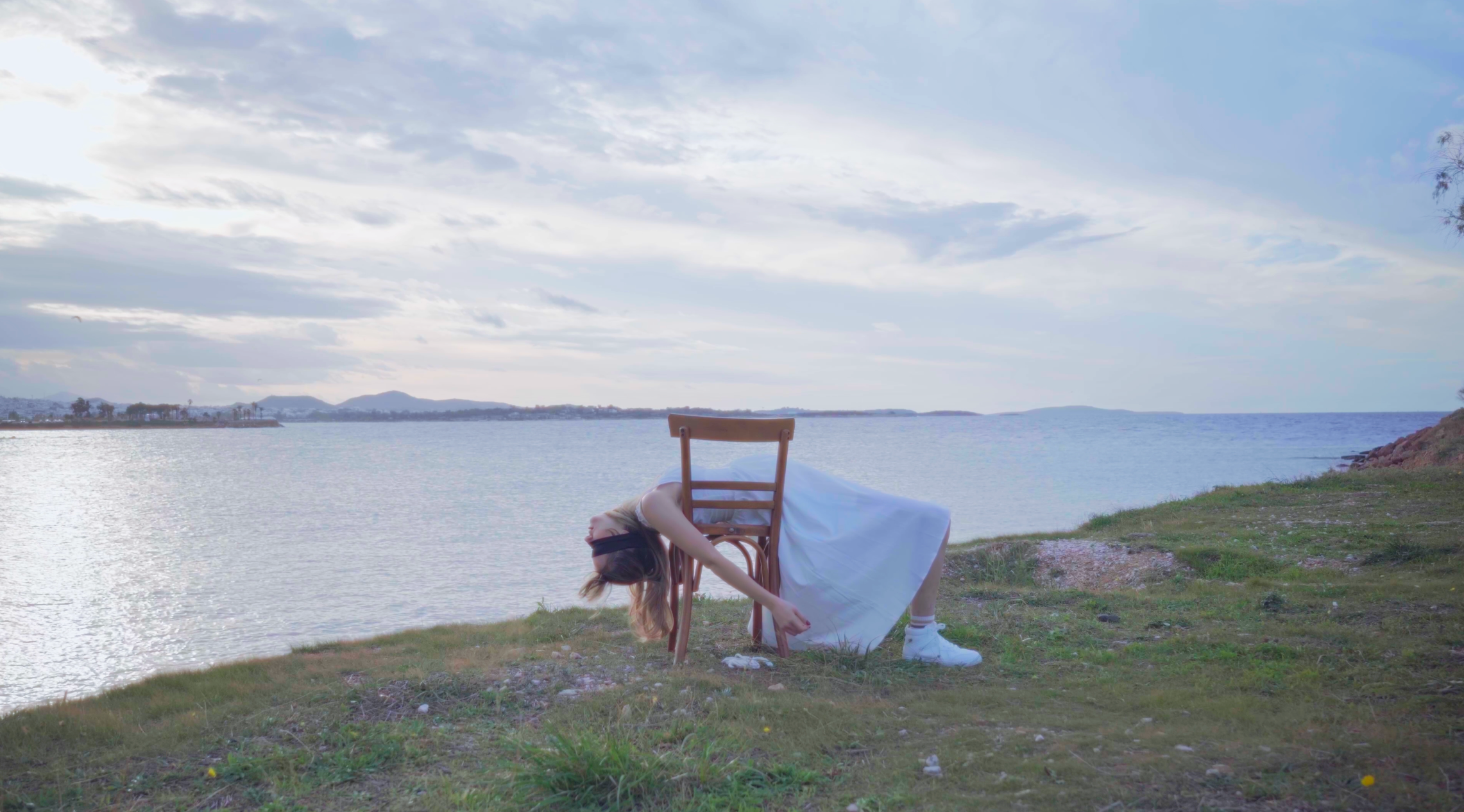
The concept of Escape came to me visually first. For about two years I had this image in my mind of a girl in a white dress running through a field, but I couldn’t find the right concept to frame it around, so I left it aside.
This year, when I felt ready to create something for festivals, I revisited all my unfinished ideas and this one stood out immediately. After a lot of thinking, the concept of freedom came to mind and I started building the visuals around that idea.
CONVERSATION ABOUT: ‘‘ESCAPE’’
The idea of freedom in the film is fascinating because it’s portrayed as both beautiful and unbearable. What interested you most about exploring freedom as something that can also be frightening?
Every project I make is connected in some way to personal experiences. For me, freedom — as important as it is — has always felt frightening. I’m not a big fan of change and I’ve often felt safer in environments I already knew, even if I wasn’t truly happy in them.
That’s what the film is about: the tragedy humans sometimes create around themselves. Someone gives you a way out, a chance to finally live freely, yet you still choose what feels familiar and “safe,” even when it’s actually hurting you.
There’s a strong physicality in the protagonist’s struggle. Did your background in contemporary and Latin dance shape how you approached body language and emotion in the film?
One of the reasons I chose to act in the film myself was because of my background in dance. When I was creating the vision in my head, I knew I wanted the protagonist to express emotions physically and vividly.
As a contemporary dancer, I’ve learned how important improvisation is in the evolution of movement. That’s exactly how I approached the body language in Escape. I created a loose choreography outline through movement research, but most of the performance was improvised based on the emotions I felt during filming.
You’ve said, “Making art is my way to express myself and navigate through thoughts and feelings.” What thoughts or feelings were you personally navigating while making Escape?
While making Escape, the main feeling I was exploring was the complexity of freedom. I wanted to show a different side of it — the reality that sometimes people subconsciously avoid freedom even when they desperately want it.
The protagonist is trapped in a restrictive situation and is finally given the opportunity to escape. But once she experiences freedom, she realizes how overwhelming and uncertain it can feel. In the end, she consciously chooses to return to what she already knows.
What was the biggest lesson you learned about yourself during the process of making your first film?
I think the biggest lesson I learned was that I can’t do everything alone. Directing and starring in the film at the same time was definitely challenging.
I honestly don’t think the final result would have been the same without the support of my colleagues. They became my eyes behind the camera, helping me understand what worked and what didn’t, and guiding me throughout the entire process.
In future projects, do you plan to explore similar genre intersections, or are there other genres you're eager to explore ?
For the near future, I think I will continue exploring experimental and video-art style films because they feel very close to my artistic identity and I genuinely enjoy creating them.
At the same time, I would love to eventually create a more narrative-driven short film. That’s definitely something I see in my future plans.
If you could sum up the film’s core question in a single sentence that would make someone want to watch it immediately, what would it be?
“When you finally have the right to freedom… do you still second guess it?”