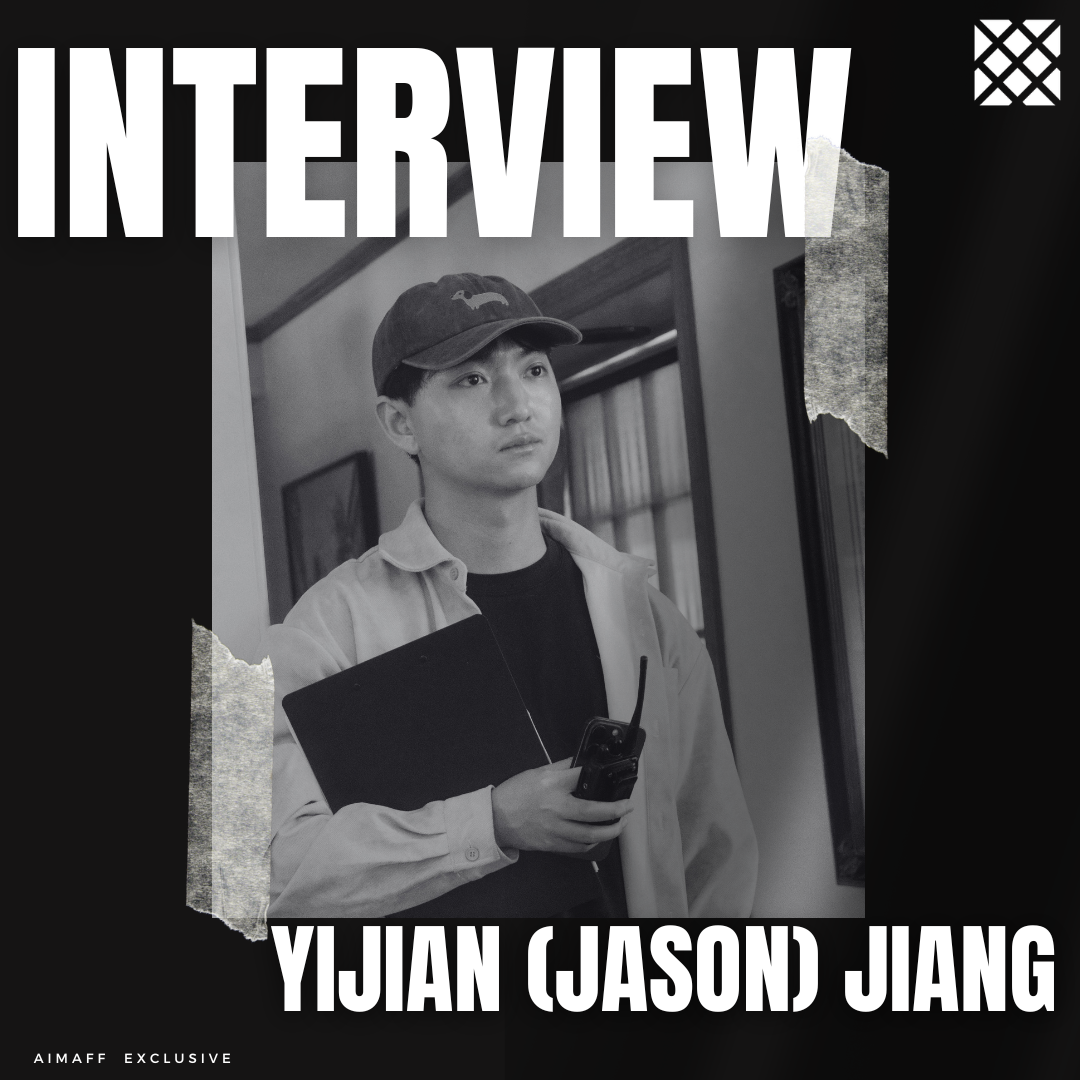
Yijian Jiang Explores the Quiet Language of Loss
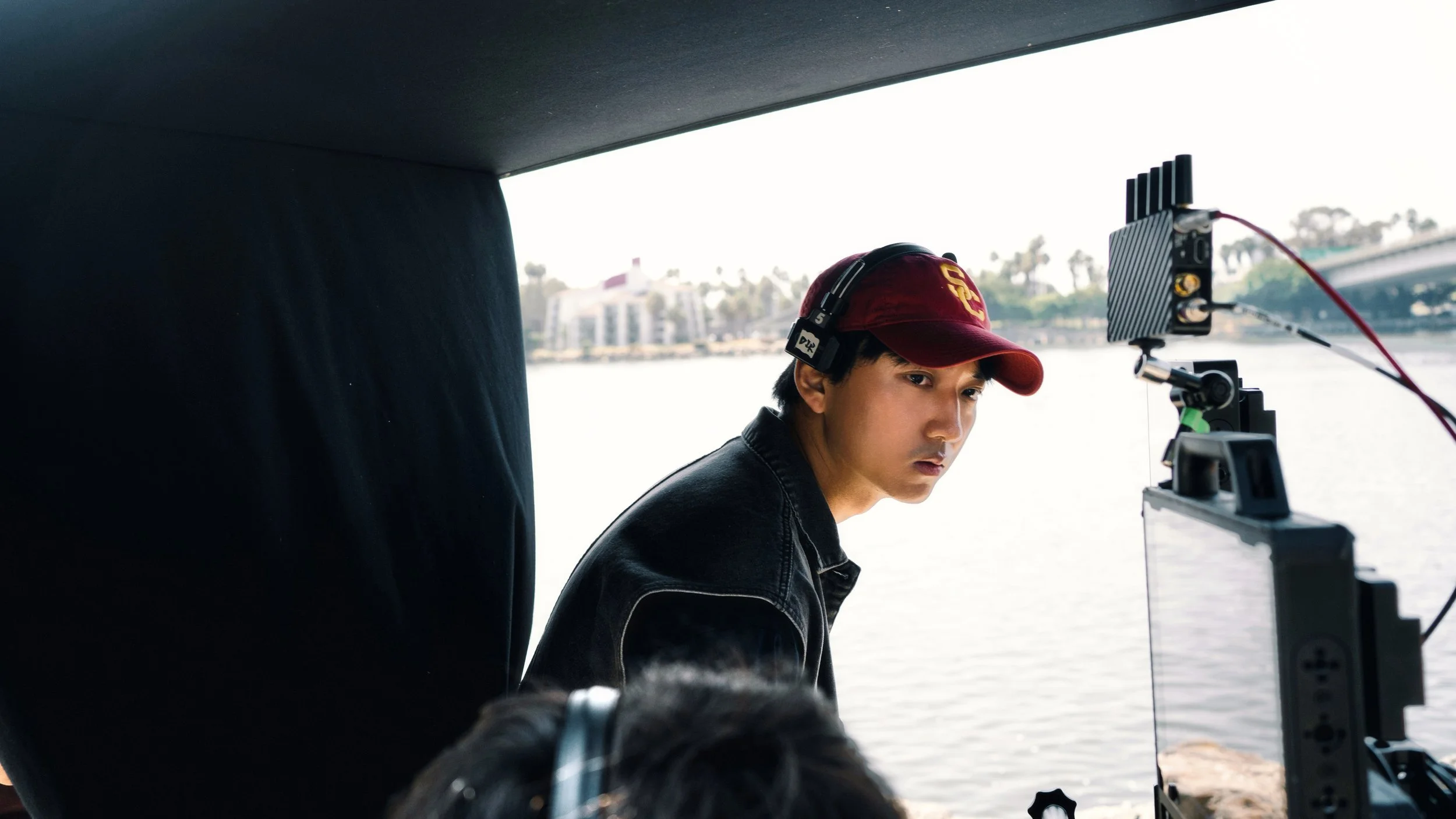
Welcome Yijian, we are very excited to have you today with us to discuss about your work.
Who is Yijian Jiang, and how did your passion for creating begin?
I’m a filmmaker who began my journey with a small video camera, capturing local and lively stories on the small island city called Macau. My passion for filmmaking pushed me to go somewhere bigger, where my emotions and creative voice could be seen and heard. That is why I flew across the world to study and make films in Los Angeles. Here, I have had the opportunity to collaborate with people who bring different perspectives and forms of creativity to filmmaking. Through these experiences, I have continued to discover not only what kinds of stories I want to tell, but also who I am as a filmmaker.
Can you tell us a bit about your previous work?
Having started making films on such a small island, much of my previous work explores isolation and the search for belonging. One of my previous short films follows a cross-border student who becomes involved in smuggling to save money for her mom. She feels isolated between two lives—one in Hong Kong and the other in mainland China—and does not feel that she fully belongs to either world. Her only hope is to give her mom a better life and eventually stay together with her, whatever it takes. Most of my films are inspired by real stories and lived experiences. My goal is to allow audiences to experience lives that may be very different from their own, while still recognizing emotions that can be universally felt and explored.
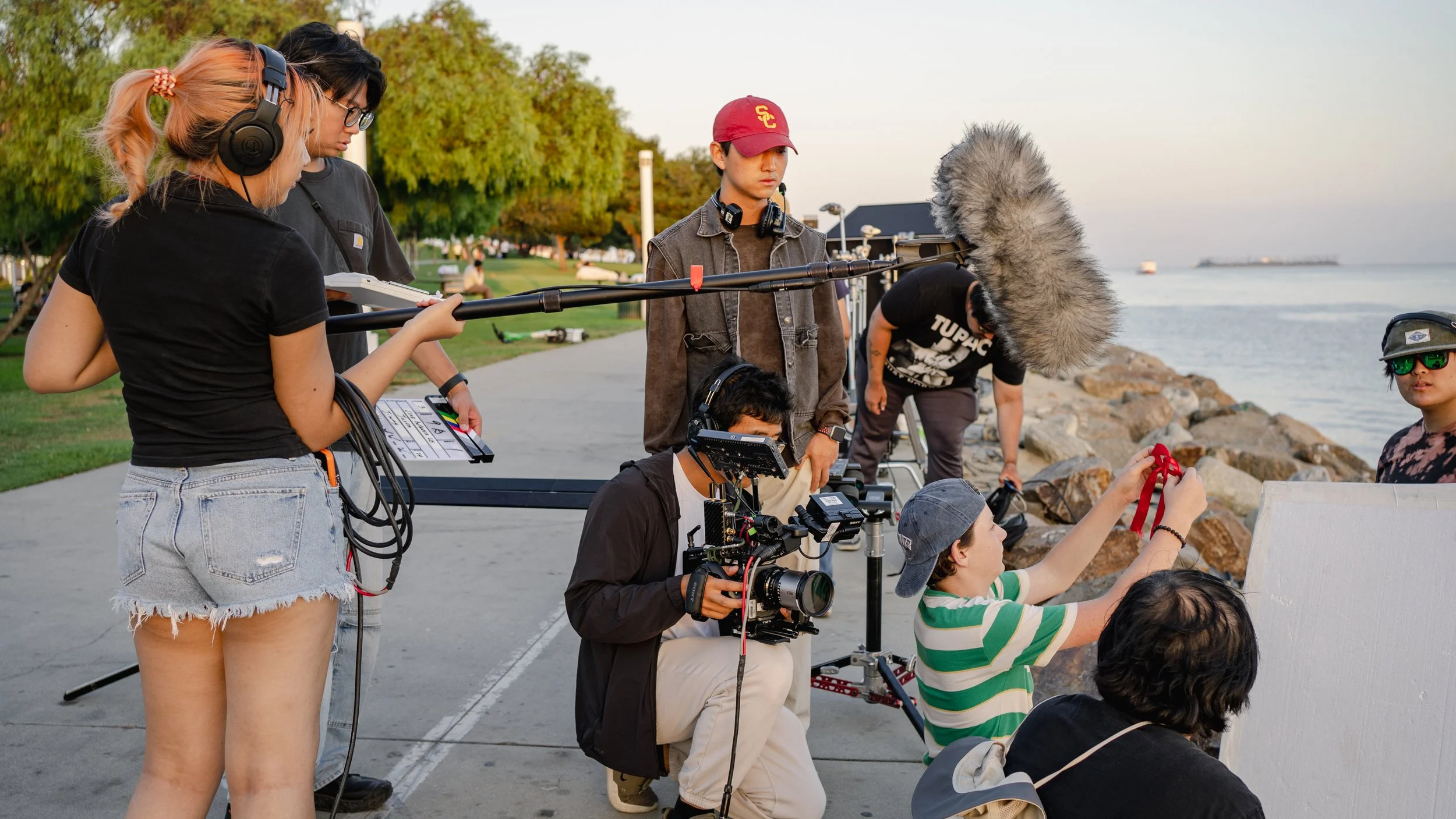
Fishing in the film feels less like an activity and more like a form of prayer. At what point did you realize ritual would become the emotional core of the film?
The original idea for The Line Between Us was inspired by my grandfather, who had many rituals and habits that no one fully understood, including his own family. After he passed away, I began to explore his world more deeply. I realized that these rituals were almost like his personal bible for living. They carried the words he never spoke and contained traces of everything he had experienced throughout his life. That realization made ritual the emotional core of the film. I wanted the audience to understand how much emotional weight a repeated action can hold, even when its meaning is difficult for others to recognize.
CONVERSATION ABOUT: ‘‘THE LINE BETWEEN US’’
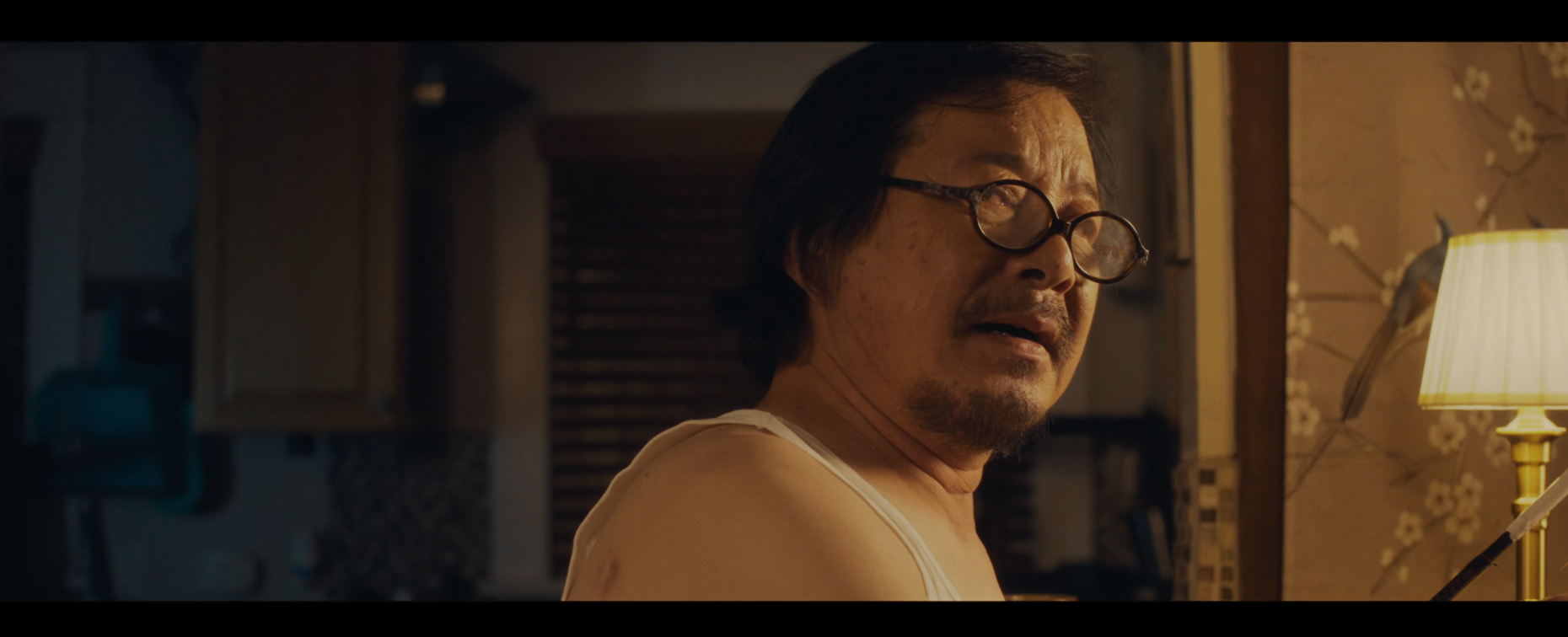
Your film explores grief in a very restrained and subtle way. Why did you choose quiet gestures and actions over direct emotional confrontation?
To me, grief is often quiet and restrained, especially for someone like Li, who has experienced many different stages and hardships in life and has chosen to protect the most beautiful parts of his memories. His pain is deep and hard to fully express through direct confrontation or dialogue. It needs to be slowly discovered. I did not want the audience to be immediately pushed into an emotional response. Instead, I wanted them to observe, feel, and gradually understand the character’s inner world. The quiet gestures—the way Li handles the fishing rod, ties the red ribbon, or waits beside the water—allow his grief to exist without being explained. These actions reveal both his love and his inability to let go.
You mentioned being inspired by La Chimera, particularly in blending memory with reality. What elements of that dreamlike emotional texture influenced your visual approach?
What influenced me most about La Chimera was the way memory feels physically present rather than separated from reality. In The Line Between Us, I wanted the past to emerge through small sensory details—the red ribbon, the fishing rod, the sounds around Li, and the movement of the sea. Instead of using clear transitions or explanatory flashbacks, I allowed memories of Li’s wife to enter the film, almost like fragments of a dream. Visually, Light, texture, sound, and repeated gestures carry much of the emotional weight. That dreamlike approach helped me portray grief not as something that has been left behind, but as something that remains physically and emotionally present within ordinary moments.
As a Chinese filmmaker working within both Eastern philosophy and contemporary independent cinema, how do those influences naturally merge in your storytelling voice?
What excites me most about filmmaking is that language is not always necessary for people to feel and understand a story. I try to move beyond language barriers by focusing on the humanity shared by both Eastern and Western characters. When I work with actors, I realize that they already bring their own unique voices, rhythms, and cultural experiences to the characters. I do not need to control every detail if I can communicate the universal emotions and human needs at the center of a scene. I hope to bring more Eastern philosophy into my future films, particularly the meanings hidden within ordinary actions. At the same time, I want these ideas to exist naturally within contemporary cinematic storytelling. I believe meaningful philosophy is never limited to one culture. When it is expressed through honest human emotions, it can be understood by audiences anywhere.
What do you hope audiences feel in the final moments of the film—comfort, sadness, hope, or something more unresolved?
There is no definitive ending to the film. Instead, there is a moment when two people from different generations and different worlds finally look at each other. There is hope in the possibility that they begin to connect. At the same time, I hope the audience can feel what the young man feels at Li—the sadness of regret, the weight of an aging life, and the realization that some wounds cannot be completely repaired. The ending is intended to remain poetic and slightly unresolved. We do not know exactly what will happen between them after this moment, but something has shifted. A small connection has been created.
In future projects, do you plan to explore similar genre intersections, or are there other genres you're eager to explore ?
Ang Lee once said that every story he makes contains certain elements that personally attract him. I feel the same way. I would love to explore different genres in my future films, including horror, comedy, and even science fiction. I am interested in how genre can create different cinematic experiences. However, no matter which genre I explore, I believe I will always search for emotional elements within stories about human connection and isolation. Those themes are deeply personal to me and continue to shape the way I understand characters.
If you could sum up the film’s core question in a single sentence that would make someone want to watch it immediately, what would it be?
Can two strangers, divided by age, culture, and grief, find connection through the very thing that first pulls them apart?