The Shape of Sound: Inside Yoona Hwang’s Silence
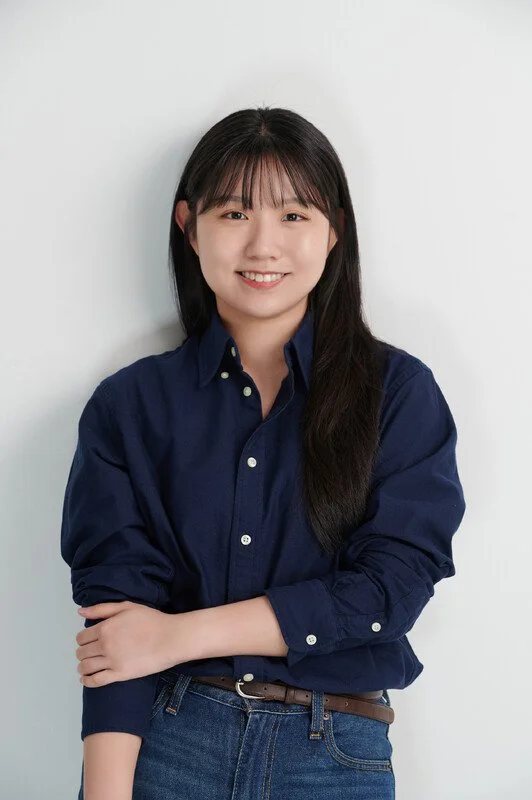
Welcome Yoona, we are very excited to have you today with us to discuss about your work.
Who is Yoona Hwang and how did the passion for creating begin?
I’m a 3D Environment Modeler and Storyboard Artist based in the United States, originally from South Korea. My passion for visual storytelling began at age seven while tracing my favorite comic books and keeping a visual diary, as I was fascinated by how drawings and speech bubbles brought stories to life. This led me to specialize in Cartoon and Animation at Gyeonggi Arts High School (GAHS). There, co-directing my first 2D short animated film, “The Way to Die,” and screening it on stage inspired me to pursue animation professionally.
While studying Media Contents & Technology at the Catholic University of Korea (CUK), a transformative semester as an exchange student at Alverno College in Wisconsin redefined my approach to art and gave me the courage to step out of my comfort zone. Driven to dive into the heart of the industry, I later earned my MFA in Animation from the Savannah College of Art and Design (SCAD). Moving to the U.S. alone was the greatest challenge of my life, but the excitement of studying what I loved fueled my professional skills in 3D animation, modeling, texturing, storyboarding, and the production pipeline.
Can you tell us a bit about your previous work?
While my filmmaking journey began with diverse media projects at CUK, my collaborative experience expanded significantly at SCAD. Notably, I served as a Storyboard Artist for SCAD Animation Studios’ “Inkwashed! (2025)” This large-scale production deepened my understanding of the pipeline and the technical demands of crafting dynamic comic action sequences.
At the same time, I have contributed to various projects as a 3D Artist. I modeled the stylized environments for “Sunburn (2025),” a beautiful short film directed by Esther Son. Since the film has a painterly, pastel-like aesthetic, I intentionally tried to simplify the geometry to preserve the unique art style rather than making it overly detailed.
Building on this, I stepped into leadership as the 3D Lead and Artist for the upcoming hybrid short animation, “Oasis Express,” produced by World of Korean Artists, where I actively executed the modeling, texturing, and rendering pipelines. Additionally, I worked as a CG Environment Modeler for an upcoming CG Production Project with Asians in Animation (AIA).
“Silence” transforms something we often take for granted, hearing, into an entirely new visual experience. What was the first spark that inspired this story?
The spark for “Silence” stems from an idea I had long wanted to explore. My interest in raising awareness about disabilities first began at Gyeonggi Arts High School, when I saw “Cane,” an animated short by upperclassmen telling a love story between a blind person and a deaf person. It made me realize that everyday experiences we take for granted are not so easily accessible to everyone.
This awareness deepened over time, particularly as I observed the accessibility challenges faced by individuals with disabilities in Korea’s transportation systems. I dreamed of creating content that would highlight the challenges faced by marginalized communities, especially individuals with disabilities. I later joined Orot, a university start-up club dedicated to creating barrier-free subtitles for the hearing impaired. There, I directed a stop-motion animated film about a character with hearing loss who relies on subtitles at a movie theater, reflecting the club’s mission.
These cumulative experiences and my ongoing interest in accessibility ultimately converged into “Silence,” inspiring me to transform the auditory experience of music into a vibrant, visual narrative that resonates with diverse audiences.
CONVERSATION ABOUT: ‘‘SILENCE’’
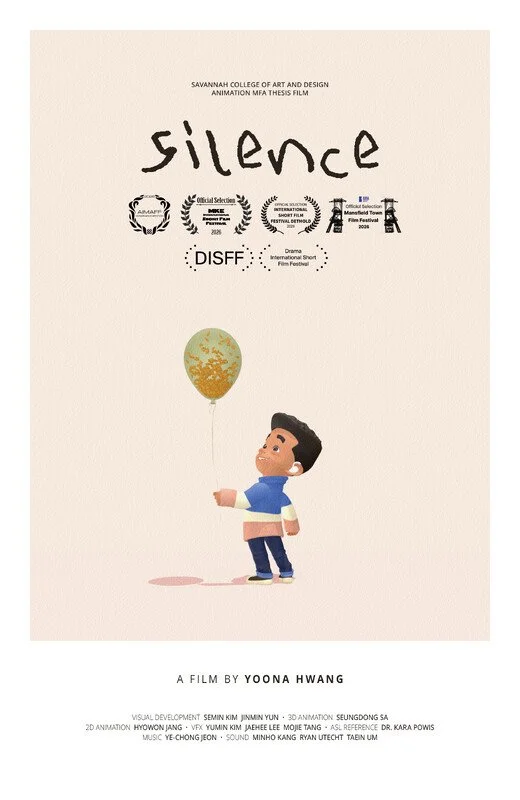
The idea that music can be felt rather than heard is beautifully explored through Tacet’s balloon. What does that balloon symbolize for you?
To me, the balloon symbolizes a bridge—a tool that transforms sound into a tactile, shared language. Initially, a balloon simply reminded me of childhood nostalgia and theme parks. However, after a friend shared how people with hearing loss use balloons and other devices to feel the vibrations, it took on an entirely new meaning as a medium for approaching culture and enjoying art.
To truly understand my protagonist, Tacet, I brought a balloon to a live performance during production. It was fascinating how well the vibrations were felt through the balloon, much more than I expected. While the paper scraps inside didn’t float as actively as the star confetti does in the film, a bit of cinematic license!), the experience confirmed that I was on the right track using the material.
Ultimately, the balloon is more than just a visual motif. It represents inclusivity, empathy, and the extraordinary ways we can connect through music beyond sensory barriers.
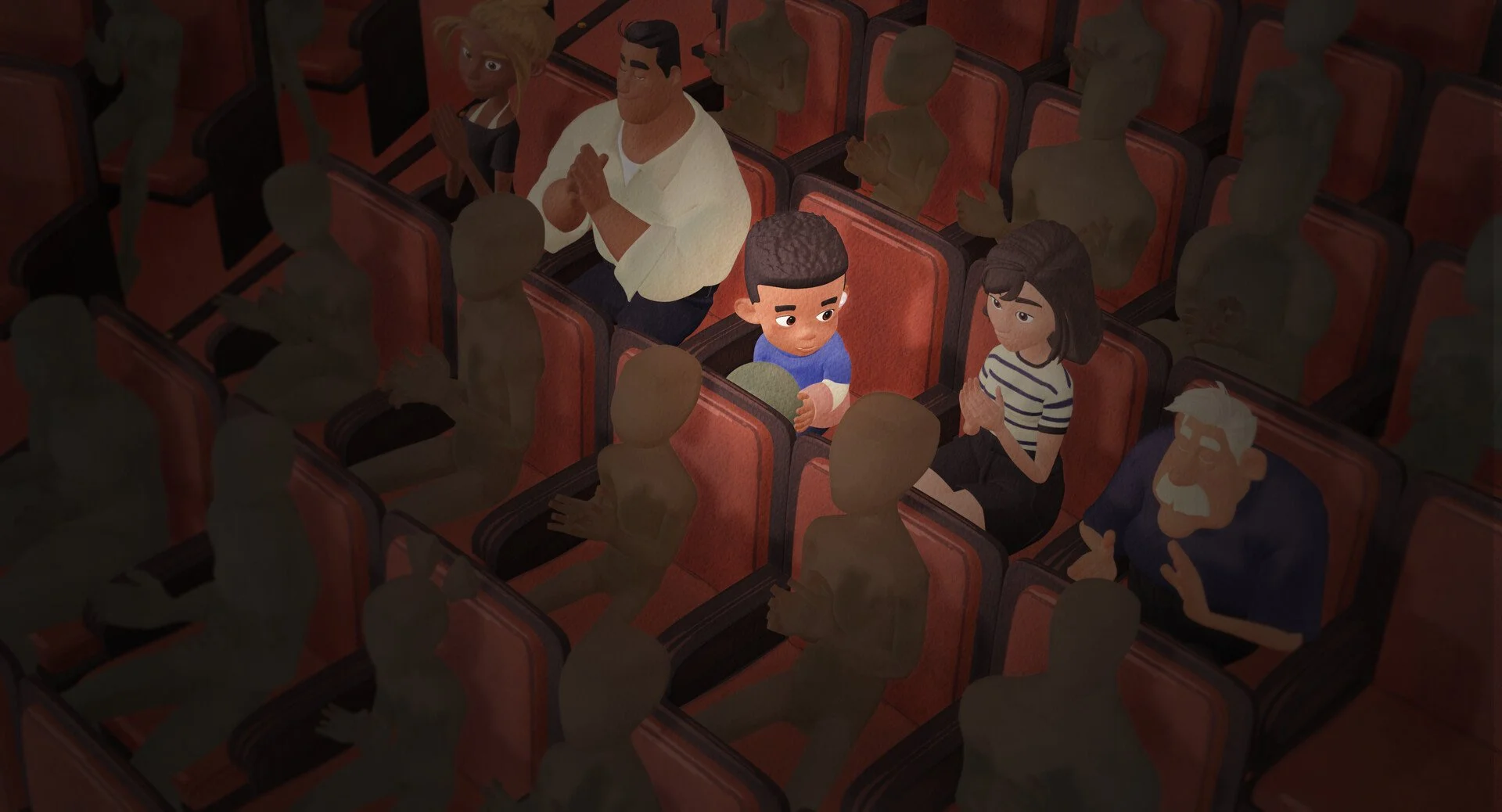
The film asks an intriguing question: can music exist beyond sound? What answer did you discover while creating it?
I strongly believe music exists beyond sound. Music encompasses both sound and silence—just as musical scores rely on both notes and rests. Sound itself is fundamentally composed of vibrations and energy, making the human body an instrument capable of feeling resonance beyond mere audition.
While creating “Silence,” I realized that music belongs to anyone willing to experience its harmony, whether through sound, vibration, or visual rhythm. During pre-production, I drew deep inspiration from the films of Oskar Fischinger, a legendary animator of visual music, particularly his work “An Optical Poem (1938),” as well as Disney’s “Fantasia (1940).” Studying how visual geometry and movement can translate musical pacing reinforced my core discovery: music is not confined to the ears. Ultimately, I discovered that music is not defined by how we hear it, but by how deeply we experience it.
As a storyboard artist, how did your background influence the way every frame communicates emotion without relying heavily on dialogue?
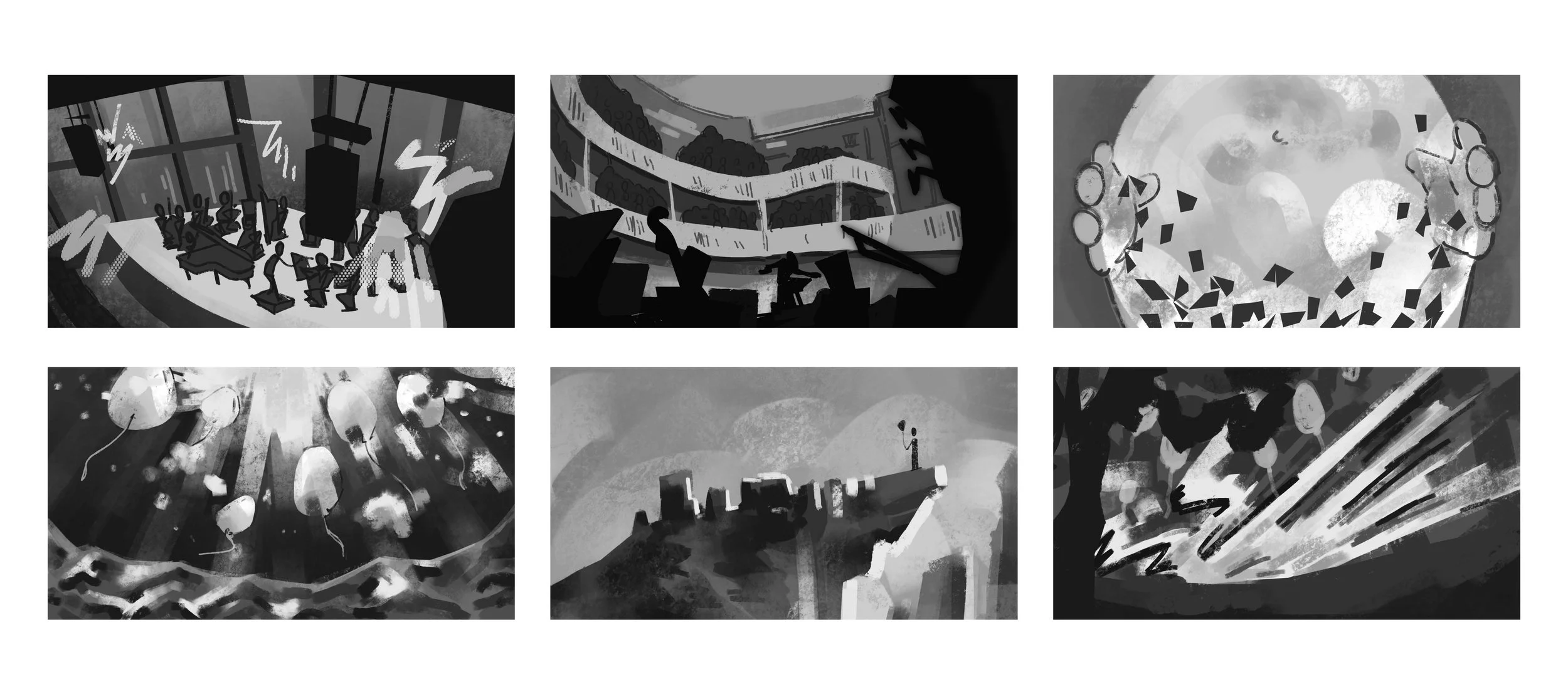
Since “Silence” relies entirely on music and visuals without dialogue, every frame had to carry emotional weight. As a storyboard artist who typically designs personal storyboard panels that communicate clearly without text, I felt completely comfortable drawing panels driven by backgrounds, composition, layout, and character performance.
To build this visual narrative storyline, I followed a structured visual pipeline. I started with beatboards, mapped emotional beats on an intensity chart, and refined thumbnails into detailed layouts. Then the roughboards and storyboard panels were created for each scene. I intentionally focused on subtle visual elements, such as camera framing, eye tracking, and environmental beats, to convey character relationships and internal shifts.
As mentioned earlier, communication extends far beyond verbal dialogue. American Sign Language (ASL), where hand gestures and facial expressions serve as a primary language, proves that spoken dialogue is not mandatory for meaningful connection in this film.
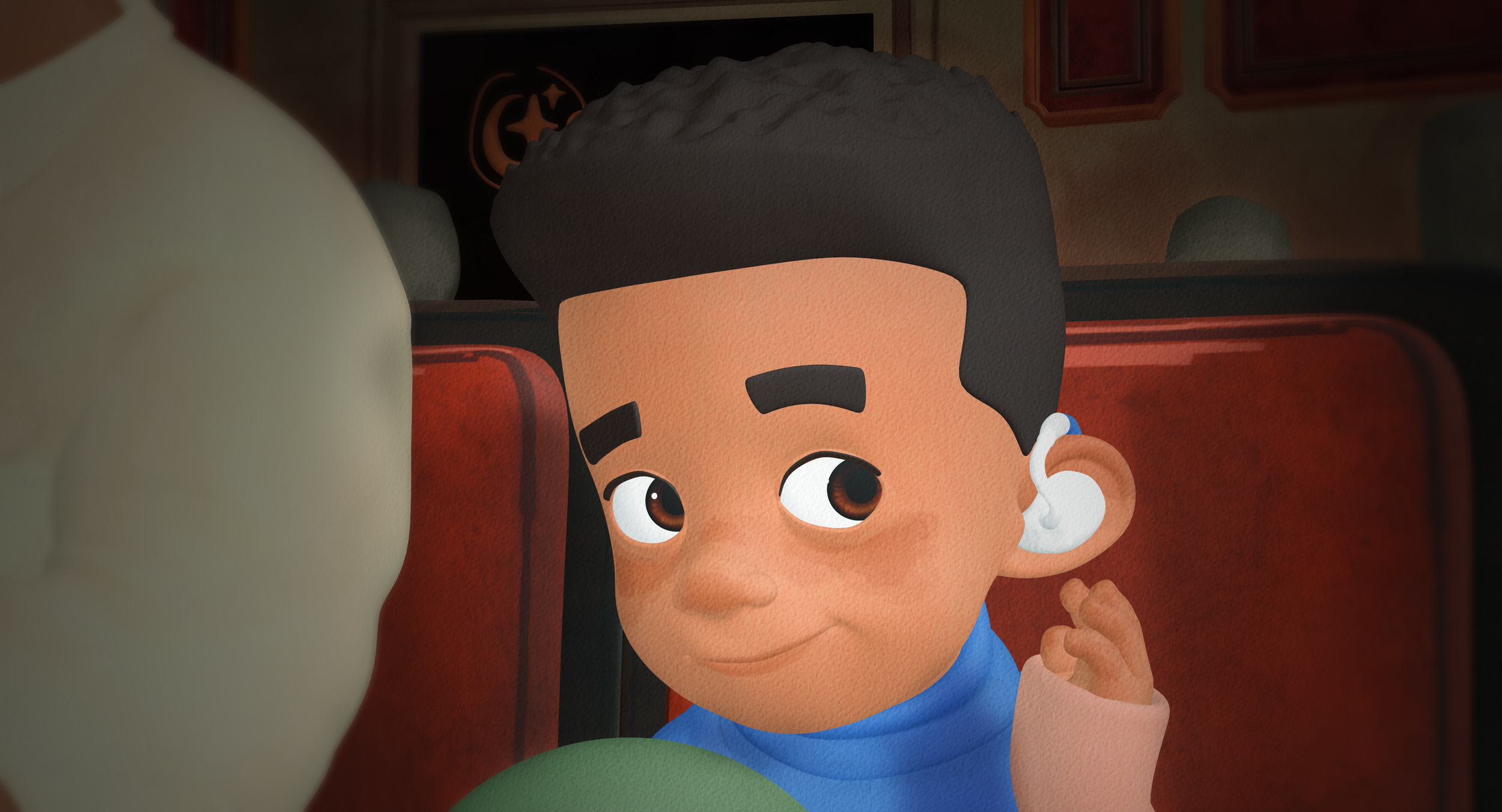
What do you hope hearing audiences take away after experiencing the world through Tacet’s eyes?
The key purpose of “Silence” is to immerse hearing audiences in the perspective of individuals with disabilities, helping them recognize the hidden barriers others face in enjoying what many take for granted. Creating this film was a deeply fulfilling challenge, as it required me to tell a story from a perspective I cannot personally reflect. Seeing how individuals with disabilities continue to advocate for accessibility in Korea—and around the world—strengthened my desire to foster a more inclusive and accessible society.
To me, a well-crafted and powerful film is one that invites audiences to think, discuss, and interpret its meaning without needing excessive explanation from the director. Through Tacet’s eyes, I hope hearing viewers gain a fresh perspective on sound, music, and communication. Ultimately, I hope “Silence” resonates deeply with viewers and contributes to a world free of discrimination and limitations, reminding us that art can be a powerful medium for positive change.
In future projects, do you plan to explore similar genre intersections, or are there other genres you're eager to explore ?
I certainly plan to continue exploring these genre intersections. “Silence” is just the first step in my journey toward building a more inclusive world through visual storytelling. Disability encompasses diverse spectrums and experiences, and even hearing impairments vary widely depending on cause and lived experience. Thus, I feel a strong responsibility to deepen my research and representation to convey diverse perspectives thoughtfully for a better and more inclusive world.
In fact, I already have a new animated short idea stemming from early discussions with Ye-chong Jeon, the composer of “Silence.” This project revolves around a visually impaired girl experiencing visual art. While “Silence” used music and vibration as a natural approach to visualize sound, interpreting the world through the perspective of someone who cannot see poses a unique creative challenge—one that requires thoughtful, innovative visual language.
Moving forward, I want to keep pushing the boundaries of animation to give voice to marginalized perspectives. While there is always room to grow, I remain committed to approaching these stories with care, authenticity, and respect. I hope audiences look forward to where this journey leads next!
If you could sum up the film’s core question in a single sentence that would make someone want to watch it immediately, what would it be?
“What does music look like in the middle of silence?”