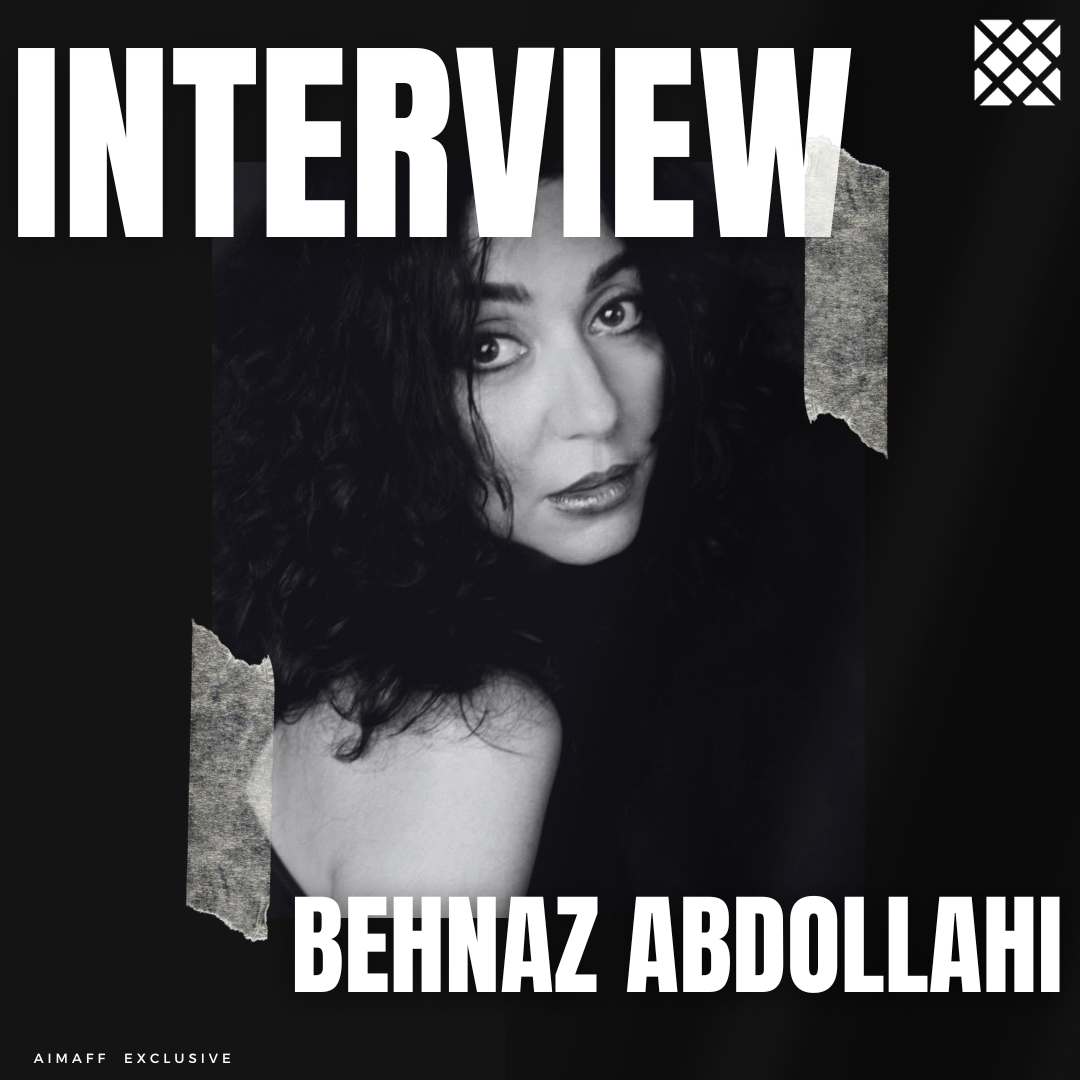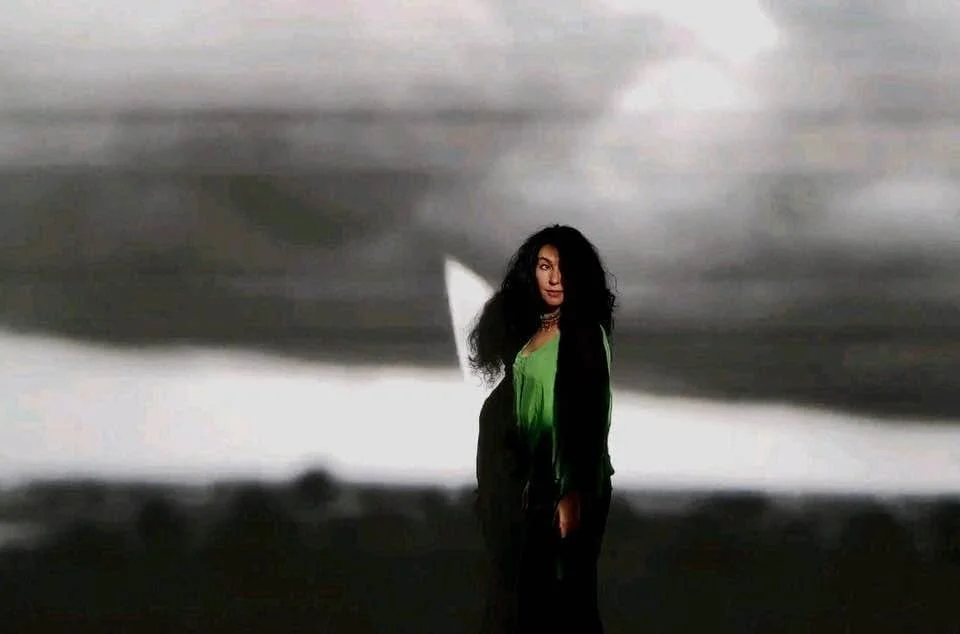
Welcome Behnaz, we are very excited to have you today with us to discuss about your work.
Who is Behnaz Abdollahi and how did the passion for creating begin?
I am an independent filmmaker and multimedia artist. My work explores the complex depths of human emotion, psychology, and visual storytelling. For me, cinema is not simply a medium , it is a language for giving form to the unspoken.
My passion for creation began in childhood, rooted in the world of colours and forms, shaped by my father, who was also a painter. That early foundation eventually led me to filmmaking in 2017, a pivotal year when poetry and storytelling merged within me. I realised my inner visions were no longer static. Images began to move in my imagination, accompanied by voices and stories echoing in my mind. This natural synergy between visuals and sound drew me toward cinema. Creation, for me, is not a choice , it is an instinctive necessity. A way of connecting my inner world with the world outside.
Can you tell us a bit about your previous work?
My previous work was never driven by calculated concepts , it came purely from instinct, the subconscious, and intuitive visions. I began my filmmaking journey with short films where images and sounds flowed naturally from my imagination, without forcing them into any traditional narrative structure.
In those early projects, I simply trusted my inner visuals and allowed the subconscious stream to shape the atmosphere. Each of those experiences was a discovery , learning to trust my instincts, finding my own cinematic language. Ultimately, they created the space for raw emotional expression and paved the way for Blood and Blossom.
Your film communicates so much emotionally without relying on dialogue. When did you realize silence could sometimes speak louder than words?
Perhaps silence travelled with me from the world of painting into cinema. When you stand before a painting, there are no words , yet it pulls you inward and connects you to something deeper within yourself.
Words can limit and frame emotion. But silence sets it free. In silence, even the faintest sound or whisper finds a deeper meaning , and every feeling is allowed to expand without boundaries. This is what I wanted for my films: not to tell the viewer what to feel, but to open a space where feeling can move freely, without being named.
CONVERSATION ABOUT: ‘‘Blood and Blossom’’
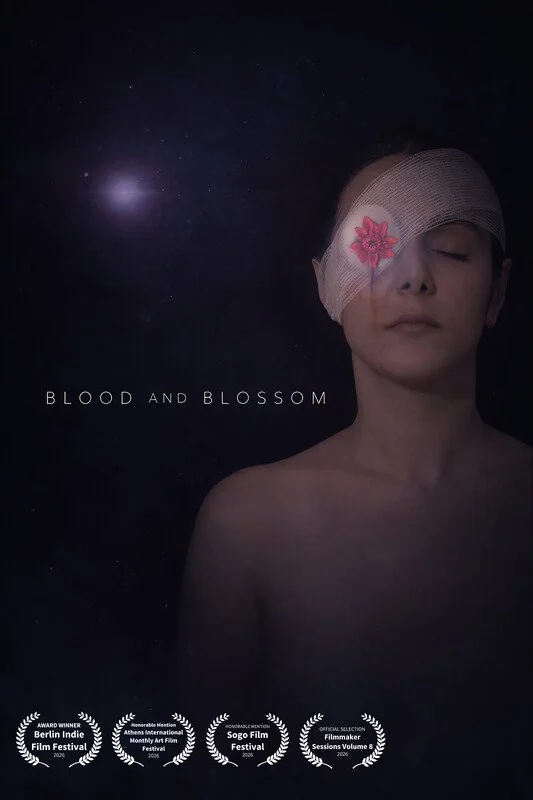
The film explores destruction and restoration almost as two inseparable forces. Do you believe healing is impossible without first confronting damage?
Yes, I deeply believe that healing is impossible without confronting the wound. In my view, destruction and restoration are not two separate poles , they exist in a constant friction with one another.
Healing is not a neutral process or a passive miracle; it is a courageous confrontation with the challenge of ruin. To reach healing, a person must first feel the weight of pain with their entire being. Passing consciously through the heart of this devastation is not about rejoining broken pieces , it is a new birth into life.
This is the process that runs through Blood and Blossom , a film where renewal emerges from the very heart of destruction.
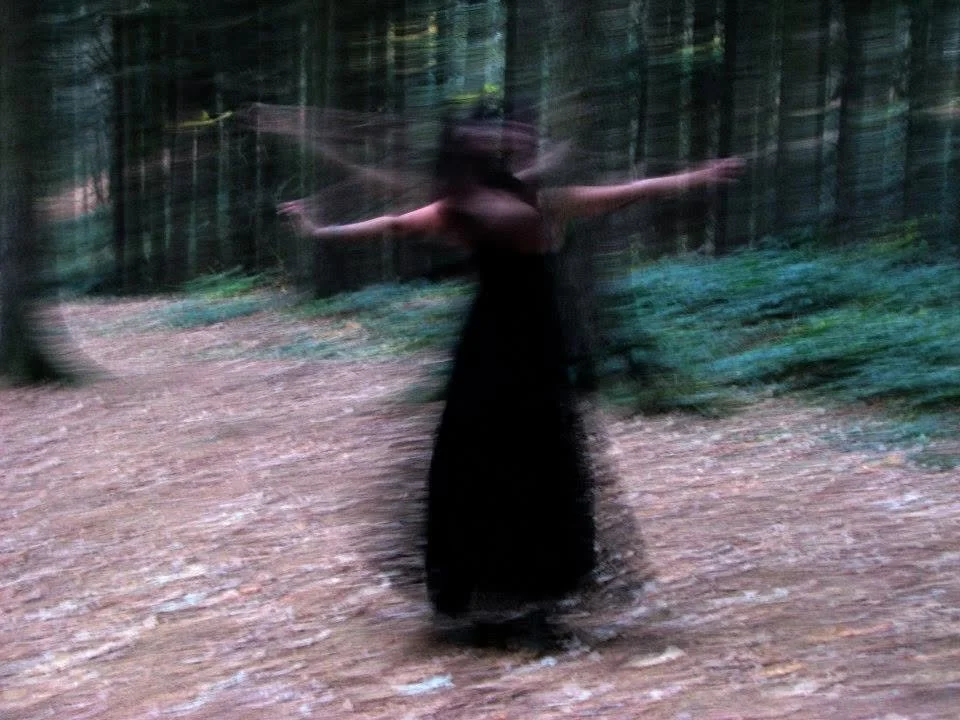
You’ve said you treat the screen as a canvas. How does your background as a painter influence the way you compose cinematic images?
When I stand behind the camera, my background as a painter never disappears ،it simply changes its medium. For me, every frame is a painting. I approach the cinematic image the way I approach a blank canvas: with intention, with colour, with light and shadow as my primary language.
In Blood and Blossom, every visual choice was deliberate. The white bandage was not chosen by accident ، white amplifies red, and in that contrast, reality becomes visible. The wound is real. The bandage is real. But from that exact point, a red blossom grows. Red, for me, is not only blood ، it is love, it is life. The two exist simultaneously, inseparable.
The difference between painting and cinema is that in cinema, the canvas moves ،and in that movement, it speaks. But the painter’s instinct remains: every colour holds its own place, its own meaning. Nothing is decoration. Everything is language.
Having grown up across multiple countries and cultures, how has displacement or cultural fluidity shaped your artistic voice?
Growing up across multiple countries and cultures meant accepting a constant state of fluidity. The truth is, I never felt I truly belonged to a fixed structure or a specific geography. These experiences taught me to break my initial mental frameworks and to see the world without borders.
When you plant roots in different cultures, you realise that your common language with the world is no longer words or geography ، it is deep human emotion: suffering, hope, and ultimately, images. This cultural fluidity gave my artistic voice a universal identity. In my filmmaking, rather than relying on a specific language, I trust the instinctive, shared language of being human. My cinema does not belong to a particular land ، it belongs to the shared feeling of being alive.
The film leaves space for audiences to project their own meanings onto the imagery. Have there been interpretations from viewers that genuinely surprised you?
Honestly, audiences didn’t offer me verbal or formulated interpretations ، but I noticed something far deeper: a kind of lostness after the film ended. I’m not sure whether this comes from encountering a world that operates beyond the logic of the mind. Viewers in a cinema unconsciously search for a conclusion, something rational to hold onto ، but my film takes them into a space where those logical tools no longer function.
This was the surprise for me: watching how the audience initially tries to analyse the film with their intellect, but ultimately surrenders to the feeling running through the images. That lostness, for me, is an achievement ،not an ambiguity. It means the images succeeded in separating the viewer from everyday reality and carrying them into an intuitive space, where each person is forced to find their own personal meaning within the silence and suspension. The film becomes complete precisely at the moment the audience lets go of logic.
In future projects, do you plan to explore similar genre intersections, or are there other genres you're eager to explore ?
I don’t usually plan future projects around predetermined structures or genres. For me, art is an instinctive process ،I’m drawn toward whatever moves me in that moment. Whatever shakes me, whatever strikes me in the world, will find its way into my cinema.
That said, one thing is completely clear to me: regardless of where the next story takes me, colour and feeling will remain the core pillars of my work. I am always drawn to exploring the complex layers of human emotion. Genres, for me, are only surface shells. What will remain constant in everything I make is a focus on the human soul and the translation of its deepest emotions into the language of images.
If you could sum up the film’s core question in a single sentence that would make someone want to watch it immediately, what would it be?
The film’s core question is this: What is that nameless, mysterious force at the narrow threshold between destruction and blossoming ،the force that can transform the deepest loss into a new life?
For me, the true wonder is not destruction itself, nor blossoming itself , it is that delicate, ambiguous, and defining process that occurs between the two. Not every destruction leads to blossoming. So within that space, there exists a thin and fragile line, carrying a hidden power , a force that connects the two worlds of death and life.
This film is an invitation to witness that mysterious in-between space; a space where words fail, but images can reveal its secret.