
Welcome Rodrigo, we are very excited to have you today with us to discuss about your work.
Who is Rodrigo Pedroza and how did the passion for creating begin?
Since I was a child, I have always been creative. I liked to play and made movies with toys for my friends to watch; there was an audience following my stories. Later on, during my youth, I fell in love with cinema.
Can you tell us a bit about your previous work?
During my training in audiovisual, I directed the short film ‘‘Presente’’ which was shown in England and Brazil. I worked as the cinematographer on the short film ‘‘Iracema’’ which won an award in Poland. In 2026, I created and became CEO and CIO of the first software for writing cultural projects and film scripts in Brazil. Global is considered the most complete on the market and will have its world premiere this year.
Every film has an initial spark. What was the image, concern, or original idea that gave rise to Amazônia Xamã BR?
Reading, research, and experiences. I was reading a lot about decoloniality, and I already had a certain knowledge planted in my mind. I arrived three years ago in Amapá – Brazil – Amazon, and in this space, I was able to experience and follow the struggles of the indigenous peoples.
CONVERSATION ABOUT: ‘‘Amazônia Xamã BR’’
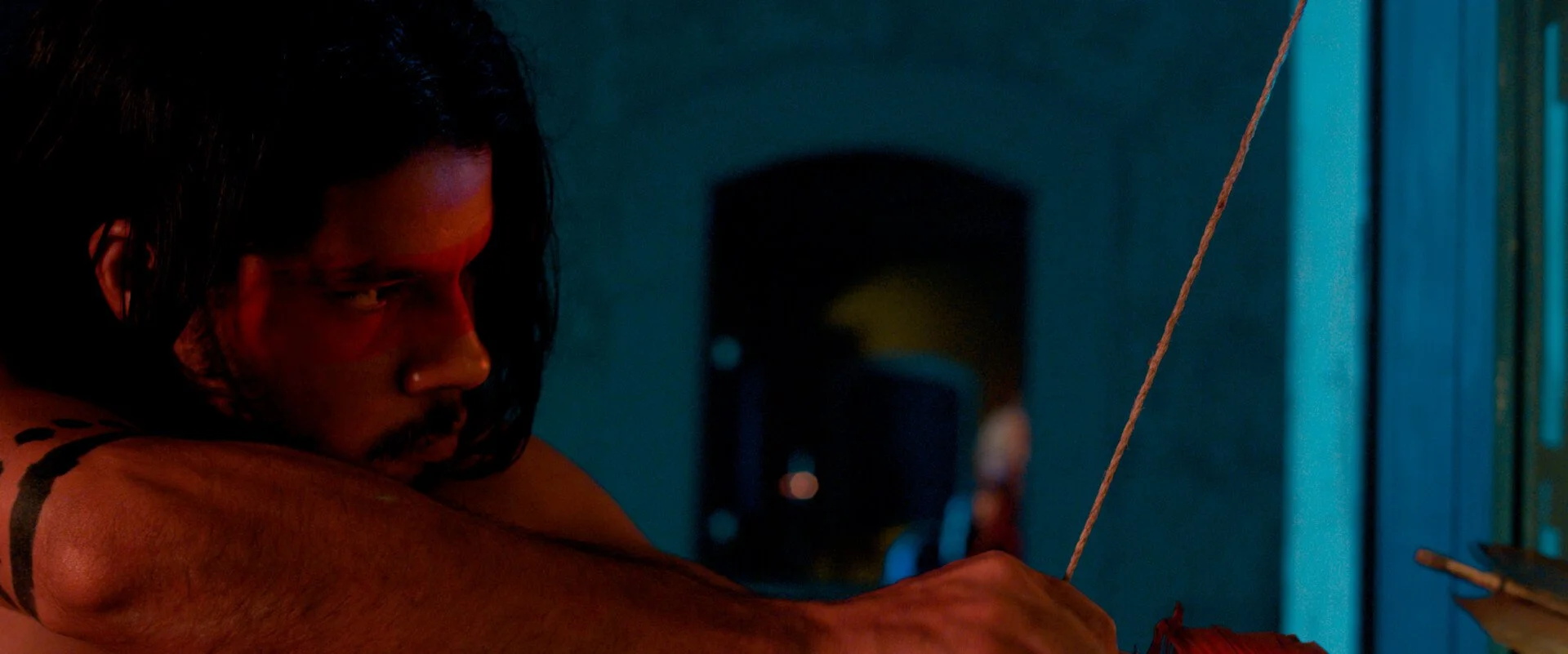
Why was science fiction the appropriate language for exploring the Amazon, cultural memory, and environmental destruction?
I needed to consider three timeframes: past, present, and future. The world edges closer to degradation every day; this has been an intense process of exploitation—devoid of sustainability or responsibility. The film’s central aim is to provoke thought: Where are we headed? Where did we go wrong, and where do we continue to err? These reflections—regarding the exploitation of both humanity and the environment—are central to the film.
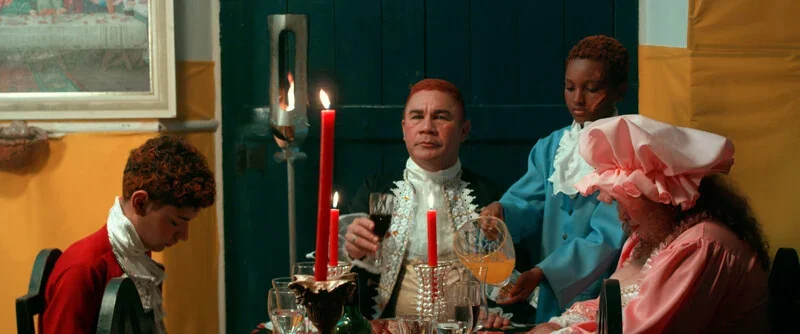
When a culture is at risk of disappearing, what can cinema preserve that historical records or data cannot?
Cinema offers a specific perspective—and the short film, an even more focused one. A culture is something far broader, composed of collective experiences, unique ways of thinking, and diverse ways of life, among other aspects. Through cinematic recording, we can reflect on the world we inhabit and the world we desire for ourselves and for our children, our grandchildren... therein lies the true power of cinema.
Working as both director and art director, how did you build the visual contrast between Raoni’s world and the mechanical presence of the Garimaldis?
It was a pleasurable and fun process. I enjoy creating things and putting them into practice. Spinoza said that creation is a gift from God. In cinema, I create my own universe—but I do so responsibly; therefore, the process is fun, pleasurable, responsible, and natural.
What do you hope the Brazilian audience recognizes in the film that international audiences might perceive differently?
With its original concept, the film possesses a distinct identity. I recently screened it for a film class, and everyone loved it—they found the short film extraordinary. I believe international audiences will really appreciate the way the narrative is told and the film’s aesthetic. The short is now entering the festival circuit in Brazil.
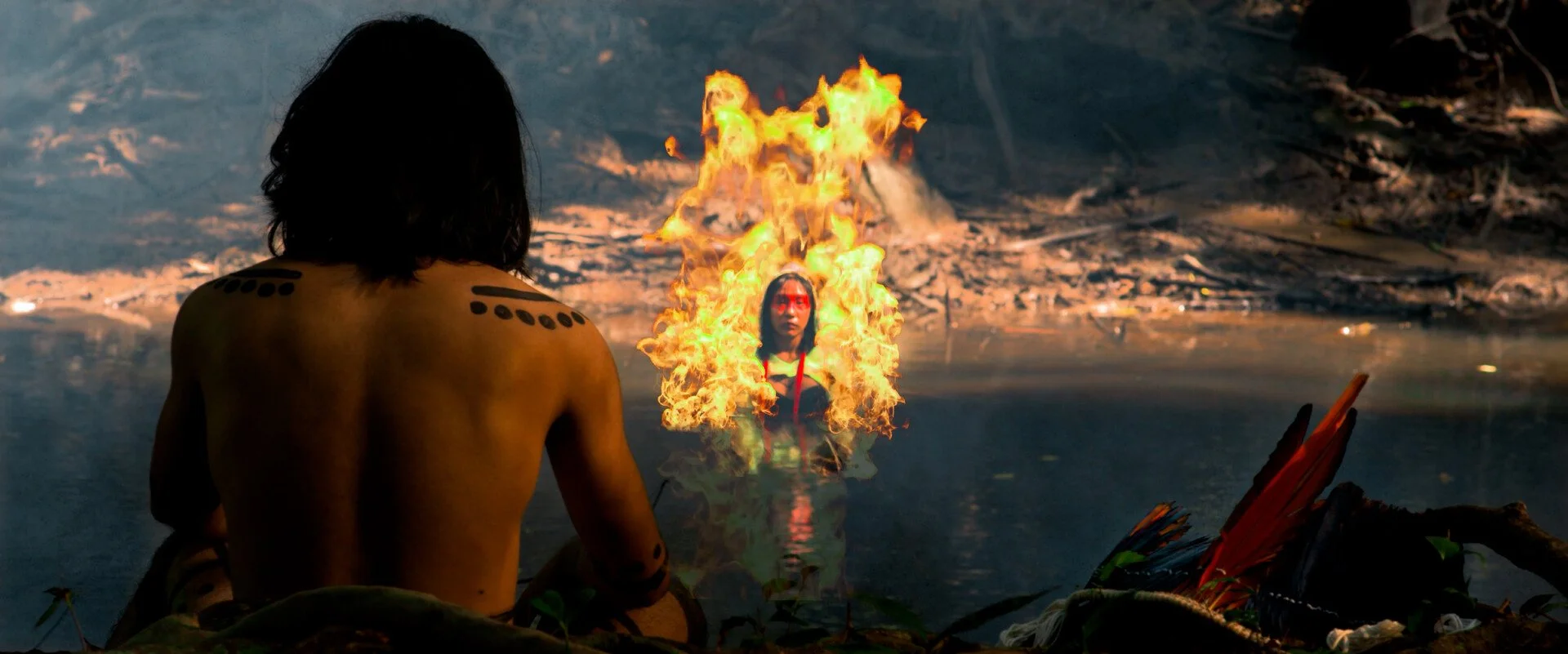
In future projects, do you plan to explore similar genre intersections, or are there other genres you're eager to explore ?
I intend to continue working in science fiction, but I also want to branch out into drama and documentary filmmaking. Currently, I am finalizing the screenplay for a feature-length drama titled Bacabeira City. I am pleased with how it is turning out.
If you could sum up the film’s core question in a single sentence that would make someone want to watch it immediately, what would it be?
Every form of exploitation is a form of destruction.